BNN Summary
India's political landscape is abuzz with speculation as the BJP-led government reportedly plans to revive the controversial delimitation bill. This move comes after a previous attempt in April 2026 failed, and amidst a perceived weakening of the INDIA opposition bloc, particularly with the Dravida Munnetra Kazhagam (DMK) distancing itself. The DMK remains a staunch opponent, fearing a loss of parliamentary representation for southern states, while the government seeks to unbundle the bill and potentially use the 2011 census for re-apportionment.
In-Depth Analysis
The Bharatiya Janata Party (BJP)-led central government is reportedly preparing a renewed push for the contentious delimitation bill, a legislative effort that seeks to redraw India's parliamentary constituencies. This strategic maneuver gains significant traction amidst signs of a fracturing INDIA opposition bloc, with particular attention on the Dravida Munnetra Kazhagam (DMK)'s unwavering opposition and recent disengagement from the alliance's collective efforts.
Delimitation, the process of redrawing electoral boundaries to ensure equitable representation based on population, is constitutionally mandated to occur after every census. However, a freeze on seat revision, based on the 1971 census, was put in place by the 42nd Constitutional Amendment in 1976 and further extended until after the first census following 2026 by the 84th Constitutional Amendment in 2001. This freeze was intended to encourage states to implement population control measures without fear of penalization through reduced political representation. With the moratorium nearing its expiration, the government's renewed focus on delimitation could fundamentally reshape India's federal structure and the balance of power in the Lok Sabha.
Previously, a legislative package including the Constitution (131st Amendment) Bill, 2026, the Delimitation Bill, 2026, and the Union Territories Laws (Amendment) Bill, 2026, was introduced in the Lok Sabha on April 16, 2026. This attempt, which sought to link women's reservation with delimitation and increase Lok Sabha seats to an upper limit of 850, failed to secure the necessary two-thirds majority and was defeated on April 17, 2026. Sources now indicate that the government's revised strategy involves unbundling the Delimitation Bill from the Women's Reservation amendments, presenting it potentially as a standalone piece of legislation. This would aim to facilitate its passage, as a standalone delimitation bill might only require a simple majority, although any changes to seat numbers would still necessitate a constitutional amendment requiring a two-thirds majority.
A critical aspect of the proposed delimitation is the census year to be used for calculation. While the next official census has a reference date of March 1, 2027, and is unlikely to be completed before the 2029 general elections, the government is reportedly considering using the 2011 census as the basis for the exercise. This approach, outlined in the Delimitation Bill, 2026, would increase the Lok Sabha strength from the current 543/550 to up to 850 seats (815 for states and 35 for Union Territories).
The Dravida Munnetra Kazhagam (DMK), a prominent regional party governing Tamil Nadu, has emerged as a vocal and formidable opponent to the delimitation exercise based on population. DMK leaders, including Chief Minister M.K. Stalin and MP Kanimozhi Karunanidhi, argue that such a move would unfairly penalize southern states like Tamil Nadu and Kerala, which have successfully implemented population control measures. Projections suggest that if seats are re-apportioned based on the 2011 census and the Lok Sabha strength remains fixed at 543, Tamil Nadu's seats could decrease from 39 to 32, and Kerala's from 20 to 15. Conversely, populous northern states like Uttar Pradesh and Bihar could see substantial gains. Even with an expanded Lok Sabha, southern states are projected to gain disproportionately fewer seats compared to their northern counterparts.
DMK has vehemently called the delimitation proposal an 'attack on federal principles' and a 'grand conspiracy' against states that have prioritized national development goals through family planning. The Tamil Nadu Legislative Assembly has passed a unanimous resolution urging the Union Government to extend the freeze on parliamentary constituencies, based on the 1971 Census, for another 25 years. The party has also indicated its readiness to challenge the legislation in the Supreme Court if the bill passes, emphasizing the need to protect Tamil Nadu's interests and federal rights. Despite initial reports of the government reaching out to DMK with proposed changes to protect southern interests, the party's core stance remains unchanged.
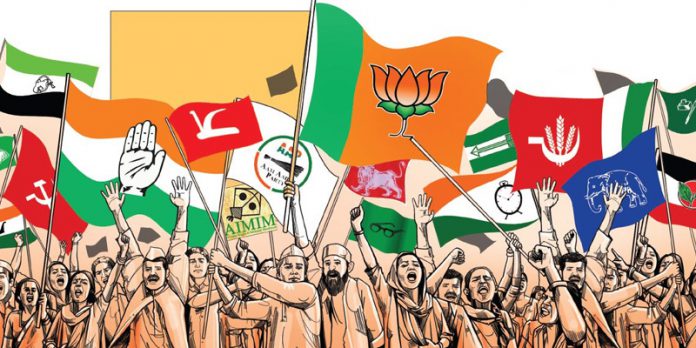
Adding another layer of complexity to this political debate is the perceived weakening of the INDIA opposition bloc. The alliance has faced significant internal strife and electoral setbacks, with the BJP actively capitalizing on the disunity. A notable development illustrating this weakening was the DMK's formal boycott of the latest INDIA bloc meeting on June 8, 2026. This decision stemmed from a bitter fallout after the Congress party reportedly walked out of their alliance in Tamil Nadu. The absence of a key regional player like DMK underscores the fragility of the opposition's united front, potentially emboldening the BJP to push forward with its legislative agenda without facing a cohesive resistance. The internal criticism directed at Congress from other regional parties within the bloc, emphasizing that leadership should be determined by state-specific strengths rather than automatically defaulting to Congress, further highlights the challenges facing the INDIA alliance. The political implications of a delimitation exercise could be far-reaching, impacting the federal balance of power and parliamentary representation for decades to come, especially with general elections expected by April 2029.
How do you feel about this story?