BNN Summary
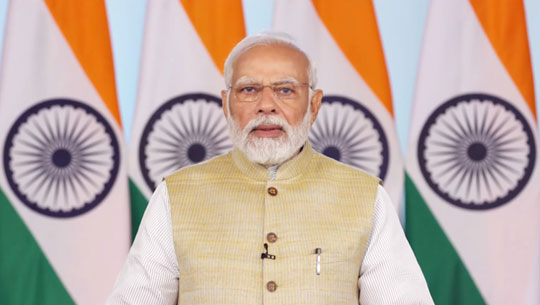
Prime Minister Narendra Modi has completed an unprecedented 12 years in office, becoming India's longest-serving elected Prime Minister. The Bharatiya Janata Party (BJP) and its allies are celebrating this milestone, praising a period of significant national 'transformation'. A crucial NDA meeting is scheduled at Bharat Mandapam, while civil society leaders acknowledge the public trust gained during his tenure.
In-Depth Analysis
Prime Minister Narendra Modi has achieved a significant political milestone, completing 12 years in office. This tenure positions him as India's longest-serving elected Prime Minister, an achievement that is being celebrated extensively by the ruling Bharatiya Janata Party (BJP) and its allies across the nation. The BJP is particularly highlighting this period as an era of profound 'transformation' for India, though specific details of this transformation are broadly interpreted to encompass various aspects of governance, economy, and social reforms.
The celebrations surrounding this milestone are not merely ceremonial. A crucial meeting of the National Democratic Alliance (NDA), the coalition led by the BJP, is scheduled to take place at the Bharat Mandapam on Wednesday. This gathering is expected to be a key event, likely serving to reinforce alliance unity, strategize for future political challenges, and collectively acknowledge the Prime Minister's enduring leadership. The choice of Bharat Mandapam, a state-of-the-art convention center, for such a significant political congregation underscores the importance attached to this anniversary.
Adding to the chorus of acknowledgments, Shaista Amber, the president of the All India Muslim Women's Personal Law Board (AIMWPLB), extended her congratulations to Prime Minister Modi for his 12 years in office. In a notable statement, Amber urged opposition parties to recognize and respect the substantial public trust that Prime Minister Modi has garnered over his extensive tenure. Her call highlights a broader sentiment among certain sections of civil society to acknowledge the democratic mandate and popular support behind the Prime Minister's leadership, irrespective of political affiliations.
The concept of 'transformation,' as articulated by the BJP, speaks to a narrative of developmental change and progress under Modi's leadership. While the exact contours of this transformation are subject to ongoing political discourse, it generally refers to initiatives in areas such as economic growth, infrastructure development, social welfare programs, and India's enhanced global standing. The party's emphasis on this theme serves to reinforce the idea that Modi's tenure has been pivotal in steering India towards a new trajectory of growth and development.
Modi's journey to becoming the longest-serving elected Prime Minister is a testament to his political acumen and enduring popularity. His leadership style, characterized by decisive policy-making and direct engagement with the populace, has resonated with a significant portion of the Indian electorate. This long tenure has allowed for sustained policy implementation and the pursuit of long-term national goals, providing a degree of stability and continuity in governance that is often challenging to achieve in a diverse democratic landscape.
The implications of such a long period in power extend beyond mere electoral success. It impacts the institutional memory of the government, shapes the nation's strategic direction, and influences the political culture. For the BJP, Modi's continued leadership is central to its electoral strategy and its vision for India. As the NDA gathers at Bharat Mandapam, the discussions are likely to revolve around solidifying their agenda, addressing contemporary challenges, and leveraging the Prime Minister's enduring appeal to further their political objectives. This milestone marks not just a personal achievement for Narendra Modi, but also a significant chapter in India's political history, underscoring the dynamics of leadership and public trust in the world's largest democracy.
How do you feel about this story?