BNN Summary
The Indian National Developmental Inclusive Alliance (INDIA) bloc held a crucial meeting in New Delhi with 23 constituents, but faced challenges from the absence of key parties like the Aam Aadmi Party (AAP) and the Dravida Munnetra Kazhagam (DMK). The Trinamool Congress (TMC) also attended amidst internal turmoil. This gathering aimed to strategize against the ruling BJP and address internal differences following recent electoral setbacks, highlighting the alliance's ongoing struggles for unity and cohesion.
In-Depth Analysis
NEW DELHI – The opposition Indian National Developmental Inclusive Alliance (INDIA) bloc convened a significant meeting at the Constitution Club in New Delhi, bringing together 23 of its constituent parties. However, the conclave was overshadowed by the notable absence of two major regional players, the Aam Aadmi Party (AAP) and the Dravida Munnetra Kazhagam (DMK), underscoring the persistent internal fault lines within the alliance.
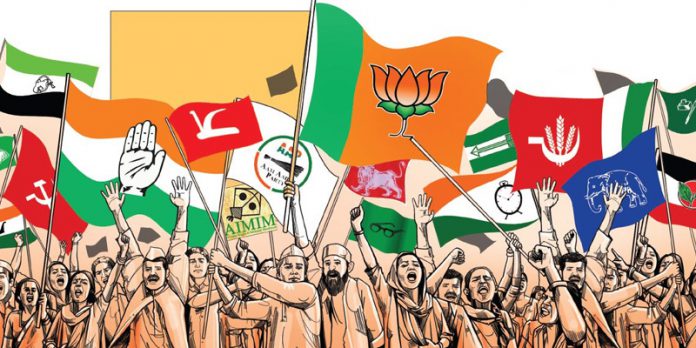
The INDIA bloc, formally known as the Indian National Developmental Inclusive Alliance, was established in July 2023 with the primary objective of presenting a united front against the Bharatiya Janata Party (BJP)-led National Democratic Alliance (NDA) in the 2024 general elections. The alliance, comprising a diverse array of national and regional parties, aimed to consolidate opposition votes and safeguard what it perceives as threats to democracy and the Constitution under the current government.
The absence of the DMK, a long-standing ally of the Congress party and a significant force in Tamil Nadu politics, stems from a severe rift with the Congress. The DMK accused the Congress of 'betrayal' after the national party reportedly allied with the Tamilaga Vettri Kazhagam (TVK) in Tamil Nadu following the recent state assembly elections, without prior consultation with the DMK. DMK leaders expressed deep dissatisfaction, stating that their cadres were 'deeply upset and angry' with Congress's actions and that the DMK would not participate in any meeting where Congress was a constituent. This strained relationship has even led to DMK MP Kanimozhi requesting separate seating arrangements for DMK MPs in the Lok Sabha, signaling a formal acknowledgment of the fractured ties.
The AAP, led by Arvind Kejriwal, also opted to stay away from the meeting. The party had earlier announced its formal exit from the INDIA bloc in July 2025, citing the bloc's failure 'to stay united and take steps to further its agenda' after the 2024 general elections. AAP leaders, including Rajya Sabha MP Sanjay Singh, squarely blamed the Congress, accusing it of neglecting its responsibility as the bloc's largest constituent and even 'working hand in glove with the BJP to weaken regional and smaller parties'. The AAP's decision reflects a strategic recalibration, focusing on consolidating its power in states like Punjab and Gujarat, and pursuing an independent agenda rather than adhering to a national opposition framework dominated by the Congress.
Meanwhile, the Trinamool Congress (TMC), despite reportedly facing internal divisions and a 'crumbling' situation after electoral setbacks in the West Bengal Assembly elections, saw its supremo Mamata Banerjee and national general secretary Abhishek Banerjee attend the meeting. The TMC's participation comes amid efforts by Mamata Banerjee to stabilize her party and reassert her leadership, with reports suggesting she might seek support from other opposition parties to counter post-poll challenges and internal dissent, including a rebellion by 58 of its 80 MLAs.
Congress general secretary Jairam Ramesh confirmed that 23 parties were participating, asserting that the bloc remained united despite the diversity and occasional differences. He emphasized that even absent parties continued to oppose the policies and actions of the Modi government. The meeting's agenda was expected to cover critical national issues such as the economy, inflation, unemployment, parliamentary coordination, and the opposition's political roadmap. However, the internal tensions, particularly the rifts between Congress and its allies in various states, including the CPI(M) and Jharkhand Mukti Morcha (JMM), highlight the significant challenges in maintaining a cohesive national alliance. The ongoing struggles with seat-sharing arrangements and a lack of a consensus prime ministerial candidate have further impacted the bloc's public image and effectiveness.
Despite these visible cracks and the criticisms from NDA leaders alleging disunity and weak leadership, the INDIA bloc leaders affirmed their commitment to countering the BJP. Congress leaders expressed optimism that post-poll resentments, particularly with the DMK, would eventually be overcome. The alliance also reportedly took five key decisions during the meeting, including a plan to meet more frequently, with the next gathering scheduled for Hyderabad in August, indicating an ongoing effort to strengthen coordination and present a more unified front in the evolving political landscape.
How do you feel about this story?