BNN Summary
Political analysts argue that the Indian opposition's most effective strategy against the ruling BJP lies not in merely reviving the INDIA alliance but in a fundamental transformation of the Indian National Congress. This perspective suggests that while the alliance offered a challenge in 2024, a future 'INDIA 2.0' lacks the necessary foundation. Instead, a 'Congress 2.0,' characterized by renewed organizational strength, clear ideological vision, and decisive leadership, is deemed essential for presenting a credible national alternative to the electorate.
In-Depth Analysis
In the intricate landscape of Indian politics, discussions are increasingly converging on the strategic imperative for the opposition to mount a robust challenge against the Bharatiya Janata Party (BJP). Following the dynamics observed in the 2024 general elections, a prevailing analytical perspective suggests that the path forward for the opposition does not primarily involve merely re-energizing the INDIA alliance. Rather, the focus is shifting towards an urgent and profound revitalization of the Indian National Congress, an initiative colloquially termed 'Congress 2.0.' This view posits that while the INDIA alliance managed to present a significant, albeit ultimately unsuccessful, challenge to the BJP in 2024, a mere reiteration or 'INDIA 2.0' would likely fall short of achieving a more substantial impact in future electoral contests.
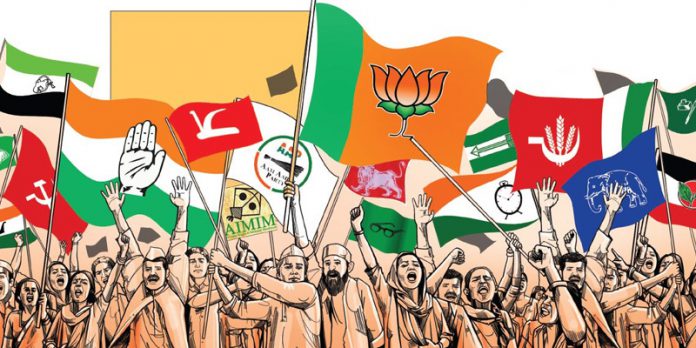
The limitations inherent within the existing framework of the INDIA alliance became apparent during its previous iteration. Comprising numerous regional parties with often disparate ideologies, competing regional interests, and varied political priorities, the alliance struggled with presenting a truly unified front. Key challenges included difficulties in coherent seat-sharing arrangements across states, a perceived lack of a singular, charismatic national leader to rally behind, and an inability to articulate a consistent and compelling national narrative that transcended individual state-level concerns. While the alliance managed to galvanize anti-BJP sentiment to some extent, it often lacked a positive, proactive vision that could inspire confidence across a broad swathe of the electorate. This fragmentation, coupled with internal disagreements, made it challenging to effectively counter the BJP's centralized messaging and robust organizational machinery.
Consequently, the spotlight has turned towards the imperative of a 'Congress 2.0'—a comprehensive overhaul and rejuvenation of the Indian National Congress. Such a transformation would necessitate several critical components. Firstly, a deep-seated rebuilding of the party's organizational cadre is essential. This involves strengthening grassroots presence, empowering local and district-level leaders, and revitalizing party units in states where its influence has waned significantly. A robust organizational structure is the bedrock upon which any national party must stand, ensuring effective outreach and mobilization.
Secondly, the Congress must articulate a clear, contemporary, and appealing vision and ideology. Moving beyond its historical legacy, the party needs to develop a distinct economic and social agenda that resonates with the aspirations of modern India. This involves offering concrete and credible solutions to pressing issues such as widespread unemployment, persistent inflation, growing social disparities, and environmental degradation. A coherent ideological stance, distinct from both the BJP's Hindutva-driven nationalism and purely regional concerns, is crucial for attracting diverse voter segments.
Thirdly, a leadership overhaul is paramount. The party needs to foster dynamic, decisive leadership that can inspire confidence, articulate its vision effectively, and command respect across the political spectrum. Addressing perceptions of dynastic politics and promoting meritocratic leadership can help in attracting new talent and regaining public trust. Furthermore, an effective communication strategy is vital in the digital age. Utilizing modern media platforms, engaging actively with younger demographics, and proactively countering disinformation are key to shaping public opinion and conveying the party's message.
Finally, a redesign of its electoral strategy is necessary. This includes scientifically identifying key demographics and regions for targeted campaigns, forging alliances from a position of renewed strength rather than desperation, and focusing on winnable seats by understanding local political dynamics. Fostering internal democracy and accountability will also be crucial in creating a more vibrant and effective party structure.
Ultimately, the Indian National Congress, with its historical pan-India presence and secular credentials, remains the only national party capable of providing a truly national alternative to the BJP. An alliance, however formidable on paper, inherently lacks the cohesive power and singular vision that a strong, revitalized anchor party like Congress can provide. Without a robust and reformed Congress at its core, any broader opposition alliance risks remaining a loose confederation of regional interests, perpetually struggling to offer a compelling and unified national narrative. Therefore, the strategic emphasis for the Indian opposition, as analysts suggest, must be firmly placed on cultivating a 'Congress 2.0,' thereby laying the groundwork for a more potent and credible democratic challenge in the years to come.
How do you feel about this story?