BNN Summary
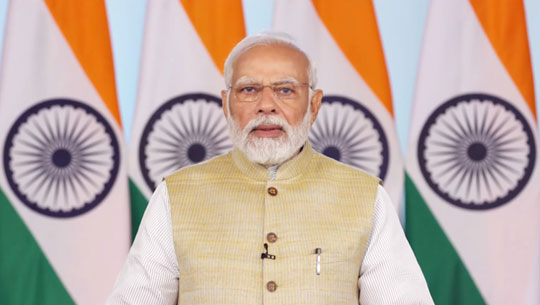
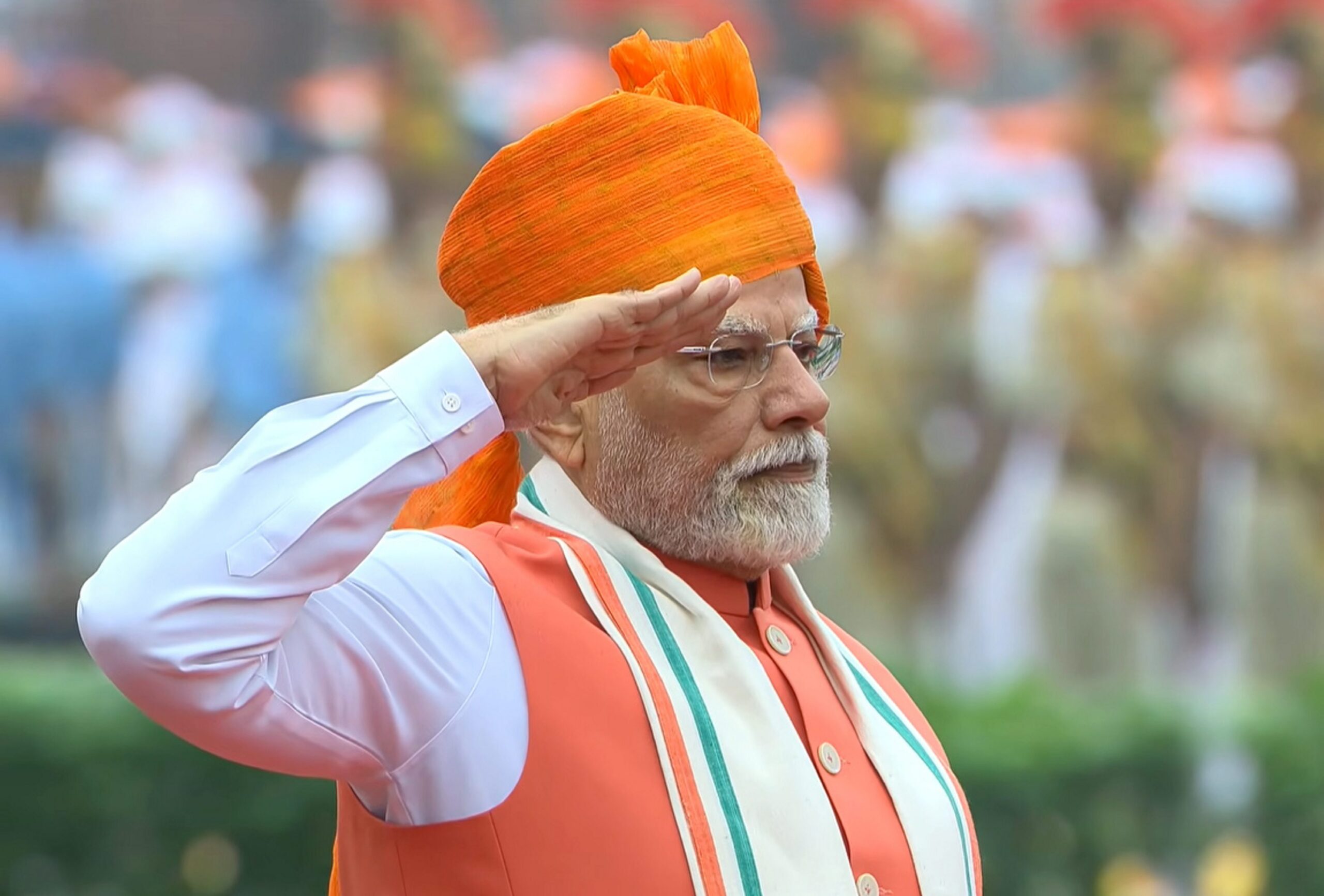
Prime Minister Narendra Modi has officially become India's longest continuously serving democratically elected Prime Minister, surpassing the record previously held by Jawaharlal Nehru. Achieving 4,399 days in office on June 10, 2026, this significant milestone was marked by celebrations from NDA leaders and the BJP, who erected banners in Delhi to commemorate his 12-year tenure. The achievement underscores his enduring leadership and repeated mandates from the Indian electorate.
In-Depth Analysis
Prime Minister Narendra Modi has officially etched his name deeper into India's political annals, becoming the nation's longest-serving democratically elected and continuously serving head of government. This historic milestone was reached on Wednesday, June 10, 2026, as he surpassed the previous record held by India's first Prime Minister, Jawaharlal Nehru, marking 4,399 days in office. The momentous occasion was met with considerable celebration from leaders within the National Democratic Alliance (NDA) and the Bharatiya Janata Party (BJP) across the nation, particularly in the national capital of Delhi.
The BJP, in particular, seized the opportunity to commemorate this significant achievement, adorning prominent locations in Delhi with banners that proudly announced Prime Minister Modi's completion of 12 years in his current tenure. This visual display served as a public testament to his enduring leadership and the sustained mandate he has received from the Indian electorate. The atmosphere among NDA allies reflected a collective acknowledgment of a political journey that has not only seen two consecutive full terms in power but has also reshaped the contours of Indian governance and policy.
Jawaharlal Nehru, an iconic figure in India's independence movement and the architect of modern India, served as Prime Minister from August 15, 1947, until his death on May 27, 1964. His tenure, though remarkable for its length and foundational impact on the nascent nation, included a period from 1947-1952 where he led an interim government before elections were institutionalized. Nehru's record as a continuously elected Prime Minister, post the first general elections of 1952, spanned 4,398 days from May 13, 1952, until his death. This record has now been exceeded by Prime Minister Modi's continuous service as an elected leader.
This comparison underscores a shift in India's political narrative, highlighting the ability of a non-Congress leader to command such a prolonged period at the nation's helm. Modi's tenure began on May 26, 2014, when he first assumed office, leading the BJP to a historic majority in the Lok Sabha elections. He repeated this feat with an even larger mandate in 2019 and secured a third consecutive term in 2024, becoming the first Prime Minister since Nehru to win three successive Lok Sabha elections. Modi is also the first Prime Minister born after India's independence and the longest-serving non-Congress premier in the nation's history.
The significance of such a long continuous tenure for any head of government in a vibrant democracy like India cannot be overstated. It often points to a consistent political vision, the effective implementation of policies, and a stable administrative framework. For India, a country of immense diversity and complex socio-economic challenges, a sustained period of leadership can foster an environment conducive to long-term planning and execution of ambitious national projects. Over his years in office, Prime Minister Modi's government has championed various initiatives focusing on economic reforms, infrastructure development, social welfare schemes, and a more assertive foreign policy. Achievements highlighted by his government include lifting millions out of poverty, expanding affordable healthcare, boosting defense and overall exports, and fostering digital governance through platforms like UPI and the JAM framework.
The longevity of a leader's term often allows for the deep embedding of their ideological and policy imprints into the national fabric. This can lead to a more predictable policy environment for businesses and international partners, while also enabling the government to pursue structural changes that require extended periods to yield results. Modi's administration has been characterized by its emphasis on 'developmental nationalism' and a strong focus on India's global standing, often articulated through platforms like the G20 presidency and bilateral engagements. World leaders have sent congratulatory messages, acknowledging Modi's leadership and India's growing role in global affairs, praising India's economic growth and development-focused governance model.
This milestone is not merely a statistical record; it is a moment for political reflection and assessment of the trajectory India has taken under his leadership. It prompts discussions about governance models, the role of strong leadership in a parliamentary democracy, and the evolving nature of the Indian electorate's preferences. As Prime Minister Modi continues his tenure, the political landscape will undoubtedly continue to analyze the implications of such sustained power and the legacy that will be further shaped by his ongoing leadership. The celebrations in Delhi and across the NDA symbolize not just a numerical achievement, but a reaffirmation of the political strength and public support that have underpinned his extended period of service to the nation.
How do you feel about this story?