BNN Summary
The INDIA bloc convened in New Delhi after a two-year hiatus to forge unity and strategize against the ruling government. Despite key allies' absence, discussions centered on overcoming internal rifts, with partners urging Congress to adopt a 'large heart' approach. The meeting yielded a five-point agenda focusing on electoral integrity, economic concerns, and continued coordination, aiming to strengthen the alliance for future political battles.
In-Depth Analysis
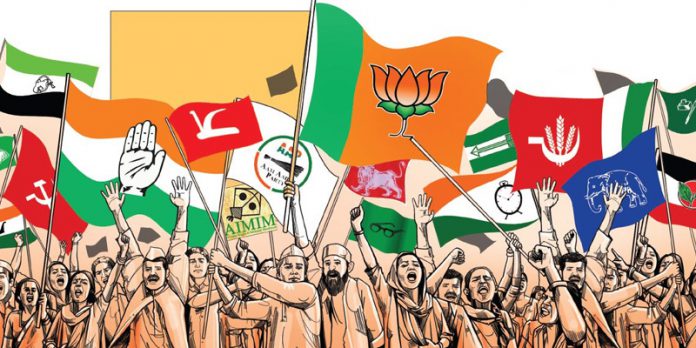
The Indian National Developmental Inclusive Alliance (INDIA) bloc held a pivotal meeting in New Delhi on Monday, June 8, 2026, marking its first significant gathering in nearly two years since the Lok Sabha elections in June 2024. The crucial conclave, attended by leaders from approximately 25 opposition parties, aimed to iron out internal differences and devise a united strategy to counter the ruling Bharatiya Janata Party (BJP)-led government ahead of the 2029 general elections and upcoming state polls.
A central theme emerging from the discussions was a resounding call for the Congress party to demonstrate a 'large heart' and adopt a more accommodating stance towards its regional allies. This sentiment was particularly articulated by Samajwadi Party (SP) chief Akhilesh Yadav and Rashtriya Janata Dal (RJD) leader Tejashwi Yadav, who emphasized the critical role of regional parties in challenging the BJP's dominance and urged the Congress leadership, including Mallikarjun Kharge, Sonia Gandhi, and Rahul Gandhi, to acknowledge their significance and coordinate accordingly.
The meeting was not without its palpable internal tensions. The Communist Party of India (Marxist) (CPI(M)) and Communist Party of India (CPI) leaders, John Brittas and D Raja, vocally raised concerns regarding remarks made by senior Congress leaders during the recent Kerala Assembly election campaign. These remarks had alleged a 'tacit understanding' or 'underhand dealing' between the Left Democratic Front (LDF) and the BJP in Kerala. Ahead of the meeting, CPI(M) General Secretary M.A. Baby had already dispatched a strongly-worded letter to Congress President Mallikarjun Kharge, criticizing these allegations as inconsistent with the spirit of cooperation within the opposition alliance and circulating copies to other INDIA bloc constituents. In response to these grievances, Rahul Gandhi reportedly clarified his party's position and reassured allies, stating that Congress, as the largest party, would endeavor to keep the bloc united with 'all the love and affection.'
Further highlighting the alliance's internal fault lines was the notable absence of two key constituents: the Dravida Munnetra Kazhagam (DMK) and the Aam Aadmi Party (AAP). The DMK chose to boycott the meeting, attributing its decision to Congress's support for actor Vijay's Tamilaga Vettri Kazhagam (TVK) in forming the government in Tamil Nadu. DMK leaders publicly accused Congress of 'betraying' and abandoning a decades-old partnership for political expediency, a move that drew criticism from other allies like Akhilesh Yadav. The AAP, while formally a member, is currently engaged in an electoral battle with Congress in Punjab, which is slated for polls in 2027. The TVK also did not attend the meeting.
Trinamool Congress (TMC) supremo and former West Bengal Chief Minister Mamata Banerjee presented a seemingly reconciliatory tone, a shift from her previous skepticism regarding Congress's leadership capabilities. She strongly emphasized the need for alliance partners to 'try not to criticise each other' and also raised issues of alleged 'political retribution' during and after the recent West Bengal polls. Ahead of the formal proceedings, Banerjee engaged in a ten-minute conversation with Congress Parliamentary Party chairperson Sonia Gandhi, and a photograph of the two leaders embracing was subsequently shared by Congress on social media, signaling a potential thawing of relations.
The meeting also looked towards future electoral challenges, with many leaders stressing the importance of strategizing for the 2029 Lok Sabha elections. Mallikarjun Kharge recalled the opposition's unified action on April 17, 2026, when they collectively defeated the Modi government's 'malicious bills on delimitation,' underscoring the potential of a united front. Interestingly, the rise of the nascent Cockroach Janta Party (CJP) also found mention, with Uddhav Thackeray (Shiv Sena UBT) and Omar Abdullah (National Conference) suggesting that the alliance should either support its movement or introspect on why such a new phenomenon was gaining traction, hinting at a need for the INDIA bloc to maintain continuous engagement with the public beyond election cycles.
The deliberations culminated in a five-point joint statement outlining the bloc's immediate action plan:
- Regular Meetings: The INDIA bloc resolved to meet every two months, with the next gathering scheduled for August in Hyderabad, Telangana.
- Letter to CJI: The alliance decided to send a letter to the Chief Justice of India (CJI) to address alleged irregularities in the 'Special Intensive Revision (SIR)' of electoral rolls, 'vote loot,' and concerns over 'stealing elections.'
- Education Minister's Resignation: A unanimous demand was made for the immediate resignation of the Union Education Minister over the NEET-CBSE exam row and allegations of paper leaks.
- All-Party Meeting on Economy: The bloc urged the Union government to convene an all-party meeting to discuss the nation's 'precarious economic situation,' unemployment, price rise, farmers' issues, and the concerns of marginalized sections of society.
- Parliamentary Coordination: Members affirmed their commitment to continued floor coordination during the upcoming Monsoon Session of Parliament, with daily morning meetings planned in the office of Leader of Opposition Mallikarjun Kharge.
In response to the meeting, BJP spokesperson Sambit Patra dismissed the INDIA bloc's efforts, claiming that the alliance lacks credibility among the populace and is merely attempting to regain relevance. He asserted that the public is closely observing their actions and believes these deliberations will not yield any meaningful outcomes. Despite external criticism and internal challenges, the INDIA bloc's recent meeting signals a renewed effort to consolidate its ranks and present a united front against the ruling dispensation on key national issues.
How do you feel about this story?