The Election Commission cannot become an institution whose leadership is expected to resign whenever a major political party alleges that an electoral exercise has worked against it. But what the statistics actually show is, RJD won the highest vote share in Bihar, TMC’s victory in constituencies of highest number of SIR deletions in West Bengal, Where the opposition's own prediction failed in Tamilnadu.
What does the “I” in BRICS mean today? More than just standing for India, it represents the country’s journey from being questioned for its place in the grouping to becoming one of its important voices. This journey can be traced back to the 4th BRICS Summit in New Delhi in 2012. At the time, India was facing slower growth and economic pressures. There was even media speculation about whether Indonesia could replace India in BRICS, although this was never an official proposal. The debate, however, reflected a larger question: Could India justify its place among the major emerging economies? In 2012, India’s GDP was around $1.83 trillion, compared with $8.G7 trillion for China, $2.47 trillion for Brazil and $2.21 trillion for Russia. India was clearly smaller economically than the other BRIC economies at the time. Fourteen years later, that picture has changed significantly.
A successful summit would strengthen India's image as a country capable of organising and leading major international institutions. After India's G20 presidency, another high-profile international gathering provides an opportunity to reinforce the narrative that India has moved from being primarily a participant in global affairs to becoming an agenda-setter.
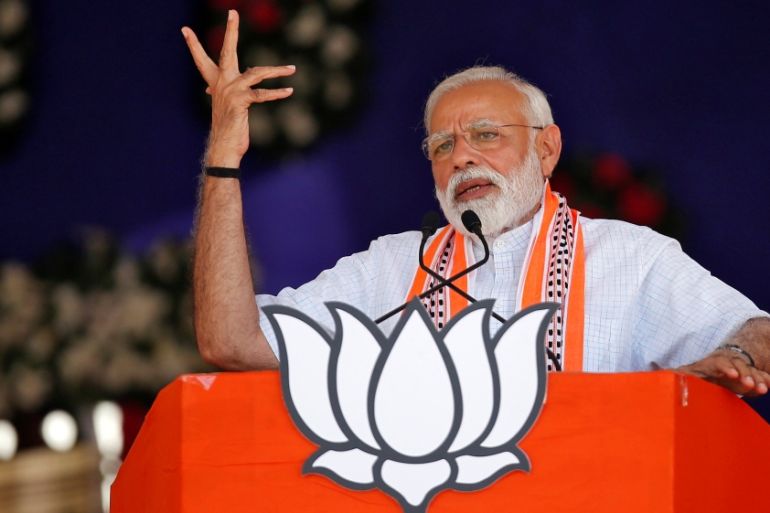
The BJP's political design built on the notion of cultural nationalism, and politically more overtly expressed in the form of unapologetically Hindutva represented by charismatic leadership of Narendra Modi is largely aimed to persuade India's Hindu majority that they're not Bihari or Bengali, Brahmin or Yadav, Tamil or Hindi speaking but Hindu first in their very origin, identity and understanding.
His contribution can be viewed through many different lenses—as a politician, author, thinker, public intellectual and organisational leader. But perhaps one of the most enduring dimensions is his role as a mentor and guide who has helped create platforms for young people, intellectuals and policy thinkers to interact and develop leadership capabilities
Instead of calling the proposed facilities “free coaching centres,” the government could name them “Skill Enable Centres, or Yuva Saksham Kendras” etc, reflecting a broader and more empowering purpose. The term “coaching” suggests a narrow focus on clearing examinations, whereas Skill Enable Centres could combine exam preparation with AI literacy, communication, critical thinking, career counselling, entrepreneurship and practical vocational training. Such centres would help Gen Z prepare not only for government vacancies but also for opportunities in emerging industries, start-ups and self-employment. The new identity would underline that the initiative is an investment in young people’s capabilities rather than simply a free service, turning each centre into a gateway to lifelong learning, employability and confidence.
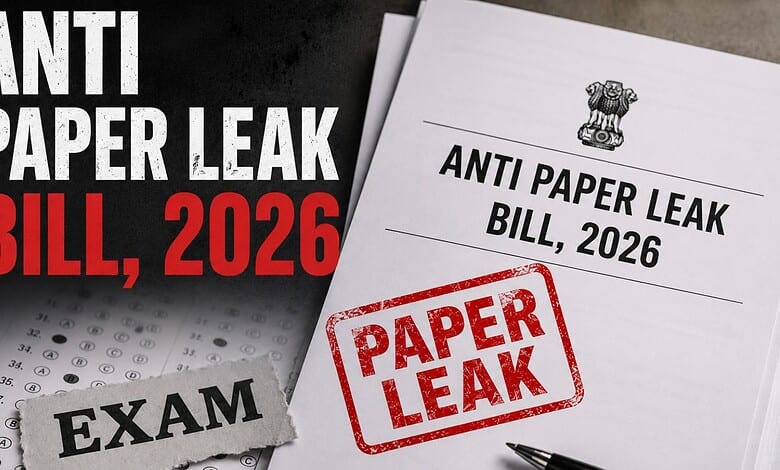
A dedicated National Examination Security Command Centre could monitor all major examinations simultaneously, identify vulnerabilities, and coordinate with law enforcement agencies whenever suspicious activity is detected. Public awareness is equally important. Students must understand that purchasing leaked papers is not a shortcut to success but participation in organized crime that destroys meritocracy. Parents, coaching institutes, and educational institutions should actively promote ethical examination practices and discourage any attempt to seek unfair advantage.
India's defence exports stood at just ₹686 crore in FY 2013-14. By FY 2024-25, defence exports had reached a record ₹23,622 crore, representing an increase of more than 34 times in a decade. India's defence exports reached another record of ₹38,424 crore in FY 2025-26, reflecting a growth of more than 62% over the previous year. This demonstrates increasing global confidence in Indian defence products and technologies.
Gen Z protests have shaken Sri Lanka, Bangladesh and Nepal in recent years — but not India. India’s Gen Z is busy in Nation building. India has the world's largest youth population. About 377 million Indians — some 27% of the population — belong to Generation Z, a term referring to people born roughly between 1997 and 2012. It's a demographic that will play a decisive role in shaping the country's democratic future.
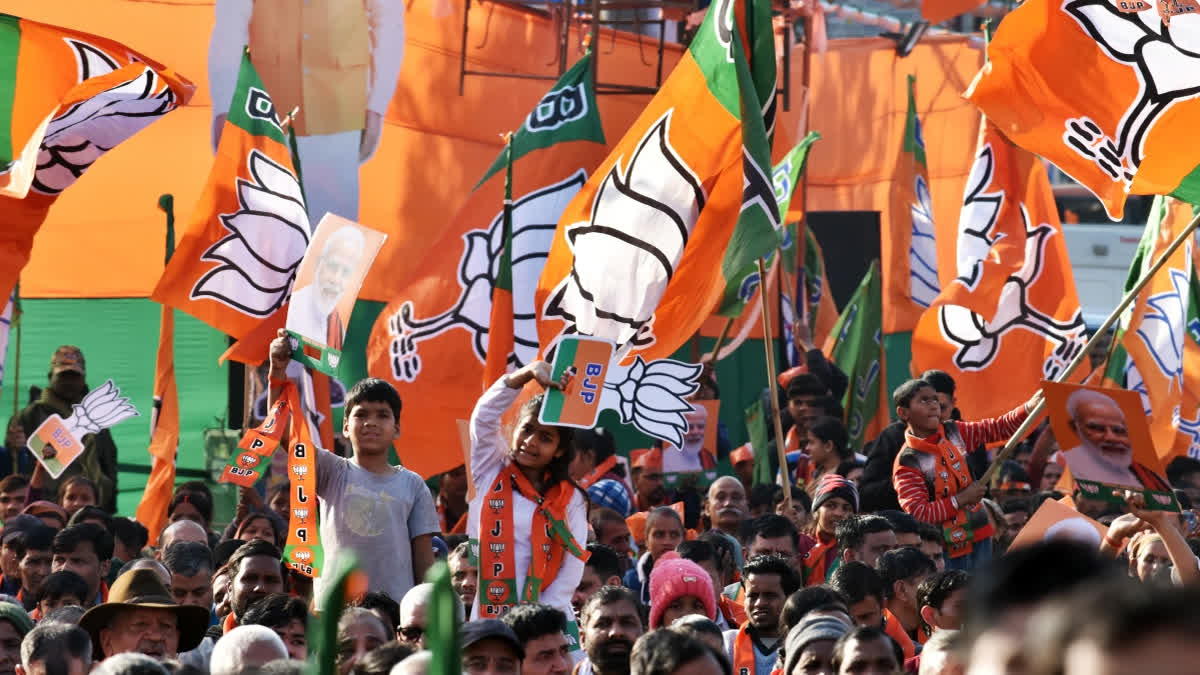
The journey of the Bharatiya Janata Party (BJP) over the past 47 years stands as one of the most remarkable success stories in Indian politics. From a modest beginning in 1980 to becoming the most dominant political force in the country, the BJP’s rise reflects resilience, strategic leadership, and a strong ideological foundation.
In South India, the BJP has traditionally held a strong foothold only in Karnataka. However, in states like Telangana and Kerala, the party has secured double-digit vote shares, signaling potential for future growth.
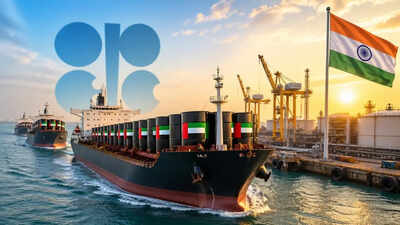
The UAE announced on Tuesday that it would exit OPEC and the wider OPEC+ group, effective May 1, in what could be a significant blow to the cartel's control over prices, long led in practice by Saudi Arabia. The shock announcement comes after the UAE was the target of missile and drone attacks for weeks by fellow OPEC member Iran.


)