BNN Summary
To effectively challenge the Bharatiya Janata Party (BJP), the Indian National Congress must embrace a collaborative strategy, shedding its 'insecure elder sibling' approach. As the largest opposition party, Congress holds significant influence but can strengthen the broader opposition by supporting regional parties and focusing on collective action rather than insisting on leadership in every instance. This shift would foster greater unity and leverage diverse strengths across India's political landscape.
In-Depth Analysis
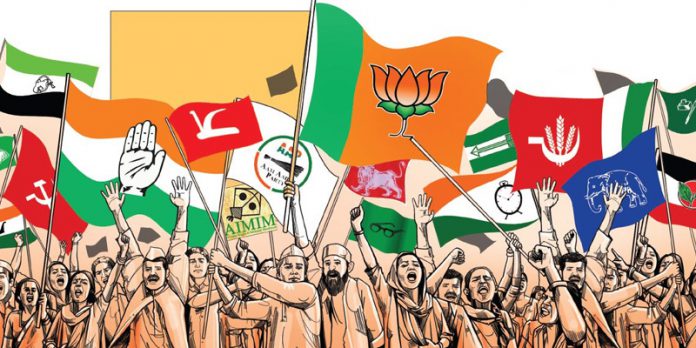
The Indian political arena is currently dominated by discussions surrounding the opposition's strategy to counter the formidable electoral machine of the Bharatiya Janata Party (BJP). A critical perspective emerging suggests that the Indian National Congress, while undeniably the largest opposition party, need not always assert leadership across all fronts to achieve its objective of defeating the BJP. Instead, a more nuanced and collaborative approach could prove significantly more effective, allowing the Congress to leverage its substantial base while empowering regional allies.
The notion of the Congress behaving like an 'insecure elder sibling' highlights a core challenge within the opposition's dynamics. This implies a tendency to insist on a pre-eminent position in all alliances and electoral understandings, potentially stemming from its historical legacy as India's dominant political force. However, in the contemporary multi-polar political landscape, such an insistence can inadvertently alienate smaller, yet electorally crucial, regional parties. These regional outfits often possess deep local roots and significant influence in their respective states, areas where the Congress's presence might be comparatively weaker or undergoing revival.
By adopting a collaborative mindset, Congress can solidify its position as a central pillar of the opposition without necessarily demanding the top spot in every partnership. This strategy involves recognizing and respecting the strengths of regional parties, allowing them to take the lead in states where they are dominant. For instance, in states where parties like the Samajwadi Party, Trinamool Congress, or Dravida Munnetra Kazhagam (DMK) hold sway, the Congress could play a supportive role, contributing its national presence and ideological framework while avoiding direct competition that could split the anti-BJP vote. Such a deferential approach, far from diminishing Congress's stature, would demonstrate strategic maturity and a genuine commitment to broader opposition unity.
The benefits of such a collaborative framework are manifold. Firstly, it would enable the opposition to present a truly united front, which is crucial for challenging the BJP's narrative of a fragmented opposition. A collective leadership, comprising various regional strongmen and the Congress, would broaden the appeal of the opposition, reaching diverse demographics and geographic regions more effectively. Secondly, it allows for a more efficient allocation of resources and efforts, with each party focusing on its areas of strength, thereby maximizing electoral outcomes. This means Congress could concentrate on rejuvenating its own cadres and voter base in states where it has a direct fight with the BJP, while simultaneously supporting allies elsewhere.
Historically, coalition politics in India has shown that while difficult, successful alliances often involve compromises on leadership and seat-sharing. The era of single-party dominance has largely receded, making multi-party cooperation a pragmatic necessity. The Congress, with its national footprint and ideological moorings, is uniquely positioned to act as a fulcrum for such an alliance. Its role would be less about dictating terms and more about facilitating dialogue, building consensus, and articulating a common minimum program that resonates with the electorate's concerns regarding economic disparities, social justice, and democratic values.
Ultimately, the defeat of the BJP is a monumental task that requires a concerted, collective effort. For the Congress to achieve its long-term goals and regain significant political ground, it must evolve beyond the instincts of an 'insecure elder sibling'. Embracing a strategy of strategic collaboration and mutual respect with other opposition parties is not a sign of weakness, but a testament to political sagacity and a clear-eyed understanding of the current political realities. This path promises not only a more potent challenge to the ruling party but also a healthier, more inclusive future for Indian democracy where diverse voices are heard and represented within a united opposition front.
How do you feel about this story?