BNN Summary
The Modi government is reportedly weighing a renewed parliamentary push for a delimitation exercise, seizing on existing fragmentation within the Opposition's I.N.D.I.A. bloc. This move could significantly alter political landscapes by redrawing electoral constituencies and reallocating parliamentary seats, with profound implications for the balance of power between India's northern and southern states ahead of future general elections.
In-Depth Analysis
The Indian political arena is abuzz with speculation as the Modi government reportedly contemplates a renewed legislative push for a nationwide delimitation exercise. This consideration comes at a strategic juncture, coinciding with visible disarray and internal rifts within the Opposition's I.N.D.I.A. bloc. The timing suggests a calculated move by the Centre to capitalize on the perceived weakness of its political adversaries, potentially paving the way for a significant restructuring of parliamentary representation.
Delimitation, at its core, is the process of redrawing boundaries of Lok Sabha (parliamentary) and state assembly constituencies to ensure that each constituency has roughly the same population size, thereby guaranteeing equal representation. It is carried out by an independent Delimitation Commission, whose orders are final and cannot be challenged in any court of law. The exercise aims to rectify population imbalances that naturally occur over time due to demographic changes, ensuring that the principle of 'one person, one vote' is upheld across the nation.
Historically, India has seen several delimitation exercises, with the last major one completed in 2008 based on the 2001 census. However, a constitutional amendment, specifically the 84th Amendment Act of 2001, froze the allocation of seats in the Lok Sabha and state assemblies until the first census conducted after 2026. This freeze was primarily implemented to incentivize states to adopt population control measures without the fear of losing political representation. The rationale was that states successfully controlling population growth should not be penalized by having their parliamentary seats reduced, while states with higher population growth might gain more seats. This freeze is set to expire in 2026, making the upcoming period a critical window for a potential new delimitation process.
Should the government initiate this process, it would involve establishing a new Delimitation Commission, which would then undertake the arduous task of redrawing constituency boundaries based on the latest available census data, likely the 2021 census, once its full results are formally released and accepted. The implications of such an exercise are far-reaching and complex, touching upon the delicate balance of federalism and political power.
One of the most contentious aspects of a new delimitation would be its impact on the representation of southern Indian states. States like Kerala, Tamil Nadu, Andhra Pradesh, and Karnataka have been notably successful in implementing population control policies over the past few decades. Consequently, their population growth rates have been significantly lower compared to states in northern India, such as Uttar Pradesh, Bihar, and Madhya Pradesh. A delimitation based on current population figures, without special provisions, would inevitably lead to a reduction in the number of Lok Sabha seats for southern states and a corresponding increase for northern states. This prospect has long been a source of apprehension for southern political leaders, who view it as a 'penalty' for their successful demographic management and a threat to their political voice in the national parliament. They argue that it would fundamentally alter the existing power dynamics, giving a disproportionate advantage to states with higher population densities and potentially undermining the federal structure.
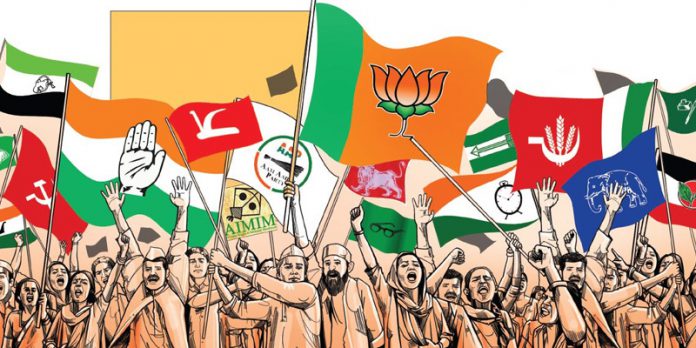
For the ruling Bharatiya Janata Party (BJP), pushing for delimitation now could be a strategic move to consolidate its electoral strength. Northern states, which have seen considerable population growth, also constitute a significant portion of the BJP's traditional voter base. An increase in seats from these regions could bolster the party's parliamentary majority in the long run, particularly in the run-up to the 2029 general elections. The current political climate, marked by perceived fractures within the I.N.D.I.A. bloc, provides an opportune moment for the government to table such a potentially divisive but impactful legislative proposal. The Opposition, still grappling with internal contradictions, leadership questions, and varying regional priorities, might find it challenging to present a united front against a bill that could fundamentally reshape India's electoral map.
The 'chaos' within the I.N.D.I.A. bloc, as observed by political analysts, manifests in several ways: ongoing disagreements over seat-sharing arrangements in various states, a lack of cohesive strategy on national issues, and internal power struggles among constituent parties. These fissures could significantly impede their ability to mount a strong, unified opposition to a delimitation bill. The government, by contrast, could portray the exercise as a necessary constitutional duty to ensure fair representation based on demographic realities. The debate around delimitation is thus not merely administrative; it is deeply political, intertwining constitutional principles with electoral strategy and regional sensitivities. Any attempt to advance such legislation will undoubtedly ignite intense parliamentary debates and significant public discourse, shaping the contours of Indian politics for decades to come.
The constitutional framework for delimitation is rooted in Article 82, which mandates the readjustment of Lok Sabha constituencies after every census. While previous amendments paused this, the approaching 2026 deadline reopens the possibility. The government's decision to proceed would require careful navigation of the intense political opposition, especially from states that stand to lose representation. However, with the Opposition's current disunity, the Centre might see a window to press ahead, aiming to set the stage for a new political reality post-2026, impacting general elections far beyond the immediate future.
How do you feel about this story?