BNN Summary
West Bengal Minister Dilip Ghosh has controversially declared the INDIA bloc to be 'non-existent,' alleging that Trinamool Congress (TMC) supremo Mamata Banerjee was compelled to attend a recent alliance meeting following her party's electoral setbacks. Ghosh's remarks underscore the perceived fragilities within the opposition coalition as leaders convene to strategize after the general elections, highlighting internal discord and competitive political narratives.
In-Depth Analysis
West Bengal Minister Dilip Ghosh has ignited a political firestorm with his assertion that the INDIA (Indian National Developmental Inclusive Alliance) bloc is 'non-existent,' a statement made as Trinamool Congress (TMC) Chairperson Mamata Banerjee attended a crucial meeting of the opposition alliance. Ghosh, a prominent figure from the Bharatiya Janata Party (BJP) in West Bengal, contended that Banerjee's participation in the meeting was a direct consequence of her party's performance in the recently concluded general elections, implying it was a move borne out of political necessity rather than genuine alliance solidarity.
Speaking to the media, Ghosh launched a scathing critique of the INDIA bloc, characterizing it as a loose amalgamation lacking true cohesion. 'The INDIA bloc is non-existent,' Ghosh stated unequivocally, further alleging, 'Mamata Banerjee was forced to attend the meeting after her election loss.' This remark points to a narrative often pushed by rival parties: that the INDIA bloc, formed with the ambitious goal of challenging the incumbent BJP-led National Democratic Alliance (NDA), is plagued by internal contradictions and opportunistic alliances. Ghosh's comments specifically highlight the perceived vulnerability of the TMC following the election results, suggesting that its leader's engagement with the INDIA bloc is a strategic retreat rather than a demonstration of strength or unified opposition.
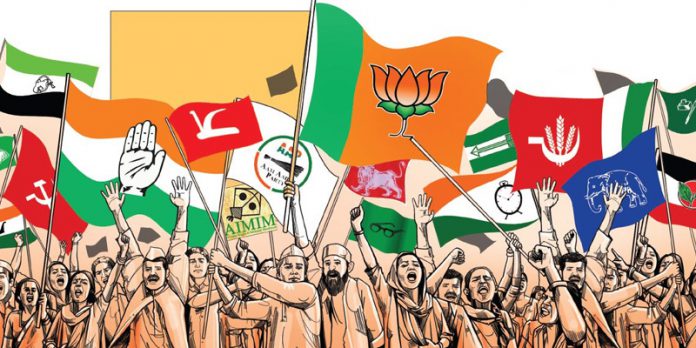
The context of Ghosh's statement is crucial. The INDIA bloc, comprising a diverse array of opposition parties including the Indian National Congress, Trinamool Congress, Dravida Munnetra Kazhagam (DMK), and others, was formed with the primary objective of presenting a united front against the BJP. Its formation was seen as a significant political development, aimed at consolidating anti-BJP votes and offering an alternative vision for the nation. However, the path of such grand alliances in India has historically been fraught with challenges, including ideological differences, conflicting regional aspirations, and leadership tussles. Ghosh's remarks capitalize on these inherent difficulties, seeking to undermine the bloc's credibility and unity, particularly in the aftermath of a national election where the alliance's collective performance was under intense scrutiny.
In West Bengal, the political landscape is particularly charged. The TMC, led by Mamata Banerjee, remains a formidable force, having dominated state politics for over a decade. However, the BJP has steadily increased its footprint in the state, emerging as the principal opposition. The recent general elections saw both parties engage in a fierce contest, with the results having significant implications for their respective trajectories. Ghosh, as a minister in the state and a prominent BJP leader, has a vested interest in portraying the TMC and its allies as weakened and fractured. His comments, therefore, serve a dual purpose: to delegitimize the INDIA bloc nationally and to amplify the narrative of TMC's supposed decline in its home state.
Mamata Banerjee's decision to attend the INDIA bloc meeting, despite Ghosh's claims, can be interpreted in several ways. On one hand, it could be a reaffirmation of her commitment to the broader opposition's cause, demonstrating that the TMC, even after facing electoral challenges, remains a key player in national politics. On the other hand, it also allows her to maintain a presence on the national stage and participate in strategic discussions that could shape the future political discourse. Regardless of the underlying motivations, her attendance provides a counter-narrative to Ghosh's assertions of her being 'forced' into the engagement.
The accusations of the INDIA bloc being 'non-existent' also touch upon the perennial debate about the effectiveness of multi-party alliances in India. While some alliances have successfully unseated powerful incumbents, others have crumbled under the weight of internal strife. Ghosh's comments tap into this historical skepticism, attempting to cast a shadow over the bloc's future prospects. The leaders of the INDIA bloc now face the critical task of not only regrouping and analyzing their electoral performance but also projecting an image of unwavering unity and purpose, especially in the face of such pointed criticisms from their political adversaries. The coming months will reveal whether Ghosh's pronouncements were merely political rhetoric or a prescient observation of the alliance's enduring challenges. The internal dynamics, strategy, and public perception of the INDIA bloc will be crucial in determining its long-term viability and its ability to effectively counter the ruling dispensation. The political discourse surrounding the alliance will undoubtedly continue to be shaped by such sharp exchanges, underscoring the high stakes involved in India's vibrant democratic arena.
How do you feel about this story?