BNN Summary
The INDIA Bloc, a broad coalition of opposition parties, faces the critical challenge of transforming widespread public anger into concrete political momentum. Drawing lessons from recent electoral outcomes, including the significant defeat of Trinamool Congress chief Mamata Banerjee in a West Bengal Assembly election, the alliance aims to unify disparate voices of discontent. Success hinges on overcoming internal divisions, effectively addressing core public grievances, and presenting a cohesive alternative to the ruling establishment, as it strives to translate dissatisfaction into electoral gains.
In-Depth Analysis
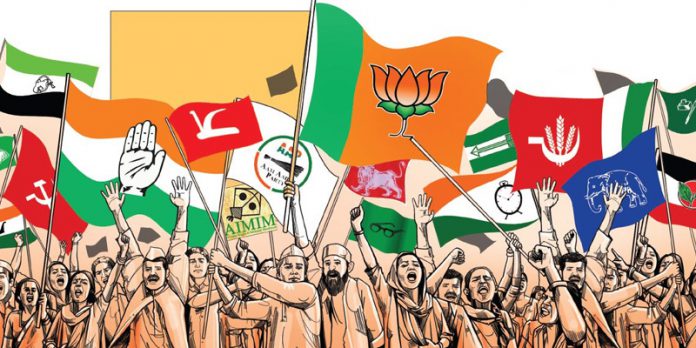
The Indian National Developmental Inclusive Alliance (INDIA) Bloc, an ambitious coalition of opposition parties, finds itself at a pivotal juncture, seeking to consolidate diverse streams of public discontent into a formidable political force. The alliance's primary objective is to channel perceived public anger and frustration against the incumbent government into tangible electoral momentum across the nation.
Public anger, a multifaceted phenomenon, often stems from a confluence of socio-economic issues. Persistent inflation, particularly affecting essential commodities, continues to burden households across income strata. The challenge of unemployment, especially among the youth, remains a significant concern, contributing to widespread economic anxiety. Furthermore, issues related to governance, social harmony, and perceived democratic backsliding often fuel public dissatisfaction, creating fertile ground for opposition narratives. The INDIA Bloc aims to articulate these grievances coherently and present itself as a viable alternative capable of addressing these deep-seated problems.
Lessons from recent electoral dynamics highlight the imperative for introspection and strategic recalibration within the opposition. The significant defeat of Trinamool Congress (TMC) chief Mamata Banerjee in a recent West Bengal Assembly election, as noted by observers, served to 'burst the bubble of arrogance' among certain political factions. While the context of this specific defeat needs to be understood within its regional complexities, it underscores a broader lesson for all opposition parties: public sentiment can be fickle, and even strong regional leaders are not immune to electoral setbacks if their strategies fail to resonate or if public mood shifts. For the INDIA Bloc, this serves as a potent reminder that unity and a clear agenda are paramount, and overconfidence can be a significant pitfall.
The INDIA Bloc's strategy revolves around several key pillars. Firstly, it seeks to present a united front against the ruling dispensation, thereby overcoming the historical fragmentation that has often plagued opposition efforts. This involves meticulous seat-sharing negotiations, a process fraught with challenges given the diverse regional strengths and aspirations of the constituent parties. Successful seat adjustments are crucial to avoid vote splitting and maximize the alliance's electoral prospects in a first-past-the-post system.
Secondly, the alliance endeavors to craft a compelling narrative that directly addresses the public's pain points. This includes developing common minimum programs focused on economic revival, job creation, social welfare, and protecting constitutional values. By presenting a shared vision, the INDIA Bloc hopes to offer voters a clear choice and a credible alternative, moving beyond mere criticism of the incumbent to proposing actionable solutions.
However, the path to converting diffuse public anger into concentrated electoral support is fraught with challenges. The INDIA Bloc comprises parties with varying ideological stances, regional priorities, and leadership ambitions. Reconciling these differences, particularly on sensitive issues, requires continuous dialogue and compromise. Questions of leadership within the alliance, while often downplayed publicly, can also become points of friction, potentially undermining the unity that is central to their appeal. Furthermore, effectively communicating their message across diverse linguistic and cultural landscapes, and countering the narrative propagated by a well-resourced incumbent, demands sophisticated communication strategies and robust grassroots mobilization.
Ultimately, the success of the INDIA Bloc hinges on its ability to not only galvanize public anger but also to sustain it, channel it constructively, and translate it into a decisive mandate. This requires not just political acumen but also genuine efforts to connect with the electorate, understand their evolving aspirations, and present a united, coherent, and trustworthy alternative capable of leading the nation.
How do you feel about this story?