Image: Serper
BNN Summary
Chinese President Xi Jinping, Russian President Vladimir Putin, and Indian Prime Minister Narendra Modi convened in New Delhi for a pivotal BRICS Summit. Amid shifting trade dynamics under Donald Trump's return to international prominence, member nations formally adopted the New Delhi Declaration to bolster economic cooperation, local currency trade, and strategic autonomy across emerging market economies.
In-Depth Analysis
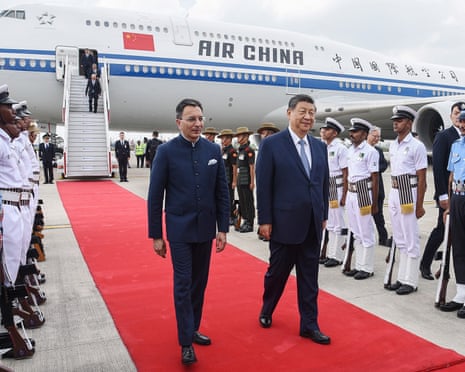
Global leaders from the BRICS bloc of emerging economies gathered in New Delhi for a high-stakes summit, marking a critical moment in contemporary international relations. Hosted by Indian Prime Minister Narendra Modi, the summit brought together key world figures, including Chinese President Xi Jinping and Russian President Vladimir Putin, as member states sought to fortify economic resilience and deepen diplomatic ties in an increasingly fragmented global landscape.
The high-profile summit culminated in the formal adoption of the landmark New Delhi Declaration. This joint document outlines a comprehensive framework aimed at expanding intra-BRICS trade, enhancing supply chain security, accelerating financial integration, and pushing for long-overdue reforms in global multilateral institutions such as the United Nations and the International Monetary Fund. The declaration emphasizes the necessity of fostering a multipolar world order where developing nations exercise greater influence over global economic governance.
Shifting Geopolitical Realities
A major backdrop to the deliberations was the shifting international posture of the United States under Donald Trump's renewed foreign policy agenda. With Washington doubling down on tariff threats, protectionist trade policies, and selective disengagement from international agreements, major non-Western powers are rapidly recalibrating their strategic posture. For countries like China, India, and Russia, the summit provided an indispensable platform to hedge against global economic uncertainty and construct durable financial networks less vulnerable to unilateral sanctions or economic leverage.
President Xi Jinping highlighted the critical importance of economic solidarity among developing nations, stressing that unilateral trade barriers and economic fragmentation threaten long-term global growth. In his addresses during the summit sessions, Xi advocated for deeper cooperation in high-tech innovation, digital economy infrastructure, green energy transitions, and cross-border trade settlements in local currencies. China's vision aligns closely with the broader BRICS agenda of reducing reliance on traditional Western-dominated financial architectures.
Strengthening Bilateral and Multilateral Ties
The presence of President Xi Jinping in New Delhi also provided a significant venue for delicate bilateral diplomatic engagements. Relations between China and India have seen gradual stabilization after years of border tensions, with both Beijing and New Delhi recognizing the mutual necessity of maintaining economic stability and regional calm. Prime Minister Narendra Modi emphasized India's strategic autonomy, balancing robust economic ties with Western partners alongside active leadership in Global South institutions like BRICS.
Similarly, Russian President Vladimir Putin used the summit to demonstrate Moscow's ongoing integration with major Asian markets amidst Western sanctions. The diplomatic synergy displayed among the three major leaders underscored how the BRICS group has evolved from an informal economic dialogue into a major diplomatic force capable of reshaping global trade routes and geopolitical priorities.
Expanding Influence in the Global South
As BRICS continues to expand its footprint with new member states and partner nations, the New Delhi summit demonstrated the growing weight of the Global South on the international stage. By cementing consensus around trade diversification, energy cooperation, and institutional reform, Xi Jinping, Modi, and Putin demonstrated that alternative mechanisms of global governance are not only viable but rapidly maturing in response to global geopolitical volatility.
How do you feel about this story?
Discussion
No comments yet. Be the first to share your thoughts.
Join the discussion
Sign in to share your thoughts on this story.