BNN Summary
Following high-profile political contests in regions like Nandigram, recent assembly bypolls in Rejinagar witnessed minimal resistance from opposition parties. Rivals have strongly alleged severe police bias and intimidation, forcing them to retreat from active campaigning and polling monitoring.
In-Depth Analysis
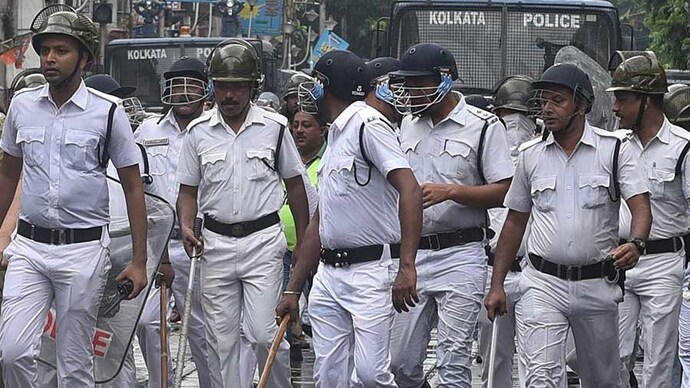
The political landscape of West Bengal continues to experience high turbulence following recent assembly bypoll elections. In the constituency of Rejinagar, the Bharatiya Janata Party (BJP) faced notably little resistance from its political rivals, sparking widespread allegations of administrative partisanship and law enforcement bias. Opposition parties claimed that local law enforcement machinery actively favored the ruling dispensation, creating an asymmetric electoral environment that severely constrained fair political competition.
Political analysts and local observers noted that the dynamics in Rejinagar closely mirrored previous high-stakes electoral battles in the state, most notably the intense political showdowns witnessed in Nandigram during earlier election cycles. However, unlike the fierce street-level resistance and high voter mobilization seen in those historical contests, the atmosphere in Rejinagar was characterized by a sudden and conspicuous retreat of opposition cadres.
According to leaders from various opposition factions, party workers and polling agents were subjected to systematic intimidation days before voting commenced. Several candidates alleged that local police authorities turned a blind eye to acts of vandalism and threats directed against opposition campaigners. Furthermore, complaints filed with the state election commission regarding the arbitrary detention of local leaders reportedly yielded little relief, leaving the political opposition demoralized and effectively sidelined.
'The entire apparatus of the state administration was deployed to ensure a smooth, unchallenged path for our opponents,' stated a prominent opposition district leader who requested anonymity out of safety concerns. 'When the protectors of law decide to become political participants, fair elections become an absolute impossibility. Our workers were threatened with false criminal cases if they dared to step out of their homes on polling day.'
In response to these allegations, representatives of the ruling party strongly dismissed the claims, characterizing them as baseless excuses concocted by desperate political entities facing imminent electoral rejection. Ruling party spokespersons asserted that the lack of opposition mobilization was not the result of intimidation or administrative bias, but rather a reflection of complete grassroots alienation and a lack of organizational depth among rival factions.
'The people of Rejinagar have rejected the politics of negativity and division,' a senior ruling party functionary remarked. 'The opposition is simply crying foul because they failed to connect with the electorate and lacked the necessary ground support to put up a meaningful contest. Blaming the police is an old habit when political defeat stares them in the face.'
Independent election monitors and civil society groups have expressed deep concern over the shrinking democratic space and the growing frequency of uncontested or low-resistance electoral outcomes in various pockets of West Bengal. Observers emphasize that a robust multi-party democracy requires not only the holding of periodic elections but also the guaranteed freedom for all political actors to campaign, organize, and monitor the electoral process without fear of reprisal or systemic disadvantage.
As the final tallying of votes approaches, the controversy surrounding the Rejinagar bypoll is expected to remain a prominent flashpoint in state politics. Opposition parties have indicated plans to approach higher judicial authorities and central election observers with formal memorandums detailing the alleged instances of police bias and voter suppression. Meanwhile, civil society organizations continue to call for comprehensive electoral reforms to restore public confidence in the neutrality of grassroots administrative and security frameworks across the state.
How do you feel about this story?
Discussion
No comments yet. Be the first to share your thoughts.
Join the discussion
Sign in to share your thoughts on this story.