BNN Summary
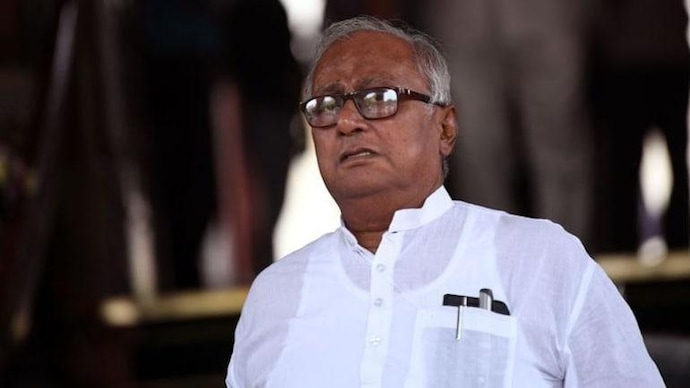
Trinamool Congress leader Saugata Roy has defended Rahul Gandhi over his controversial mimicry of Prime Minister Narendra Modi, asserting that no insult was intended and politics should accommodate humour. The incident has intensified political tensions between the ruling administration and opposition parties.
In-Depth Analysis
The political landscape in India witnessed a fresh wave of debate regarding parliamentary decorum and freedom of expression, following remarks by Trinamool Congress (TMC) veteran and Member of Parliament Saugata Roy. Weighing in on the ongoing controversy surrounding Congress leader Rahul Gandhi's alleged mimicry of Prime Minister Narendra Modi, Roy stated that the action did not constitute an insult and emphasized that there should always be adequate room for humour and lightheartedness in political discourse.
Speaking to mediapersons on the sidelines of parliamentary proceedings, Saugata Roy elaborated on his perspective, suggesting that satire and theatrical expressions have historically been a part of democratic traditions across the globe. He noted that politicians should not take themselves overly seriously and that satirical expressions, when executed without malicious intent, should be accepted in good spirit. The TMC leader's remarks quickly drew significant media attention, given the high-stakes political environment and the sharp polarisation between the ruling Bharatiya Janata Party (BJP) and the opposition INDIA bloc.
The controversy originally erupted when Rahul Gandhi, during an informal interaction or opposition gathering, purportedly mimicked Prime Minister Narendra Modi's speaking style and mannerisms. The video clip of the interaction circulated rapidly across various social media platforms, triggering fierce reactions from the ruling establishment. Prominent BJP leaders and supporters condemned the act, arguing that it demonstrated a fundamental lack of respect for the high office of the Prime Minister and lowered the dignity of parliamentary democracy. Critics demanded an unconditional apology from the senior Congress leader, claiming that the mimicry crossed the line from political criticism into personal ridicule.
Despite the intense backlash from the treasury benches, several opposition figures rallied to defend Rahul Gandhi, arguing that the ruling party was hypersensitive and attempting to divert public attention away from pressing socio-economic issues, inflation, and unemployment. Saugata Roy's intervention added a nuanced dimension to the debate, as the TMC, despite being a key constituent of the opposition alliance, often maintains an independent line on parliamentary strategies and public messaging. By advocating for humour in politics, Roy sought to de-escalate the rhetoric, framing the incident as an innocuous form of political theatrics rather than a grave breach of parliamentary etiquette.
Political analysts have pointed out that the mimicry row highlights the deepening trust deficit and the frequent breakdown of bipartisan communication within the Indian parliament. Over recent sessions, both the ruling coalition and opposition parties have locked horns over multiple issues, ranging from legislative procedures to security lapses and investigative agency actions. Incidents like the mimicry controversy often serve as flashpoints, consuming valuable legislative time and dominating news cycles at the expense of substantive policy debates.
As the political fallout from the episode continues to unfold, civil society members and parliamentary watchdogs have expressed concern over the declining standards of debate in public life. While proponents of free speech argue that satire is an essential tool for holding power to account, defenders of institutional decorum maintain that constitutional offices command a certain gravity that must be preserved by all elected representatives, regardless of their political affiliation. Saugata Roy's defence of humour underscores the ongoing ideological tug-of-war over how political adversaries should interact inside and outside the temple of democracy.
How do you feel about this story?
Discussion
No comments yet. Be the first to share your thoughts.
Join the discussion
Sign in to share your thoughts on this story.