New Delhi, India
Live Updates
Home›Editorial›The Looming Crisis Of Declining Water Tables In Punjab
Editorial

The Looming Crisis Of Declining Water Tables In Punjab

b
Written ByBNN Opinion Desk

Saturday, 17 October 2026 at 01:12 am

AI-Assisted Reporting · Reviewed by our Editorial Team
The Looming Crisis Of Declining Water Tables In Punjab

BNN Summary

Punjab is facing an escalating environmental crisis as its groundwater levels continue to plummet at an alarming average rate of 0.43 metres per year over the past two decades. This severe depletion highlights deep-rooted agricultural and policy challenges in the region, threatening long-term ecological stability and food security unless comprehensive water conservation reforms are urgently implemented to reverse the destructive trend.

In-Depth Analysis

Punjab, widely recognized as the food bowl of India and a vital contributor to the nation's central food grain pool, is currently grappling with a severe environmental and agricultural crisis. Over the past two decades, the state's groundwater level has been declining at an average rate of 0.43 metres per year. This persistent and accelerating depletion poses catastrophic challenges for the local water table, threatening not only agricultural productivity but also the fundamental livelihoods of millions of residents who depend on subterranean water sources for domestic and farming needs.

Historically, the green revolution transformed Punjab into a powerhouse of agricultural output, particularly in the cultivation of water-intensive crops such as paddy. However, the heavy reliance on tube wells to irrigate these crops, driven by free or heavily subsidized electricity policies, has encouraged unregulated and often wasteful extraction of groundwater. Monsoons and natural recharge mechanisms have proven entirely inadequate in compensating for the massive volume of water being pumped out annually. As the water table sinks deeper, farmers are forced to invest heavily in lowering submersible pumps deeper into the earth, escalating debt burdens and creating a vicious economic cycle.

Environmental experts and agricultural scientists have repeatedly warned that the continuation of current farming practices will push the region past a point of irreversible ecological damage. The overexploitation of aquifers not only reduces water availability but also degrades water quality, introducing heavy metals and contaminants into the remaining subterranean reserves due to excessive depth and geological shifts. Addressing this multifaceted challenge requires a paradigm shift in agricultural policy, moving away from unviable cropping patterns toward diversified agriculture, micro-irrigation techniques, and effective rainwater harvesting systems.

Legislative measures and water preservation acts enacted in the past have yielded mixed results, often producing unintended consequences that complicate rural economies while failing to achieve desired conservation targets. For instance, restrictions on early paddy nurseries inadvertently altered sowing schedules, putting immense stress on power infrastructure during peak summer months without adequately curbing total water consumption. Policymakers face the delicate task of balancing urgent environmental conservation with the economic security of farming communities who are deeply resistant to abrupt shifts away from assured procurement crops like paddy and wheat.

To secure the future of Punjab, a collaborative effort involving state authorities, central agencies, and the farming community is indispensable. Comprehensive reforms must include robust financial incentives for crop diversification, aggressive promotion of direct seeded rice methods, and massive investments in canal irrigation infrastructure to reduce reliance on groundwater extraction. Without decisive and sustained intervention, the region risks turning its fertile plains into an arid landscape, undermining both regional prosperity and national food security.

How do you feel about this story?

Discussion

No comments yet. Be the first to share your thoughts.

Join the discussion

Sign in to share your thoughts on this story.

Sign In

More You Can Read

Election Commission Initiates Special Summary Revision of Electoral Rolls Across Seventeen Regions
Editorial

Election Commission Initiates Special Summary Revision of Electoral Rolls Across Seventeen Regions

The Election Commission of India has announced a special summary revision of electoral rolls covering 17 States and Union Territories. This administrative initiative serves as a crucial corrective measure aimed at cleaning up voter databases, removing discrepancies, including eligible new voters, and ensuring the absolute integrity of future democratic exercises by maintaining accurate, transparent, and updated electoral registers nationwide.

17 October 2026 at 01:12 amRead Story →
Clinic Conversations Transformed Into Engaging New Book
Editorial

Clinic Conversations Transformed Into Engaging New Book

Amedical practitioner has transformed ordinary, everyday interactions from a local clinic into a captivating new book. Rather than focusing solely on dramatic medical emergencies, the compilation highlights the nuanced, humorous, and deeply human conversations that occur during routine doctor-patient consultations. This unique literary project captures the authentic essence of daily clinical life, offering readers a refreshing glimpse into the profound connections formed in standard medical settings.

17 October 2026 at 01:11 amRead Story →
Election Commission Launches Special Electoral Roll Revision Across Seventeen States And Union Territories
Editorial

Election Commission Launches Special Electoral Roll Revision Across Seventeen States And Union Territories

The Election Commission has announced a Special Summary Revision of electoral rolls across 17 states and Union Territories. This administrative initiative is designed to enrol new eligible voters, rectify existing errors in voter records, and significantly improve the overall purity and accuracy of the democratic voter lists.

16 October 2026 at 10:08 amRead Story →
Election Commission Announces Special Summary Revision of Electoral Rolls Across 17 States and Union Territories
Editorial

Election Commission Announces Special Summary Revision of Electoral Rolls Across 17 States and Union Territories

The Election Commission of India has announced the schedule for the Special Summary Revision of electoral rolls across 17 states and Union Territories, including Punjab, commencing on November 2. The comprehensive exercise aims to update voter lists, enroll newly eligible electors, and purge inaccuracies ahead of upcoming democratic exercises. Citizens who attain the age of 18 by the qualifying date can submit applications for inclusion, while existing voters can rectify errors or record residential shifts through designated channels.

16 October 2026 at 10:07 amRead Story →
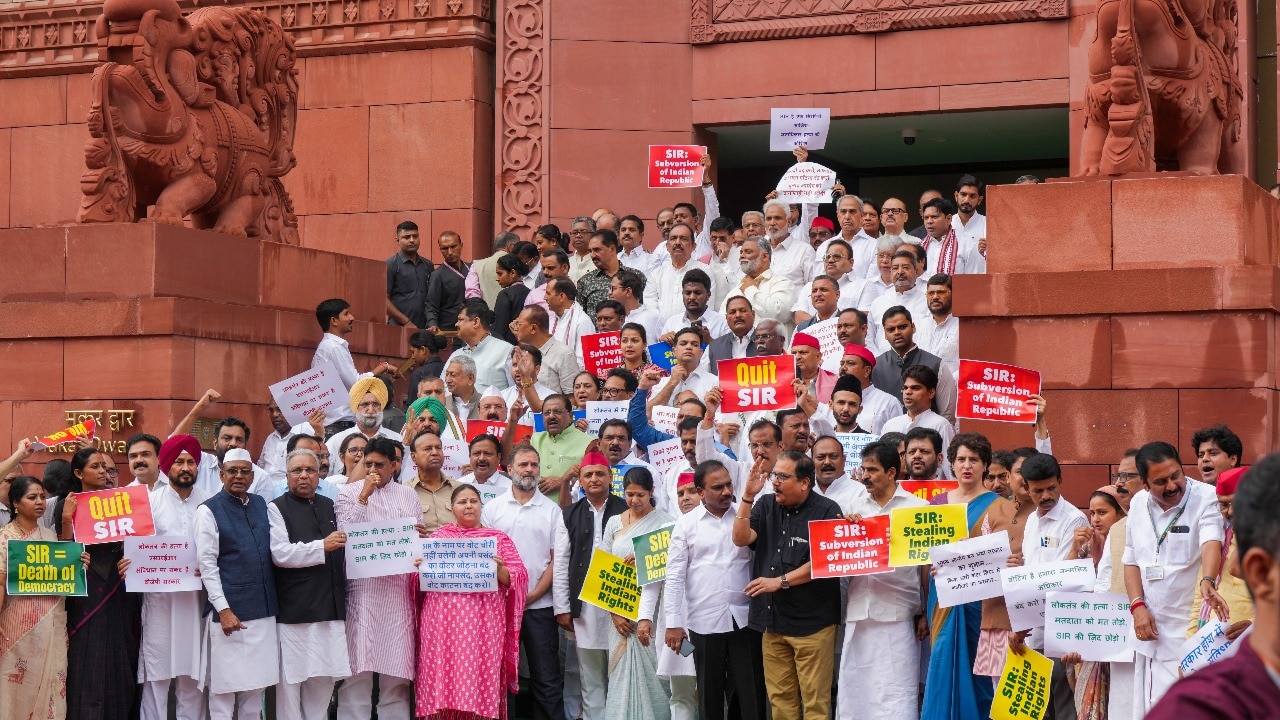
The Anatomy of a Localized Stir: Why Anti-SIR Agitations Failed to Build Nationwide Momentum
Editorial

The Anatomy of a Localized Stir: Why Anti-SIR Agitations Failed to Build Nationwide Momentum

What further diminished the credibility of the anti-SIR agitation was the ideological framing adopted by prominent figures and commentators associated with the broader movement. Rather than anchoring their critique entirely within domestic constitutional norms, several vocal activist factions drew explicit comparisons to external political upheavals. Until opposition parties pivot away from sensationalist posturing and re-anchor their strategy in grassroots, issue-based governance, hyper-localized agitations will continue to boomerang—further solidifying the government's political advantage.

16 October 2026 at 04:56 amRead Story →
New Strat360PL Report Outlines India's Strategic Road Map for Semiconductor Growth
Editorial

New Strat360PL Report Outlines India's Strategic Road Map for Semiconductor Growth

Strategic advisory firm Strat360 Private Limited has published a comprehensive report titled 'India's Electronics and Semiconductor Industry' in New Delhi. The publication charts a detailed pathway for the country to transition from assembly operations into a deeper, more self-reliant manufacturing powerhouse. The report evaluates critical policy measures, infrastructure advancements, and global supply chain shifts that position India as an emerging hub for advanced technology and semiconductor fabrication.

16 October 2026 at 03:42 amRead Story →