BNN Summary
An analytical examination of India's foreign policy challenges, focusing on its engagement with multilateral platforms like BRICS, the limitations imposed by domestic political agendas, and the urgent necessity for a comprehensive grand strategy to secure its position as a leading global power.
In-Depth Analysis
India currently finds itself at a critical juncture in its geopolitical trajectory, balancing rapid economic growth with complex regional and global security challenges. As international alliances shift and traditional multilateral institutions face unprecedented strain, New Delhi has increasingly leaned toward alternative platforms, most notably BRICS. However, analysts argue that India's diplomatic ambitions are frequently constrained by domestic political considerations and a perceived lack of a cohesive, long-term grand strategy.
The BRICS Dilemma and Multipolar Aspirations
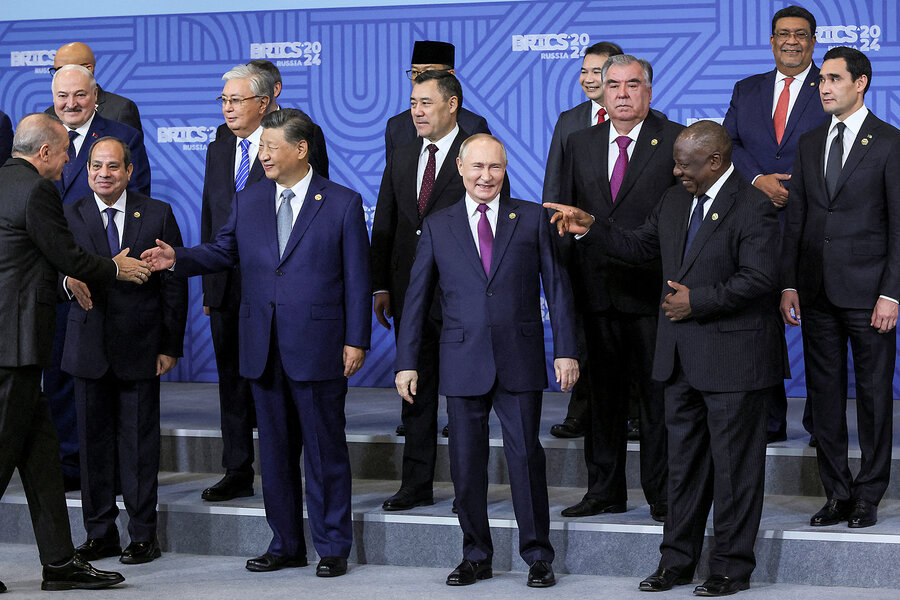
Participation in BRICS—comprising Brazil, Russia, India, China, and South Africa, alongside recent expansion members—offers New Delhi a platform to advocate for a multipolar world order. By engaging with these nations, India seeks to reform global governance structures, including the United Nations Security Council and international financial institutions. Yet, this engagement is fraught with internal contradictions. The dominant presence of China within the bloc poses a continuous strategic challenge for India, particularly given ongoing bilateral border tensions and Beijing's economic dominance.
Critics contend that India's approach to BRICS often oscillates between cautious participation and strategic hedging. While New Delhi emphasizes open trade, sustainable development, and sovereignty, the bloc is increasingly viewed by other members, notably Beijing and Moscow, as an anti-Western coalition. Aligning too closely with such a narrative could risk compromising India's deepening strategic partnerships with Western democracies, including the Quad alliance with the United States, Japan, and Australia.
Domestic Politics and Foreign Policy Ceilings
Foreign policy experts suggest that domestic political imperatives can inadvertently place a ceiling on India's global ambitions. When foreign policy decisions are heavily influenced by short-term electoral gains or nationalist rhetoric, the consistency required for a robust grand strategy can be compromised. A successful grand strategy demands bipartisan consensus, institutional depth, and the flexibility to adapt to shifting international realities without being constrained by domestic dogmas.
Moreover, economic nationalism can sometimes conflict with the imperatives of deeper global integration. While India has made significant strides in digital infrastructure, manufacturing incentives, and renewable energy, protectionist tendencies in certain sectors can hinder trade negotiations and alienate potential economic partners. For India to truly emerge as a pillar of global stability and growth, its economic policies must seamlessly align with its diplomatic outreach.
The Imperative for a Cohesive Grand Strategy
A true grand strategy requires the synchronization of diplomatic, economic, informational, and military instruments of statecraft toward a singular, long-term vision. India's strategic community has long debated the need to move beyond tactical responses to international crises and adopt a more proactive posture. This involves not only managing immediate threats in the immediate neighborhood but also securing critical supply chains, advancing technological self-reliance, and projecting soft power effectively.
As the international order enters a period of profound uncertainty, India's leaders face the task of defining the nation's role on the world stage with greater clarity. Whether through multilateral forums like BRICS or bilateral engagements across the globe, New Delhi must navigate these turbulent waters with strategic autonomy, ensuring that its domestic political frameworks elevate, rather than limit, its ascent as a global power.
How do you feel about this story?
Discussion
No comments yet. Be the first to share your thoughts.
Join the discussion
Sign in to share your thoughts on this story.