BNN Summary
The Madras High Court has strongly criticized the practice of elected members resigning purely to seek re-election, labeling it a mockery of democracy. While expressing serious concerns over the financial and administrative burden imposed by frequent bypolls, the court ultimately declined to stay upcoming elections for two assembly seats in Tamil Nadu, emphasizing the constitutional mandate of conducting timely polls.
In-Depth Analysis
The Madras High Court recently delivered a scathing critique regarding the practice of elected legislators resigning from their positions simply to seek re-election, characterizing the maneuver as a blatant 'mockery of democracy'. The judicial observations came during a crucial hearing concerning upcoming bypolls in the state of Tamil Nadu. Despite registering deep displeasure over the political tactics employed by certain lawmakers, the bench ultimately declined to grant a stay on the scheduled by-elections for the two vacant assembly seats.
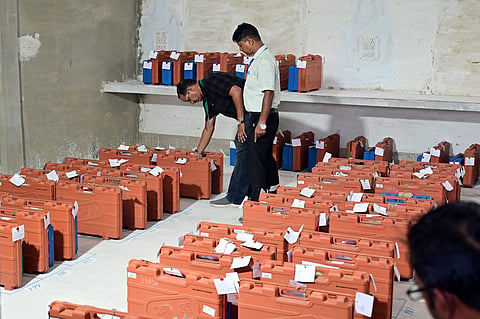
Legal experts and political analysts have long debated the implications of legislators stepping down mid-term to trigger fresh mandates. The court noted that such actions place an unwarranted financial strain on the public exchequer and disrupt administrative continuity. Organizing a by-election requires substantial deployment of security forces, administrative personnel, and financial resources, all of which are funded by taxpayers. When resignations are driven by political maneuvering rather than genuine public representation issues, it undermines the sanctity of the electoral process established under the Constitution of India.
During the proceedings, the bench deliberated extensively on whether the judiciary should intervene in the administrative timeline of the Election Commission of India. While acknowledging the ethical dilemmas raised by the petitioners, the court reiterated the established legal principle that the constitutional machinery must continue its course. Halting a scheduled election without compelling statutory grounds could create a dangerous precedent, potentially leading to administrative paralysis and uncertainty in governance. Consequently, the court chose not to interfere with the electoral schedule, allowing the bypolls to proceed as planned.
In a related legal development involving the Madras High Court, the central government recently submitted a crucial clarification regarding the prosecution of administrative officials. Representatives for the Centre informed the court that strictly only the Prime Minister’s Office possesses the authority to grant sanction for prosecuting senior Indian Administrative Service officers in specific matters. This submission highlights the stringent protocols and hierarchical clearances required when dealing with allegations against high-ranking bureaucrats, ensuring that executive oversight remains centralized and insulated from localized pressures.
Together, these legal developments underline the complex intersection of politics, administration, and constitutional jurisprudence in India. As the bypolls in Tamil Nadu approach, the strong strictures passed by the judiciary serve as a stern warning to political actors who might attempt to manipulate electoral frameworks for short-term political gains. Civil society organizations and legal scholars have welcomed the court's observation, hoping it will deter frivolous resignations and encourage greater accountability among elected representatives.
The broader debate sparked by the ruling touches upon the core tenets of representative democracy. Lawmakers are elected to serve a full five-year term, during which they are expected to address the grievances of their constituents and participate constructively in legislative policymaking. When political expediency supersedes constitutional duty, public trust in democratic institutions diminishes. The Madras High Court's firm stance reinforces the expectation that public office must be treated with utmost seriousness and respect, safeguarding the democratic ideals enshrined in the nation's foundational charter.
How do you feel about this story?
Discussion
No comments yet. Be the first to share your thoughts.
Join the discussion
Sign in to share your thoughts on this story.