BNN Summary
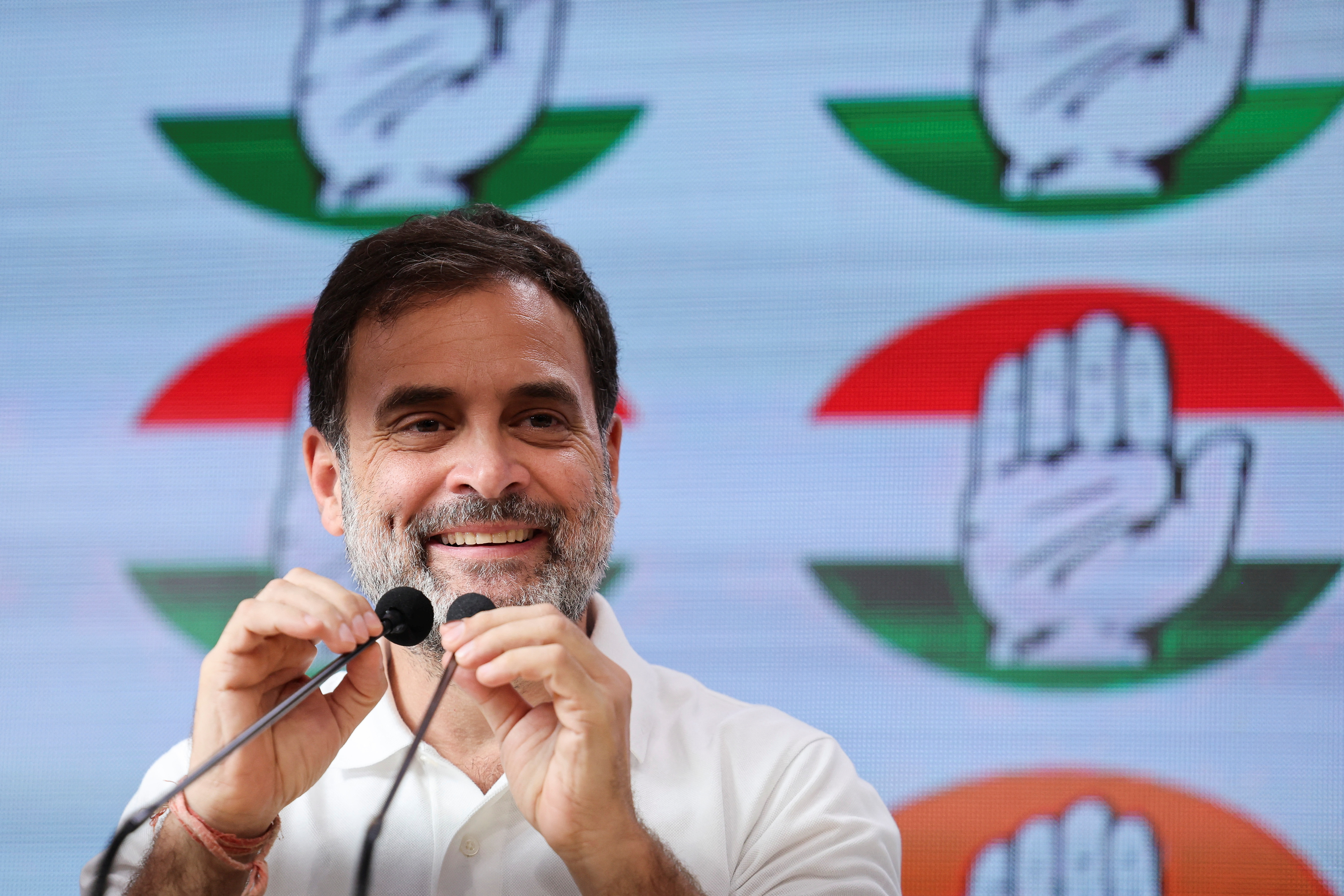
Congress leader Rahul Gandhi launched a sharp critique against the ruling dispensation, accusing the BJP and RSS of systematically hollowing out the educational infrastructure of the nation. Speaking at an interactive public outreach event, he emphasized that academic institutions are facing unprecedented pressure and ideological interference, which compromises the future of millions of students across the country.
In-Depth Analysis
New Delhi: Senior Congress leader Rahul Gandhi launched a severe and sweeping attack on the central government and the Rashtriya Swayamsevak Sangh (RSS), accusing them of systematically undermining and hollowing out the country's education system. Addressing a gathering during a public outreach event focused on youth and student welfare, Gandhi articulated deep concerns regarding the current trajectory of academic administration, curriculum formulation, and institutional autonomy in India.
During his interaction, which resonated deeply with student bodies and educators alike, the prominent opposition leader argued that educational institutions are no longer serving as bastions of free thought, critical inquiry, and independent reasoning. Instead, he claimed, a concerted effort is underway to replace meritocracy and intellectual diversity with partisan ideology. According to Gandhi, this approach has severely compromised the quality of education and has left young aspirants vulnerable to an increasingly uncertain professional and academic future.
The critique highlights a growing friction point between the ruling Bharatiya Janata Party (BJP) and the opposition coalition regarding national policy, institutional appointments, and the ideological orientation of textbooks and academic syllabi. Critics from the opposition have repeatedly asserted that key academic bodies, universities, and research institutions have been packed with individuals aligned with a singular ideological viewpoint, thereby stifling genuine debate and scientific temperament among the student community.
Gandhi further elaborated on the socioeconomic dimensions of the crisis, noting that affordable and high-quality education is rapidly becoming an elusive dream for marginalized sections of society. He pointed out that commercialization on one hand and ideological regimentation on the other are creating a dual barrier for youth striving to uplift themselves through knowledge. The Congress leader stressed that a nation's strength lies in its demographic dividend, but warned that this dividend could easily turn into a liability if the youth are deprived of progressive, inclusive, and globally competitive education.
In response to these allegations, leaders and spokespersons from the BJP have strongly rejected the assertions, defending their policy interventions as necessary reforms aimed at decolonizing the education system and rooting it in indigenous values and cultural heritage. The ruling party maintains that the previous administrations neglected national pride in academic frameworks and that current initiatives are designed to foster innovation, self-reliance, and practical skill development among students.
Despite the counter-arguments from the government, the debate over educational autonomy continues to be a central theme in national politics. As political parties gear up for upcoming electoral battles across various states, the concerns raised by student organizations and opposition leaders regarding institutional independence, employment opportunities, and academic freedom are expected to remain at the forefront of public discourse. Observers note that engaging the youth demographic through targeted discussions on education and employment will likely define the political narratives in the foreseeable future, making the battle for the minds of the younger generation a critical battleground for political supremacy.
How do you feel about this story?
Discussion
No comments yet. Be the first to share your thoughts.
Join the discussion
Sign in to share your thoughts on this story.