BNN Summary
The I.N.D.I.A. opposition alliance is reportedly experiencing significant internal turmoil, threatening its cohesion and electoral prospects. Marked by high-profile defections, escalating internal rifts, and deep-seated anger from key regional partners like the Trinamool Congress and Dravida Munnetra Kazhagam directed at the Congress party, the coalition faces an uncertain future. These challenges stem from unresolved leadership issues, contentious seat-sharing negotiations, and divergent regional priorities, casting a shadow over the alliance's ability to mount a unified challenge.
In-Depth Analysis
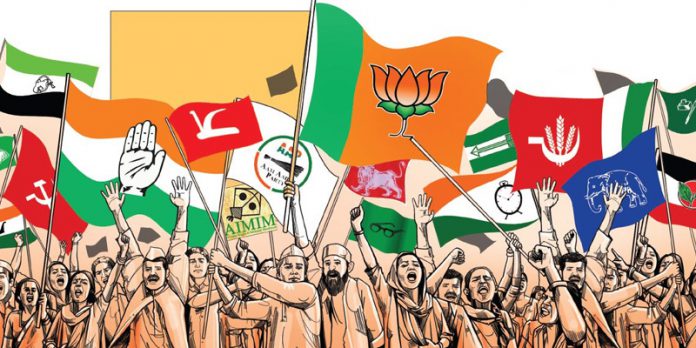
The Indian National Developmental Inclusive Alliance (I.N.D.I.A.), initially envisioned as a formidable united front to challenge the incumbent government, is reportedly facing severe internal pressures that threaten its very foundation. What began as a hopeful convergence of diverse political entities now appears to be grappling with an unravelling, characterized by a series of defections, deepening internal rifts, and palpable frustration among crucial alliance partners, most notably the Trinamool Congress (TMC) and the Dravida Munnetra Kazhagam (DMK), largely directed at the Congress party.
Reports suggest that the alliance's ambitious goal of presenting a consolidated opposition has been undermined by a steady stream of high-profile defections. Political leaders, once key proponents of the I.N.D.I.A. bloc, have reportedly opted to switch allegiances, citing disillusionment with the alliance's operational dynamics and perceived lack of clear direction. These exits are not merely symbolic; they represent a significant depletion of collective strength and a challenge to the alliance's narrative of unity. The motivations behind such defections often range from seeking better political opportunities and ensuring regional relevance to expressing profound dissatisfaction with the intra-alliance decision-making processes, especially concerning leadership and resource allocation.
Beyond individual shifts, the I.N.D.I.A. alliance is plagued by persistent internal rifts that have metastasized across various states and ideological lines. A primary flashpoint remains the unresolved question of leadership. While the Congress party, as the largest constituent, naturally assumes a prominent role, regional powerhouses often express reservations about a centralized leadership model that could diminish their local autonomy and influence. These disagreements extend to fundamental strategic decisions, including the approach to countering the ruling dispensation, campaign narratives, and the overall vision for national governance. The lack of a consensual leadership structure has led to disjointed messaging and a perceived absence of a strong, unified voice against the government.
Crucially, anger at the Congress from key partners like the TMC, led by Mamata Banerjee in West Bengal, and the DMK, a dominant force in Tamil Nadu, has become a significant centrifugal force. The TMC, for instance, has repeatedly expressed concerns over what it perceives as the Congress's reluctance to cede space or acknowledge the regional strengths of its allies. Seat-sharing negotiations have emerged as a particularly contentious issue. In states where Congress and regional parties traditionally compete, such as West Bengal, Delhi, and Punjab, arriving at mutually agreeable seat-sharing formulas has proven arduous, often leading to public spats and unilateral announcements. The TMC has, at times, indicated its preference for contesting seats independently or within state-specific arrangements rather than adhering to a pan-India formula dictated by the Congress. This friction reflects a fundamental tension between the Congress's aspiration to reclaim its national stature and the regional parties' imperative to protect and expand their localized political footprints.
The DMK, while a more steadfast ally in the southern landscape, has also reportedly voiced its frustrations over strategic coordination and the pace of decision-making within the broader alliance. While their regional equation with Congress in Tamil Nadu might be stable, the national strategic vision and the perceived delays in forming a coherent, proactive opposition strategy have been points of contention. The regional parties often argue that the Congress, despite its national presence, sometimes fails to adequately grasp or accommodate the unique political realities and electoral exigencies of various states, leading to strategies that are ill-suited for local contexts.
The cumulative effect of these defections, deep-seated internal rifts, and the palpable resentment from key partners has significantly weakened the I.N.D.I.A. alliance's ability to present a unified and credible alternative to the electorate. The lack of internal harmony projects an image of disarray, which could potentially diminish voter confidence and play into the hands of the ruling party. As the political landscape in India continues to evolve, the I.N.D.I.A. alliance faces the monumental challenge of overcoming these internal fissures to reclaim its narrative and prove its viability as a cohesive national force.
How do you feel about this story?