BNN Summary
The internal struggles and apparent 'implosion' within the Trinamool Congress (TMC) serve as a critical warning for India's broader opposition landscape. Faced with the pressing question of their core identity and purpose, opposition parties risk becoming mere onlookers to their own political decline if they fail to articulate clear ideologies and alternative visions for the nation.
In-Depth Analysis
The Trinamool Congress (TMC), a prominent regional force in Indian politics, appears to be navigating a turbulent period marked by internal strife, a phenomenon aptly described as an 'implosion' by political observers. This internal upheaval, however, is not merely an isolated incident confined to one party; instead, it serves as a stark and urgent warning for the broader landscape of India's opposition parties. The fundamental question that looms large over the TMC, and indeed over many of its opposition counterparts, is a critical one: 'What do you stand for?' Failure to provide a coherent and compelling answer to this existential query risks relegating these parties to the sidelines, transforming them into mere spectators in their own political decline.
The 'implosion' within the Trinamool Congress manifests in several discernible ways. Reports often point to escalating factionalism, a perceived weakening of central leadership authority, and a series of high-profile defections that have chipped away at the party's once formidable base. These internal fissures are exacerbated by an often-ambiguous ideological stance, making it challenging for both cadre and constituents to clearly comprehend the party's core principles or long-term vision. When a political entity struggles to articulate its foundational beliefs, it inevitably creates a vacuum that can be filled by discontent, mistrust, and disillusionment among its supporters. This internal disarray not only hampers effective governance where the party is in power but also severely compromises its ability to mount a credible challenge to incumbent forces, nationally or regionally. The constant churn of allegiances and the lack of a steadfast political philosophy project an image of opportunism rather than principled leadership, eroding public trust and voter confidence over time.
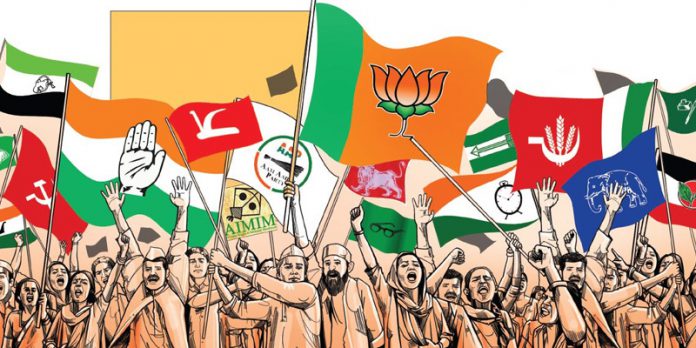
This predicament, however, extends far beyond the confines of the Trinamool Congress. Many opposition parties across India find themselves grappling with a similar, profound identity crisis. In a political environment increasingly dominated by a powerful ruling dispensation, the opposition's collective struggle to forge a cohesive national narrative has become glaringly apparent. Often, their political strategies appear to be predominantly reactive, centered around critiquing the government's policies rather than proactively presenting a distinct and viable alternative agenda. This reliance on anti-incumbency sentiment, while sometimes effective in localized contexts, often falls short of inspiring a nationwide movement or building sustained support, primarily because it lacks a positive, forward-looking vision.
The crucial question – 'What do you stand for?' – demands a comprehensive and introspective response. It necessitates a clear articulation of an alternative socio-economic model, a defined approach to governance, and a distinct ideological framework that differentiates them from their political rivals. Without such clarity, opposition parties risk being perceived as merely a collection of disparate entities united only by their opposition to the ruling party, rather than by a shared constructive purpose. This absence of a unifying ideology or a compelling programmatic vision can lead to several detrimental outcomes: a weakening of democratic debate, reduced voter engagement with substantive policy issues, and a consolidation of political power around a single dominant narrative.
The long-term consequences of this 'shrinking' are profound for India's democratic fabric. If opposition parties cannot clearly define their values, propose tangible solutions to national challenges, and galvanize public opinion around a distinct vision, they inevitably cede the political discourse entirely to the ruling party. They become observers, watching from the sidelines as the political landscape is shaped without their meaningful input or contestation. This not only diminishes their own political relevance but also undermines the very essence of a multi-party democracy, which thrives on robust debate, diverse perspectives, and the availability of credible alternatives for the electorate. For the sake of a vibrant and accountable democracy, it is imperative that opposition parties heed the warning signs emanating from instances like the TMC's current struggles and embark on a concerted effort to redefine their purpose, articulate their stands, and reconnect with the aspirations of the Indian populace.
How do you feel about this story?