BNN Summary
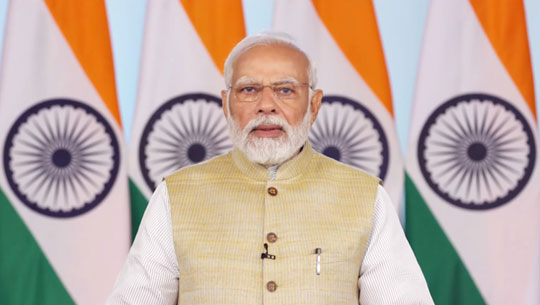
Prime Minister Narendra Modi has launched a vigorous critique against the Congress party, asserting its past governance led India into a state of helplessness and poverty. This sharp attack coincides with Modi's monumental achievement of becoming India's longest-serving continuously elected Prime Minister, a milestone that garnered congratulations from numerous global leaders. The remarks intensify the ongoing political debate over India's economic trajectory and historical development, framing the current administration's vision against the backdrop of previous eras.
In-Depth Analysis
Prime Minister Narendra Modi has intensified his critique of the Congress party, asserting that the 'grand old party' was responsible for pushing India into a state of 'helplessness and poverty' during its extensive periods of rule. This scathing assessment was delivered amidst celebrations marking a significant personal and political achievement for PM Modi: becoming the longest-serving continuously elected Prime Minister of India. The confluence of these events — a pointed historical attack and a celebration of personal longevity in power — underscores the high stakes in India's political discourse, where historical economic narratives are frequently invoked to shape contemporary political battles.
Modi's accusations are part of a broader strategy by the ruling Bharatiya Janata Party (BJP) to contrast its governance and economic vision with that of previous Congress-led administrations. While not explicitly mentioned in the immediate context, the thematic title 'From 'Hindu Growth Rate' to Modern India' suggests a deliberate effort to frame the discussion around India's economic history. The term 'Hindu Growth Rate,' coined by economist Raj Krishna, referred to India's sluggish economic growth rate of around 3.5-4% from the 1950s to the 1980s. This period, largely under Congress's dominion, was characterized by a socialist-leaning economic model, extensive state control, and protectionist policies, which critics argue stifled private enterprise and innovation, leading to slower development compared to other emerging economies. Modi's current statements appear to tap into this historical critique, implicitly holding Congress accountable for what he describes as an era of economic stagnation and limited opportunity.
According to Prime Minister Modi, the Congress party's policies created a legacy of economic dependency and societal vulnerability. He contends that his government, since 2014, has been actively working to dismantle this legacy, steering India towards a 'Modern India' characterized by rapid economic growth, digital transformation, and enhanced global standing. The BJP's economic agenda often highlights initiatives such as 'Make in India,' infrastructure development, financial inclusion schemes, and a push towards a digital economy, portraying these as fundamental departures from past approaches and crucial for realizing India's full potential.
This robust political offensive comes as Prime Minister Modi celebrates a remarkable personal milestone. He recently expressed his gratitude to world leaders, including Italian Prime Minister Giorgia Meloni, who conveyed their warm wishes on his achievement of becoming India's longest-serving continuously elected Prime Minister. This record tenure, spanning multiple consecutive terms, solidifies his position as a dominant figure in Indian politics and reflects sustained public mandate for his leadership and the BJP's agenda. The accumulation of such political capital allows him to press forward with his administration's vision while simultaneously challenging the historical narratives of his political opponents.
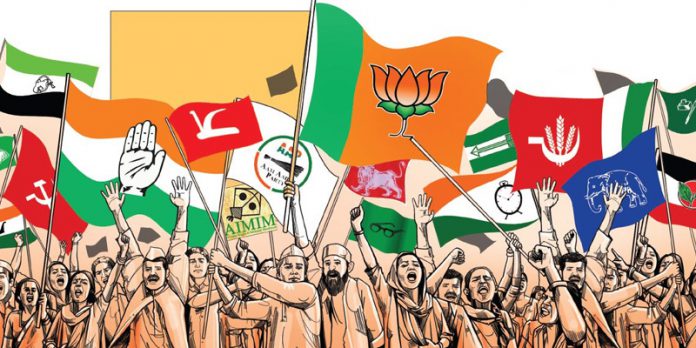
The ongoing political clash between the BJP and Congress is fundamentally an ideological battle over India's past, present, and future. The BJP consistently seeks to discredit the economic and social foundations laid by Congress, arguing that their policies hindered national progress. Conversely, Congress leaders often emphasize their role in nation-building, establishing democratic institutions, and fostering inclusive growth, while also highlighting their economic liberalization reforms in the early 1990s as a turning point for the Indian economy. The rhetoric employed by both sides is crucial in shaping public perception and mobilizing support, particularly as India approaches future electoral cycles.
Ultimately, Prime Minister Modi's recent remarks underscore a strategic effort to redefine India's historical economic narrative, positioning his government as a transformative force rectifying the perceived shortcomings of previous eras. This political strategy, amplified by his personal achievement of a record tenure, ensures that the debate over India's economic journey from its post-independence years to its contemporary aspirations remains a central and highly contentious issue in the nation's political landscape.
How do you feel about this story?