BNN Summary
Prime Minister Narendra Modi was congratulated by officials of the Prime Minister's Office (PMO) and the Union Cabinet on June 10, 2026, for becoming India's longest-serving democratically elected Prime Minister in consecutive terms. Surpassing Jawaharlal Nehru's record, Modi's tenure, which began in May 2014, has been marked by sustained public trust, significant socio-economic reforms, and an elevated global standing for India, reflecting over 4,399 continuous days in office. This milestone underscores a period of stable and transformative governance.
In-Depth Analysis
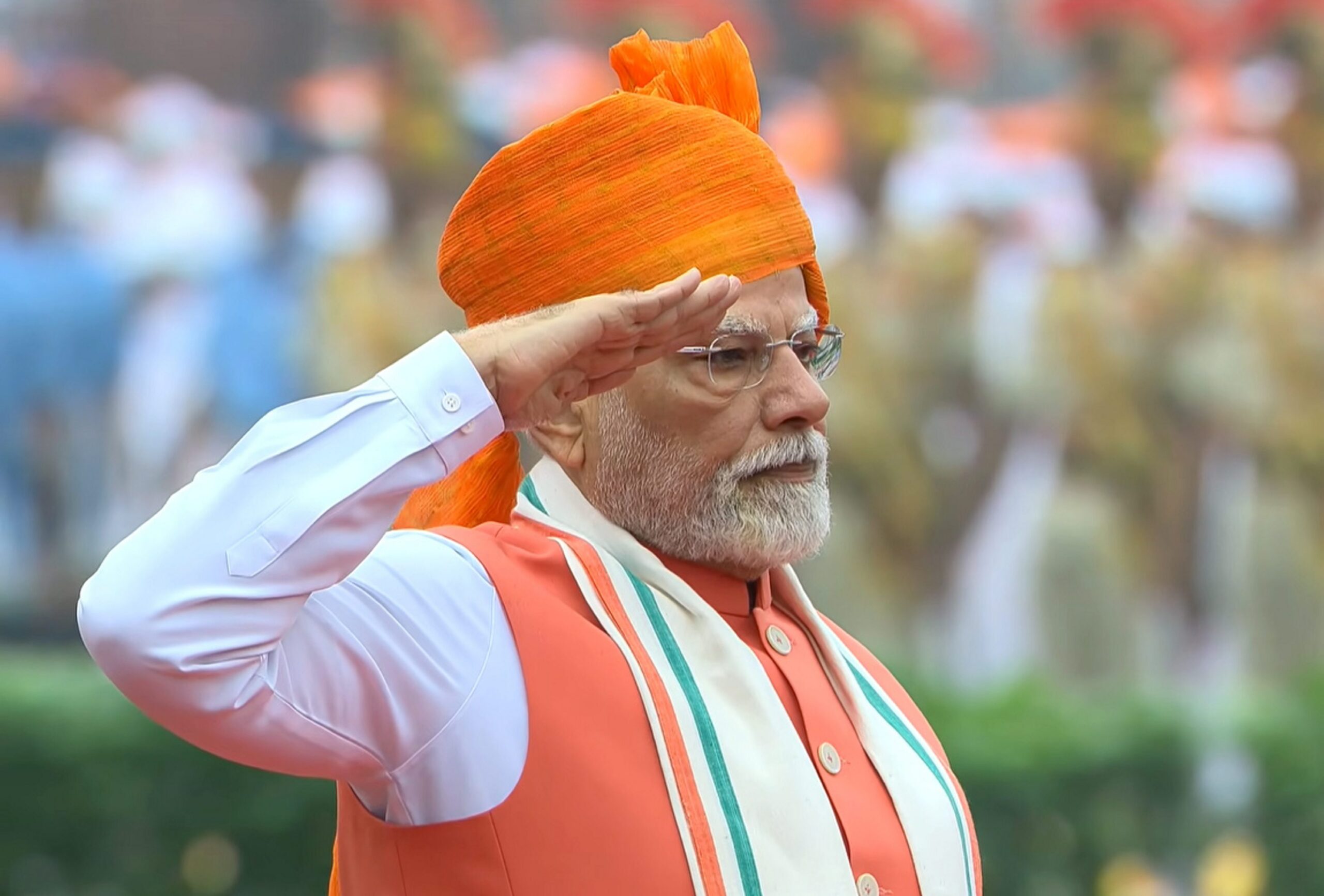
New Delhi witnessed a historic moment on Wednesday, June 10, 2026, as officials from the Prime Minister's Office (PMO) extended their heartfelt congratulations to Prime Minister Narendra Modi for becoming India's longest-serving democratically elected Prime Minister in consecutive terms. This significant achievement marks 4,399 continuous days in office, surpassing the previous record of 4,398 days held by India's first Prime Minister, Jawaharlal Nehru, post the country's first general elections in 1952.
The felicitation, held in New Delhi, saw Principal Secretary to the Prime Minister, Dr. P. K. Mishra, and Principal Secretary-2 to the Prime Minister, Shaktikanta Das, warmly welcoming Prime Minister Modi. The PMO highlighted that his leadership over the last twelve years has been characterized by 'stability, transparency, and a steadfast commitment to good governance, inclusive development, and national progress.' Concurrently, the Union Cabinet also adopted a resolution applauding Prime Minister Modi, with members giving him a standing ovation to honor this historic milestone.
Prime Minister Modi first took the oath of office on May 26, 2014, securing a decisive mandate in the Lok Sabha elections. He was subsequently re-elected in 2019 and again in 2024 for a third consecutive term, making him the only Prime Minister apart from Jawaharlal Nehru to win three consecutive general elections as the leader of a political party. His continuous tenure distinguishes him from other long-serving Prime Ministers like Indira Gandhi, whose service was not uninterrupted. This makes him the longest continuously serving elected Prime Minister in India's history.
Throughout his tenure, Prime Minister Modi has overseen a period of significant transformation across various sectors. His government's initiatives have focused on enhancing social welfare, boosting economic growth, and strengthening India's global standing. Key programs such as the Swachh Bharat Abhiyaan, aimed at improving sanitation, and the Ayushman Bharat Yojana, providing extensive health coverage, have reached millions. The Pradhan Mantri Jan Dhan Yojana has expanded financial inclusion, while the Pradhan Mantri Ujjwala Yojana has provided LPG connections to women from underprivileged families. The Pradhan Mantri Awas Yojana has worked towards affordable housing, reflecting a commitment to 'Housing for All'.
Economically, India has emerged as the world's fastest-growing major economy under his leadership, with rapid expansion of digital public infrastructure and large-scale infrastructure development. The 'Make in India' initiative has aimed to establish India as a global manufacturing hub, alongside significant improvements in the 'Ease of Doing Business' rankings. Furthermore, the rollout of the Goods and Services Tax (GST) in 2017 was a landmark reform designed to create a unified national market.
On the international stage, Prime Minister Modi has notably elevated India's diplomatic profile. India has strengthened its position as a more influential voice on global issues, including development, technology, climate action, and advocating for the priorities of the Global South. He has received the highest civilian honors from over 30 countries, a testament to his global recognition. His rise from a humble background to the highest elected office, without the backing of a political dynasty, is often cited as an embodiment of India's democratic opportunities and social mobility.
The milestone of continuous governance is particularly noteworthy in a diverse nation of over 1.4 billion people, showcasing sustained public trust across three consecutive national mandates in the world's largest democracy. The PMO's statement underscored that this occasion 'stands as a symbol of India's democratic consciousness, public trust, and the power of public participation, reflecting the unprecedented support bestowed by the people upon a leader guided by the 'Nation First' resolve.' This historic achievement not only marks a personal milestone for Prime Minister Modi but also represents a significant chapter in India's ongoing democratic journey.
How do you feel about this story?