BNN Summary
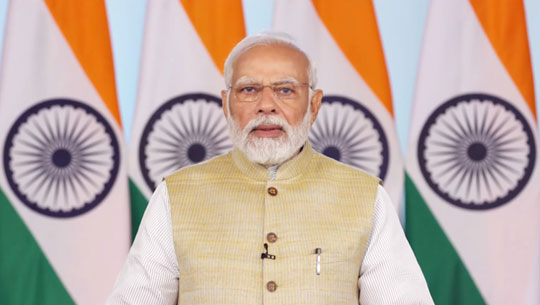
Prime Minister Narendra Modi has achieved a historic milestone, becoming India's longest continuously serving elected Prime Minister with 4,399 days in office. This surpasses the record previously held by Jawaharlal Nehru. World leaders, including former US President Donald Trump, who called Modi 'a Great One,' and Israeli Prime Minister Benjamin Netanyahu, extended their congratulations, acknowledging his transformative leadership and impact on India's global standing and socio-economic progress.
In-Depth Analysis
Prime Minister Narendra Modi has etched his name in India's political annals by becoming the nation's longest continuously serving elected Prime Minister. On Wednesday, June 10, 2026, his tenure reached an unprecedented 4,399 days, successfully surpassing the previous record of 4,398 days held by India's first elected Prime Minister, Jawaharlal Nehru. This significant milestone marks over twelve years of continuous leadership at the helm of the world's largest democracy.
The achievement has garnered widespread recognition, with congratulatory messages pouring in from both domestic and international fronts. Former US President Donald Trump was among the prominent global figures to extend his felicitations. In a post on Truth Social, Trump lauded Prime Minister Modi, referring to him as 'my friend' and stating, 'Congratulations to my friend, Prime Minister Narendra Modi, on becoming India's longest-serving Prime Minister -- And a Great One he is!'. Trump further described Modi as a 'strong, healthy, and wise man,' expressing confidence in his continued years of 'Greatness and Success'. Prime Minister Modi acknowledged Trump's warm wishes, conveying his anticipation of working together to advance the India-US Comprehensive Global Strategic Partnership.
Israeli Prime Minister Benjamin Netanyahu also conveyed his congratulations through a video message, affectionately calling Modi his 'dear friend Narendra'. Netanyahu commended Prime Minister Modi's leadership for 'transforming India,' strengthening the bond between India and Israel, and earning the admiration of millions worldwide. He highlighted that under Modi's guidance, India's leadership has propelled a nation of over 1.4 billion people into one of the fastest-growing economies globally. Furthermore, Netanyahu noted Modi's instrumental role in helping approximately 250 million Indians escape poverty, emphasizing that the friendship and bond between their two nations have 'never been stronger'.
Other world leaders who sent their greetings included European Commission President Ursula von der Leyen, Italian Prime Minister Georgia Meloni, German Chancellor Friedrich Merz, Canadian Prime Minister Mark Carney, and former United Kingdom Prime Minister Rishi Sunak. Russia, through Kremlin spokesman Dmitry Peskov, hailed Modi as the 'doyen of all Indian prime ministers,' expressing optimism for the continued development of India-Russia ties. The House Committee on Foreign Affairs of the United States Congress also congratulated Prime Minister Modi, recognizing India as a 'critical partner in the Indo-Pacific'.
Domestically, the Union Cabinet celebrated the milestone with a resolution, applauding Prime Minister Modi for his historic tenure. The resolution, passed on June 10, 2026, described the occasion as a symbol of India's democratic consciousness, public trust, and the power of public participation, reflecting the 'unprecedented support' given to a leader committed to the 'Nation First' resolve. It also pointed out that this achievement coincides with the National Democratic Alliance (NDA) government completing 12 years under his leadership and his approaching the historic mark of 25 years of continuous service as a Head of Government, combining his tenures as Gujarat Chief Minister and Prime Minister.
Prime Minister Modi's journey to this record-breaking tenure began on May 26, 2014, when he first took office, leading the Bharatiya Janata Party (BJP) to a historic parliamentary majority, a feat not achieved by any party since 1984. He was re-elected in 2019 and secured a third consecutive term in 2024, heading a coalition government. His political career, which began formally with the BJP in the 1980s after his involvement with the Rashtriya Swayamsevak Sangh (RSS), saw him serve as the Chief Minister of Gujarat from 2001 to 2014.
During his premiership, Modi's administration has focused on a range of transformative policies and initiatives. Key economic reforms include the introduction of the Goods and Services Tax (GST) in 2017, which aimed to create a unified indirect taxation framework across the country. His government has also pushed for significant infrastructure expansion, with national highways growing from approximately 91,000 km in 2014 to nearly 1.5 lakh km by 2026, and metro rail networks extending to over 1,100 km. Programs like 'Make in India' and 'Startup India' were launched to boost manufacturing and entrepreneurship, while financial inclusion was advanced through initiatives like the Pradhan Mantri Jan Dhan Yojana. Social welfare schemes such as Ayushman Bharat, the world's largest publicly funded health insurance program, and the Pradhan Mantri Garib Kalyan Anna Yojana, which provided free food grains during the pandemic, have also been central to his governance. His tenure also saw the construction and consecration of the Ram Mandir in Ayodhya, fulfilling a long-standing aspiration for many.
Under his leadership, India has cemented its position as one of the world's fastest-growing major economies, with its GDP crossing the $4 trillion mark in 2025 and economic growth consistently above 7% in FY 2025-26. The government highlights that these efforts have enabled over 250 million people to move out of multidimensional poverty. Independent global surveys have frequently ranked Prime Minister Modi among the world's most popular democratic leaders, and he has been honored with the highest civilian awards from over 30 countries. His rise from a humble background to the highest elected office without dynastic support is often cited as an embodiment of India's democratic opportunities.
How do you feel about this story?