BNN Summary
The Indian National Congress is carefully crafting its strategy amidst growing turbulence within the I.N.D.I.A bloc, particularly concerning its allies. Rahul Gandhi's consultation with West Bengal Congress chief Adhir Ranjan Chowdhury highlights the party's efforts to address internal and external pressures as the Trinamool Congress faces its own challenges, casting a shadow over the opposition's unity ahead of crucial elections.
In-Depth Analysis
The Indian National Congress (INC) finds itself at a critical juncture, meticulously weighing its strategic options as significant turbulence continues to plague the I.N.D.I.A (Indian National Developmental Inclusive Alliance) bloc. This period of uncertainty is marked by crucial internal deliberations within the Congress party, exemplified by senior leader Rahul Gandhi's recent consultation with West Bengal Pradesh Congress Committee president Adhir Ranjan Chowdhury. The discussions underscore the delicate balancing act the Congress must perform to maintain alliance cohesion while safeguarding its own political interests across various states.
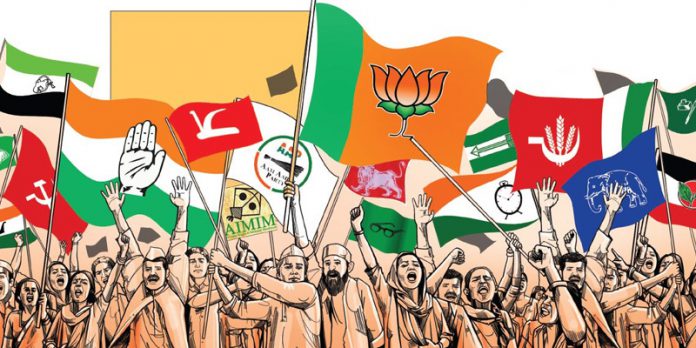
The I.N.D.I.A bloc, an ambitious coalition of opposition parties formed with the primary objective of challenging the ruling Bharatiya Janata Party (BJP) in the upcoming general elections, has been beset by internal friction almost since its inception. A central point of contention has frequently revolved around seat-sharing arrangements, with regional parties often reluctant to cede ground to the Congress or other allies in their respective strongholds. These disagreements, often protracted and public, have raised serious questions about the bloc's ability to present a united front and effectively counter the well-oiled election machinery of the incumbent government.
The situation in West Bengal serves as a particularly poignant microcosm of the broader challenges confronting the I.N.D.I.A bloc. The state's ruling party, the Trinamool Congress (TMC), led by Chief Minister Mamata Banerjee, has been grappling with its own internal dynamics. While the precise nature of these internal issues remains subject to speculation, their impact on the TMC's stance within the alliance is palpable. Historically, the relationship between the Congress and the TMC in West Bengal has been fraught with rivalry, making alliance coordination inherently difficult. Adhir Ranjan Chowdhury, a prominent Congress leader and Member of Parliament from West Bengal, has been a vocal critic of the TMC, often adopting an adversarial posture. Rahul Gandhi's consultation with Chowdhury is thus highly significant, signaling the Congress's intent to engage directly with its state units to formulate a coherent strategy that considers both national alliance imperatives and local political realities.
Navigating the complex political landscape of West Bengal requires a nuanced approach from the Congress. On one hand, maintaining a working relationship with the TMC is crucial for the I.N.D.I.A bloc's overall strength in the eastern region. On the other, the Congress cannot afford to alienate its own cadres and supporters in the state who have historically been opposed to the TMC. The challenge is compounded by the fact that the TMC, while a part of the national alliance, has often expressed reservations about seat-sharing with the Congress and the Left Front in West Bengal, sometimes even suggesting it would go it alone in the state. This fragmented approach, if replicated in other states, could severely undermine the I.N.D.I.A bloc's collective prospects.
Beyond West Bengal, the Congress faces similar dilemmas in other key states where regional powerhouses are strong, such as Uttar Pradesh with the Samajwadi Party, Delhi and Punjab with the Aam Aadmi Party, and Maharashtra with the Shiv Sena (UBT) and NCP (Sharadchandra Pawar) factions. Each of these alliances presents unique challenges related to power-sharing, electoral calculus, and leadership perceptions. The party's high command is under immense pressure to broker compromises that satisfy all allies without diluting the Congress's own electoral ambitions. The stakes are extraordinarily high, as the efficacy of the I.N.D.I.A bloc as a viable alternative to the BJP hinges significantly on its ability to demonstrate unity and resolve these internal contradictions.
The Congress's strategy, therefore, must be multi-pronged. It involves continuous dialogue with alliance partners, efforts to bridge differences on critical issues like seat distribution, and simultaneously working to rejuvenate its own organizational structure at the grassroots level. The consultations being held by Rahul Gandhi and other senior leaders are indicative of a deeper engagement process aimed at understanding ground realities and formulating a national strategy that is both inclusive and electorally astute. The coming months will be crucial in determining whether the I.N.D.I.A bloc can overcome its internal turbulence and emerge as a formidable force, or if the fissures will continue to unravel its ambitious unity project, ultimately impacting the broader democratic landscape of India.
How do you feel about this story?