BNN Summary
The INDIA Bloc gathers today with a critical CPI(M) letter, alleging Congress's 'deal' with BJP during Kerala polls, poised to dominate discussions. While Congress downplays these as electoral remarks, the BJP labels the alliance a 'figment of imagination,' citing growing rifts and a lack of unity, vision, and grassroots connection. The meeting faces pressure to address internal discord and project a united front amidst these challenges.
In-Depth Analysis
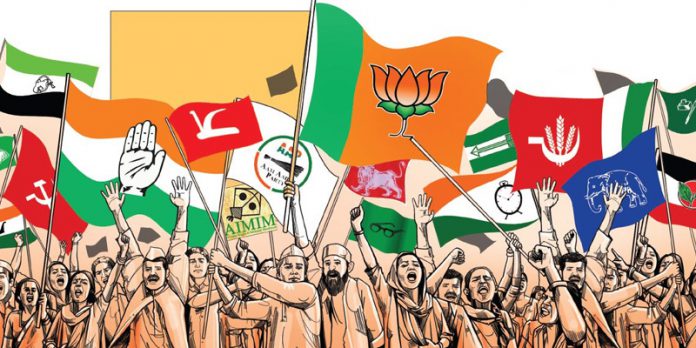
The INDIA (Indian National Developmental Inclusive Alliance) Bloc is holding a crucial meeting today, overshadowed by escalating internal disagreements and intensified external criticism from the ruling Bharatiya Janata Party (BJP). A pivotal talking point at the gathering is a sharply worded letter from the Communist Party of India (Marxist) [CPI(M)] addressed to Congress President Mallikarjun Kharge, detailing serious allegations against the Congress party's campaign tactics during the recent Kerala Assembly elections. This development underscores the inherent complexities and challenges faced by the broad-based opposition alliance as it endeavors to present a united and formidable front against the incumbent government.
CPI(M) General Secretary M. A. Baby authored the letter, which has also been circulated to other INDIA Bloc partners, ahead of today's meeting. The CPI(M) claims that during the Kerala polls, senior Congress leaders—including Rahul Gandhi, Priyanka Gandhi Vadra, and Kharge himself—systematically campaigned on claims that the CPI(M) and then-Chief Minister Pinarayi Vijayan had struck a political understanding, or 'deal,' with Prime Minister Narendra Modi and the BJP. The letter asserts that these were not isolated remarks but a 'central theme' of the Congress campaign, directly accusing the Congress of spreading a 'canard' that strikes 'at the very basis of the unity forged against the BJP'.
Furthermore, the CPI(M) objected to Congress leaders repeatedly questioning why Vijayan had not been interrogated or arrested by the Enforcement Directorate (ED). The Left party questioned whether such demands aligned with the opposition's anti-BJP stance or inadvertently encouraged punitive action by the Modi government against a fellow opposition leader. The CPI(M) emphasized its strong anti-BJP credentials, citing the sacrifices of many cadres in political clashes with the RSS-BJP in Kerala and highlighting the absence of communal riots during the ten years of Left Democratic Front (LDF) rule in the state as proof of its commitment to secularism. The party clarified that unless these matters are clarified, 'the very purpose of the INDIA bloc would be in question'.
In response to these concerns, the Congress party has reportedly sought to downplay the allegations, characterizing them as part of the normal 'mudslinging' inherent in electoral politics. However, the CPI(M) views these accusations as going 'beyond routine electoral rhetoric' and inconsistent with the spirit of cooperation necessary for the INDIA Bloc. The dualistic relationship—where parties are allies nationally but fierce rivals in state elections—is a persistent challenge for the INDIA Bloc. While the CPI(M) has reaffirmed its commitment to cooperating with INDIA Bloc partners in Parliament against the Modi government's policies, it awaits clarification from the Congress leadership on these 'disruptive moves'.
The internal discord within the INDIA Bloc has provided fodder for the ruling BJP. BJP spokesperson Shehzad Poonawalla launched a sharp critique, dismissing the INDIA grouping as a 'figment of imagination' and arguing it 'lacks unity, vision, and grassroots' connection. Poonawalla has consistently highlighted 'growing rifts' between the Congress and its regional allies, pointing to disagreements such as the DMK's decision to boycott the meeting due to grievances with Congress post-Tamil Nadu assembly polls, and ongoing disputes between JMM and Congress over Rajya Sabha seats. He asserted that the alliance has 'no mission, no vision, only confusion and every day new set of division is coming up'.
The BJP's strategic messaging aims to exploit these perceived weaknesses, portraying the INDIA Bloc as a fragmented and opportunistic coalition incapable of offering a coherent alternative. This external pressure further complicates the task for INDIA Bloc leaders, who must not only address internal grievances but also project an image of solidarity and purpose to counter the BJP's narrative. The ongoing meeting is therefore critical for the INDIA Bloc to iron out its differences, respond to the CPI(M)'s concerns, and reaffirm its commitment to its collective objectives. The discussions are expected to cover strategies for strengthening inter-party coordination, refining their common minimum program, and devising effective communication strategies to counter the BJP's attacks. The outcome will be closely watched by political observers, as it could significantly impact the opposition's prospects in forthcoming electoral cycles and its overall standing in national politics.
How do you feel about this story?