BNN Summary
The INDIA bloc's recent meeting on June 8, 2026, concluded with renewed pledges of opposition unity, yet experts continue to raise fundamental questions about the alliance's cohesion and its ability to present a formidable challenge to the incumbent government by 2029. Deep-seated ideological differences, leadership ambiguities, and complex seat-sharing negotiations persist, hindering its emergence as a strong, unified opposition front.
In-Depth Analysis
The Indian National Developmental Inclusive Alliance (INDIA) bloc, a coalition of various opposition parties, concluded its latest high-level meeting on June 8, 2026, with a familiar public declaration of unwavering unity. However, behind the veneer of solidarity, political analysts and observers continue to scrutinize the deep-seated challenges that plague the alliance, raising persistent questions about its long-term viability and its capacity to effectively counter the ruling dispensation in the lead-up to the 2029 general elections.
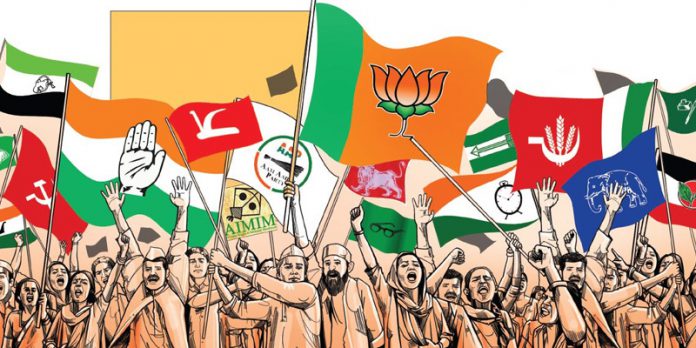
The core struggle for the INDIA bloc lies in reconciling the diverse and often conflicting interests of its constituent parties. Comprising a multitude of national and regional players, the alliance is a strategic amalgamation formed primarily to oppose the Bharatiya Janata Party (BJP). Yet, this common adversarial goal often masks significant ideological divergences and fierce electoral rivalries that play out at the state level. For instance, parties like the Indian National Congress, the Aam Aadmi Party (AAP), and the Trinamool Congress (TMC) are allies within the INDIA bloc but are fierce competitors in states such as Punjab, Delhi, and West Bengal, respectively. These intra-alliance conflicts make it exceedingly difficult to forge a cohesive national strategy and project a unified front to the electorate.
One of the most critical challenges facing the INDIA bloc is the absence of a clear, universally accepted leadership. While the alliance boasts several seasoned political figures, a consensus on a singular face or a defined leadership structure, particularly regarding a potential prime ministerial candidate, remains elusive. This contrasts sharply with the incumbent government, which projects strong and consistent leadership. The lack of a definitive leader can lead to confusion among voters and hinder the alliance's ability to articulate a consistent message and vision for the country. Without a compelling central figure to rally around, the bloc struggles to cut through the political noise and present itself as a credible alternative government.
Furthermore, the complex arithmetic of seat-sharing poses an immense hurdle. Each party within the INDIA bloc has its own regional strongholds and electoral aspirations. Negotiations for seat allocations are often fraught with tension, as each party aims to maximize its own electoral prospects, sometimes at the expense of alliance solidarity. Historical precedents in Indian coalition politics demonstrate that disagreements over seat distribution can be a primary reason for the collapse of alliances, or at the very least, lead to suboptimal electoral outcomes due to friendly contests or last-minute defections. The inability to finalize equitable and mutually agreeable seat-sharing arrangements well in advance of the elections could severely undermine the bloc's effectiveness.
Beyond organizational and leadership issues, the INDIA bloc has struggled to articulate a compelling and coherent national narrative that transcends its anti-BJP stance. While criticism of the government is a natural role for an opposition, voters often look for a positive vision and a clear alternative policy agenda. Experts suggest that the alliance has yet to successfully present a unified economic, social, or developmental roadmap that resonates deeply with the diverse segments of the Indian populace. Without a distinct and positive agenda, the bloc risks being perceived solely as a collection of parties united by convenience rather than a shared vision for India's future.
The organizational strength and financial resources of the incumbent government also add to the INDIA bloc's challenges. The ruling party has a well-oiled machinery, a robust cadre base, and significant financial backing, enabling it to reach voters effectively across the country. The INDIA bloc, being an alliance of disparate parties, faces an uphill battle in matching this level of organizational prowess and resource mobilization. Overcoming these hurdles will require unprecedented levels of cooperation, compromise, and a strategic long-term outlook from all member parties if the INDIA bloc hopes to emerge as a formidable and genuinely strong opposition by 2029.
Ultimately, while the public pronouncements emphasize unity, the road ahead for the INDIA bloc is fraught with significant internal and external challenges. Its ability to navigate these complexities—including leadership, ideological differences, seat-sharing, and narrative building—will determine whether it can evolve from a collection of opposition parties into a cohesive and strong alternative political force capable of challenging the established order in India's next general election.
How do you feel about this story?