BNN Summary
Uttar Pradesh state division debate has been reignited following remarks by a key ruling Bharatiya Janata Party ally and state minister Om Prakash Rajbhar. The controversy highlights the deeply complex socio-political, economic, and regional dynamics spanning Western UP, Awadh, Bundelkhand, and Purvanchal, bringing historical demands for smaller states back into the political spotlight.
In-Depth Analysis
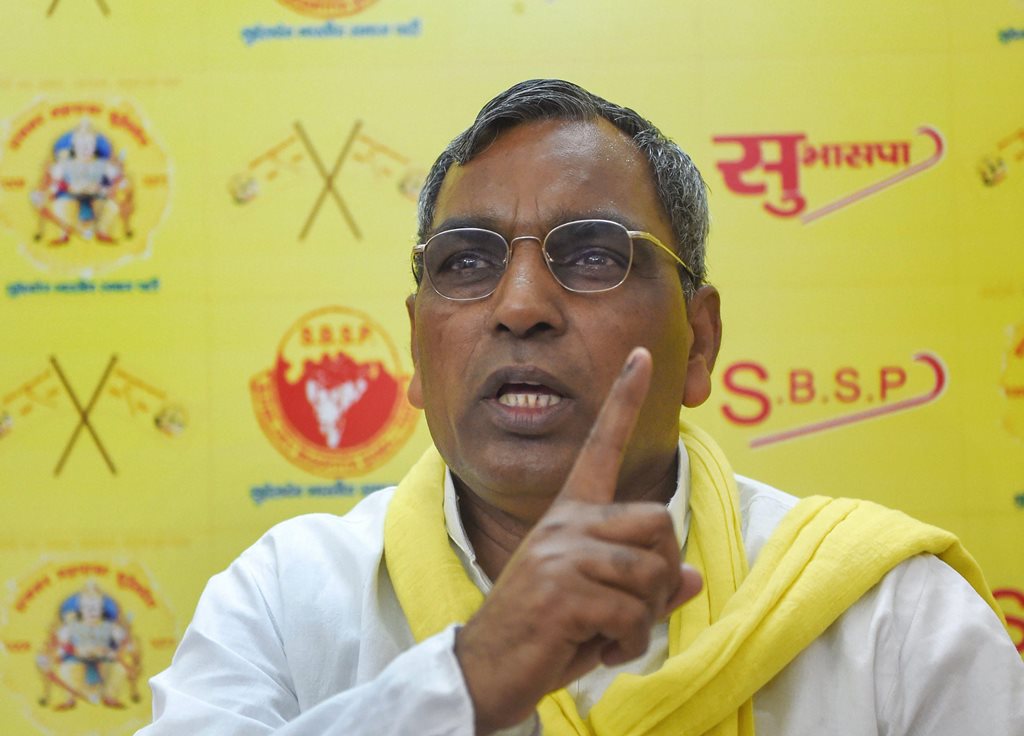
The political landscape of India's most populous state, Uttar Pradesh, has been thrown into a fresh wave of debate regarding its administrative bifurcation and division into smaller regional entities. The discussion was reignited following public remarks made by Om Prakash Rajbhar, a prominent state cabinet minister and leader of the Suheldev Bharatiya Samaj Party (SBSP), which is a key ally of the ruling Bharatiya Janata Party (BJP). Rajbhar asserted that smaller states are essential for effective governance, equitable resource distribution, and inclusive development, prompting widespread political reactions across the spectrum.
Uttar Pradesh, with its massive parliamentary footprint and a population exceeding 240 million, has historically faced challenges of administrative governance due to its sheer geographical and demographic scale. The idea of partitioning the state into smaller zones is not entirely new; historical precedents include the creation of Uttarakhand from the northern hill districts of UP in the year 2000. Over the decades, various political leaders, including former Chief Minister Mayawati, have formally proposed carving up the state into smaller administrative units such as Paschimanchal, Awadh, Bundelkhand, and Purvanchal to address regional disparities.
To understand the gravity and drivers of politics in Uttar Pradesh, analysts often segment the state into four distinct geographical and cultural regions, each characterized by unique socio-economic conditions and political inclinations:
-
Western Uttar Pradesh (Paschimanchal): Geographically close to the national capital, this region boasts a robust agrarian economy driven by sugarcane farming, alongside growing industrialization in cities like Noida, Meerut, and Ghaziabad. Politically, Paschimanchal has historically been influenced by Jat, Muslim, and Dalit communities. Issues related to farm policies, minimum support prices, and sugarcane pricing frequently dictate electoral outcomes here, making it one of the most politically volatile and intensely contested zones.
-
Awadh (Central Uttar Pradesh): Centered around the state capital of Lucknow, Awadh represents the cultural and political heartland of Uttar Pradesh. Dominated historically by a blend of upper-caste, Other Backward Classes (OBC), and minority populations, Awadh politics has traditionally revolved around identity politics, urban development, and governance narratives. The religious and cultural significance of Ayodhya heavily influences the sociopolitical atmosphere of this central belt.
-
Bundelkhand: Situated in the southern part of the state, Bundelkhand is geographically rugged and economically disadvantaged compared to its western and central counterparts. Chronic water scarcity, recurrent droughts, and agrarian distress are the primary political issues driving voter sentiment in districts like Jhansi, Banda, and Chitrakoot. Demands for a separate Bundelkhand state have persisted for decades, fueled by sentiments that the region receives inadequate attention from the state capital located far to the north.
-
Purvanchal (Eastern Uttar Pradesh): Encompassing major urban centers like Varanasi, Gorakhpur, and Prayagraj, Purvanchal is a densely populated and historically significant region. Its politics is heavily shaped by complex caste equations involving smaller OBC groups, Dalits, and upper castes. Leaders like Om Prakash Rajbhar wield considerable influence among sub-castes in Purvanchal, where socio-economic backwardness, employment migration, and local development are critical electoral levers.
While Om Prakash Rajbhar's recent statements have revived the debate over carving up the state into four distinct administrative units, the official stance of the ruling BJP remains measured. Senior party leaders have clarified that no immediate proposal for state bifurcation is under active consideration by the central government. However, political commentators suggest that such debates often serve as strategic tools to test regional sentiments, address localized grievances, and mobilize specific vote banks ahead of upcoming electoral cycles.
The debate underscores a persistent dilemma in Indian federalism: balancing administrative efficiency and regional aspirations with the political stability of large states. As political parties continue to navigate the intricate regional dynamics of Western UP, Awadh, Bundelkhand, and Purvanchal, the question of whether Uttar Pradesh should remain a single monolithic entity or be divided into smaller states will likely remain a recurrent theme in regional discourse.
How do you feel about this story?
Discussion
No comments yet. Be the first to share your thoughts.
Join the discussion
Sign in to share your thoughts on this story.