BNN Summary
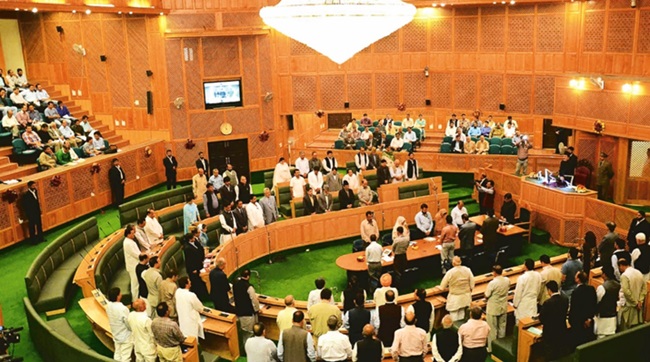
Legislators from the National Conference and the Bharatiya Janata Party engaged in a heated exchange within the Jammu and Kashmir assembly regarding public holidays designated for the birth anniversaries of Maharaja Hari Singh and Sheikh Mohammad Abdullah, highlighting deep-seated historical and political divisions in the region.
In-Depth Analysis
The legislative assembly of Jammu and Kashmir witnessed intense political sparring between members of the National Conference (NC) and the Bharatiya Janata Party (BJP) over the official calendar of public holidays. The core of the controversy centered around the commemoration of two towering figures in the region's modern history: the last Dogra ruler, Maharaja Hari Singh, and the founder of the National Conference, Sheikh Mohammad Abdullah.
During the assembly session, legislators from opposing political factions traded sharp verbal blows regarding which historical personalities deserved formal state recognition through public holidays. The debate underscores the complex and often polarized historical narratives that continue to shape contemporary politics in the union territory. Representatives from the BJP strongly advocated for the legacy and contributions of Maharaja Hari Singh, emphasizing his role in the accession of Jammu and Kashmir to the Indian Union. On the other side, NC legislators defended the historical significance and leadership of Sheikh Mohammad Abdullah, pointing to his long-standing political movement and governance.
The friction over holiday designations is not merely a symbolic disagreement about historical calendars; it reflects broader ideological battles over regional identity, sovereignty, and the historical trajectory of Jammu and Kashmir. Maharaja Hari Singh signed the Instrument of Accession in October 1947, integrating the princely state into India, a milestone that holds immense reverence for nationalist groups and the BJP. Conversely, Sheikh Abdullah played a pivotal role in negotiating the special constitutional relationship between Jammu and Kashmir and the rest of India, forming a political legacy that remains central to the National Conference.
As discussions in the assembly progressed, members from both parties accused each other of regional bias and disrespecting historical figures revered by different communities within the union territory. The verbal duel disrupted routine legislative proceedings, forcing the speaker to intervene and restore order in the house. Political analysts note that such controversies are frequently utilized by regional parties to consolidate their respective vote banks and appeal to distinct demographic sections.
The administrative decision regarding gazetted holidays in Jammu and Kashmir has undergone several revisions in recent years, particularly following the reorganization of the region in August 2019. While the administration included Maharaja Hari Singh's birth anniversary as an official gazetted holiday following persistent public and political demands, debates surrounding other historical dates continue to surface periodically.
The latest standoff in the assembly demonstrates that the battle over historical memory remains deeply entrenched in the legislative corridors of Jammu and Kashmir. Both the National Conference and the BJP appear poised to continue leveraging these emotive historical symbols as they gear up for future political engagements and governance challenges in the region.
How do you feel about this story?
Discussion
No comments yet. Be the first to share your thoughts.
Join the discussion
Sign in to share your thoughts on this story.