BNN Summary
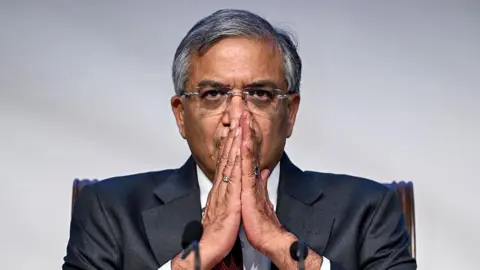
The appointment of new Election Commissioners has ignited a fierce political debate in India, with opposition parties accusing the government of undermining the neutrality of the Election Commission of India. The controversy centers on a new selection law that replaces the Chief Justice of India with a cabinet minister, giving the ruling executive a decisive majority in choosing key poll officials.
In-Depth Analysis
The recent appointment of former bureaucrats Gyanesh Kumar and Sukhbir Singh Sandhu as Election Commissioners has triggered a major political and constitutional debate in India, transcending individual appointments to touch upon the foundational principles of electoral neutrality. The decision, made under a newly enacted legislative framework, has drawn sharp criticism from opposition leaders who argue that the selection process compromises the independence of the Election Commission of India (ECI) ahead of crucial national elections.
At the heart of the dispute is the Chief Election Commissioner and other Election Commissioners (Appointment, Conditions of Service and Term of Office) Act, 2023, passed by Parliament in December. This legislation effectively altered the selection panel structure established by a landmark Supreme Court ruling in March 2023. The apex court had directed that the selection committee should consist of the Prime Minister, the Leader of the Opposition in the Lok Sabha, and the Chief Justice of India (CJI), aiming to insulate the election watchdog from executive dominance. However, the new law replaced the CJI with a Union Cabinet Minister nominated by the Prime Minister, thereby giving the ruling executive a clear two-to-one majority on the three-member selection panel.
The practical implications of this legislative shift became evident during the selection meeting. Adhir Ranjan Chowdhury, the Leader of the Opposition in the Lok Sabha and the sole non-government representative on the panel, registered a formal note of dissent. Chowdhury publicly criticized the procedural conduct, alleging that he was handed a list of over 200 potential candidates just hours before the meeting, followed by a final shortlist of six names mere minutes before the selection was finalized. He characterized the exercise as a 'fait accompli', arguing that the structure of the committee made the opposition's participation symbolic rather than substantive.
Beyond the procedural grievances, the opposition's larger battle is focused on the institutional integrity of the ECI. With India being the world's largest democracy, the neutrality of the body overseeing national and state elections is paramount. Critics argue that a selection process dominated by the executive risks creating a perception of bias, which could erode public trust in electoral outcomes. Legal challenges have already been mounted in the Supreme Court, with petitioners seeking a stay on the new law and demanding a return to the panel composition that included the judiciary.
Supporters of the new law, however, maintain that Parliament has the sovereign right to legislate on the appointment process and that the executive's role is aligned with constitutional provisions. They argue that the selected officers possess impeccable administrative records and that the process remains robust and transparent. As the nation prepares for upcoming polls, the outcome of the judicial scrutiny on this law will be closely watched, as it carries deep implications for the future of democratic checks and balances in India.
How do you feel about this story?
Discussion
No comments yet. Be the first to share your thoughts.
Join the discussion
Sign in to share your thoughts on this story.

/theprobe/media/media_files/2026/09/23/cec-gyanesh-kumar-eci-controversy-2026-09-23-17-07-14.jpg)