BNN Summary
In a massive political shift in Meghalaya, eight sitting United Democratic Party legislators have officially joined the Bharatiya Janata Party, instantly elevating the saffron party to the status of the second-largest political force in the state assembly and dramatically reshaping the regional political landscape ahead of the upcoming legislative elections.
In-Depth Analysis
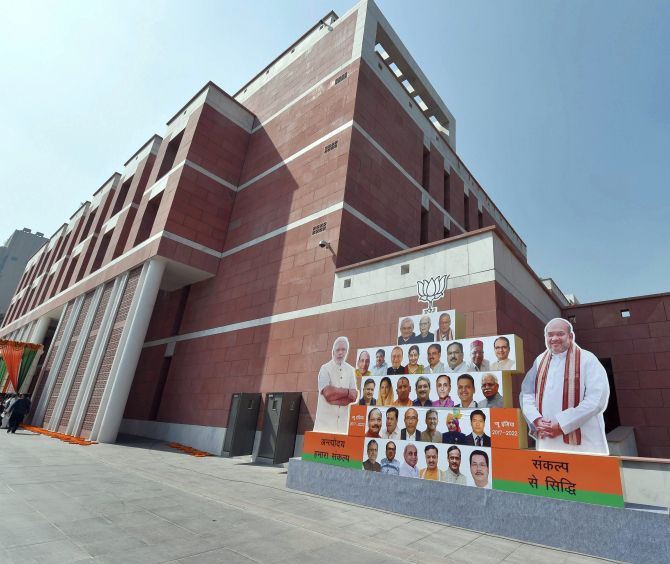
In what is being widely regarded as one of the most significant political realignments in the recent history of Meghalaya, eight sitting United Democratic Party (UDP) MLAs have officially crossed over to the Bharatiya Janata Party (BJP). This high-profile defection has sent shockwaves through the regional political ecosystem, instantly catapulting the BJP to become the second-largest political party within the state legislative assembly.
The mass switchover marks a dramatic turning point for the local political map, particularly as parties begin positioning themselves strategically well ahead of the scheduled 2028 assembly elections. Political analysts note that this sudden expansion of the BJP footprint in the northeastern state reflects a growing momentum for the party in a region where it has historically had to rely on complex coalition arrangements with regional partners.
Strategic Realignment in the Northeast
The formal induction of the eight lawmakers took place during a high-profile ceremony attended by senior party leaders and central observers who welcomed the legislators into the party fold. The newly joined leaders expressed profound confidence in the developmental vision championed by the central leadership, emphasizing that aligning with the ruling national party would bring accelerated infrastructure development, enhanced economic opportunities, and better central funding to their respective constituencies.
For the United Democratic Party, the sudden departure of eight high-profile sitting members represents a severe institutional blow. The UDP, which has long prided itself as a premier regional voice protecting the interests of the local indigenous communities, now faces an uphill battle to restore its organizational cohesion and legislative strength in the aftermath of this unexpected political earthquake.
Impact on the State Assembly
With this influx of eight experienced lawmakers, the numerical strength of the BJP in the Meghalaya Legislative Assembly has experienced an unprecedented surge. This elevation to the second-largest party status fundamentally alters the floor dynamics of the house, potentially empowering the party to play a much more assertive role in state governance and policy formulation.
Local political observers suggest that this development could trigger a broader wave of realignments across other regional formations, as ambitious leaders evaluate their political futures and assess which platforms offer the most viable path to electoral success in the coming years. The ruling coalition partners are also closely monitoring the situation to gauge the long-term impact on political stability within the state.
Looking Ahead to 2028
As the dust settles on this major defection, political strategists across the spectrum are already looking forward to the 2028 electoral contest. The BJP has consistently maintained a strategic focus on expanding its electoral footprint across Northeast India, viewing the region as a vital frontier for its long-term political expansion.
By strengthening its legislative presence in Meghalaya, the party has positioned itself as a dominant contender rather than a peripheral player, setting the stage for a fiercely contested electoral battle in the years to come.
How do you feel about this story?
Discussion
No comments yet. Be the first to share your thoughts.
Join the discussion
Sign in to share your thoughts on this story.