BNN Summary
Ramlila Maidan in New Delhi has historically served as the epicenter of massive public demonstrations and political movements. Over the decades, this iconic ground has hosted pivotal anti-government agitations that significantly altered the political landscape, notably challenging incumbent administrations and serving as a crucial platform for nationwide civic mobilization.
In-Depth Analysis
Ramlila Maidan stands as one of the most prominent public grounds in India's capital city, New Delhi, carrying a rich legacy intertwined with the nation's political history, social movements, and cultural celebrations. While originally designated for traditional religious festivities such as the Ramlila during Dussehra, the sprawling grounds have evolved into a formidable symbol of democratic dissent and public mobilization. Over the decades, Ramlila Maidan has transitioned from a simple cultural venue into a crucible of political change, frequently witnessing historic mass gatherings that have shaken successive governments at both the regional and national levels.
Throughout modern Indian history, the ground has been the preferred staging area for leaders, activists, and citizens seeking to voice their grievances against authority. Its strategic location near the old Delhi railway station and the historic Walled City makes it accessible to large crowds coming from various parts of the country. This accessibility, combined with its vast physical capacity capable of holding hundreds of thousands of people, has made it a focal point for historic political agitation.
One of the defining characteristics of Ramlila Maidan is its association with anti-corruption movements and civil disobedience. The ground gained immense prominence during various political upheavals, notably providing a platform for massive protests that dealt significant blows to ruling establishments. When political movements gather momentum, the government of the day often finds itself compelled to address the demands emanating from this historic venue. The sheer scale of gatherings at Ramlila Maidan creates immense psychological and political pressure on policymakers, often serving as a turning point in contemporary political discourse.
In addition to anti-corruption crusades, the venue has witnessed numerous labor strikes, farmer agitations, and ideological rallies. Political parties across the spectrum have utilized the grounds to demonstrate their electoral strength and rally party workers. However, it is its role as a ground for people-powered movements against institutional apathy that remains etched most strongly in public memory. When civil society groups unite under a common banner, Ramlila Maidan transforms into a sea of humanity, echoing with slogans, speeches, and patriotic fervor.
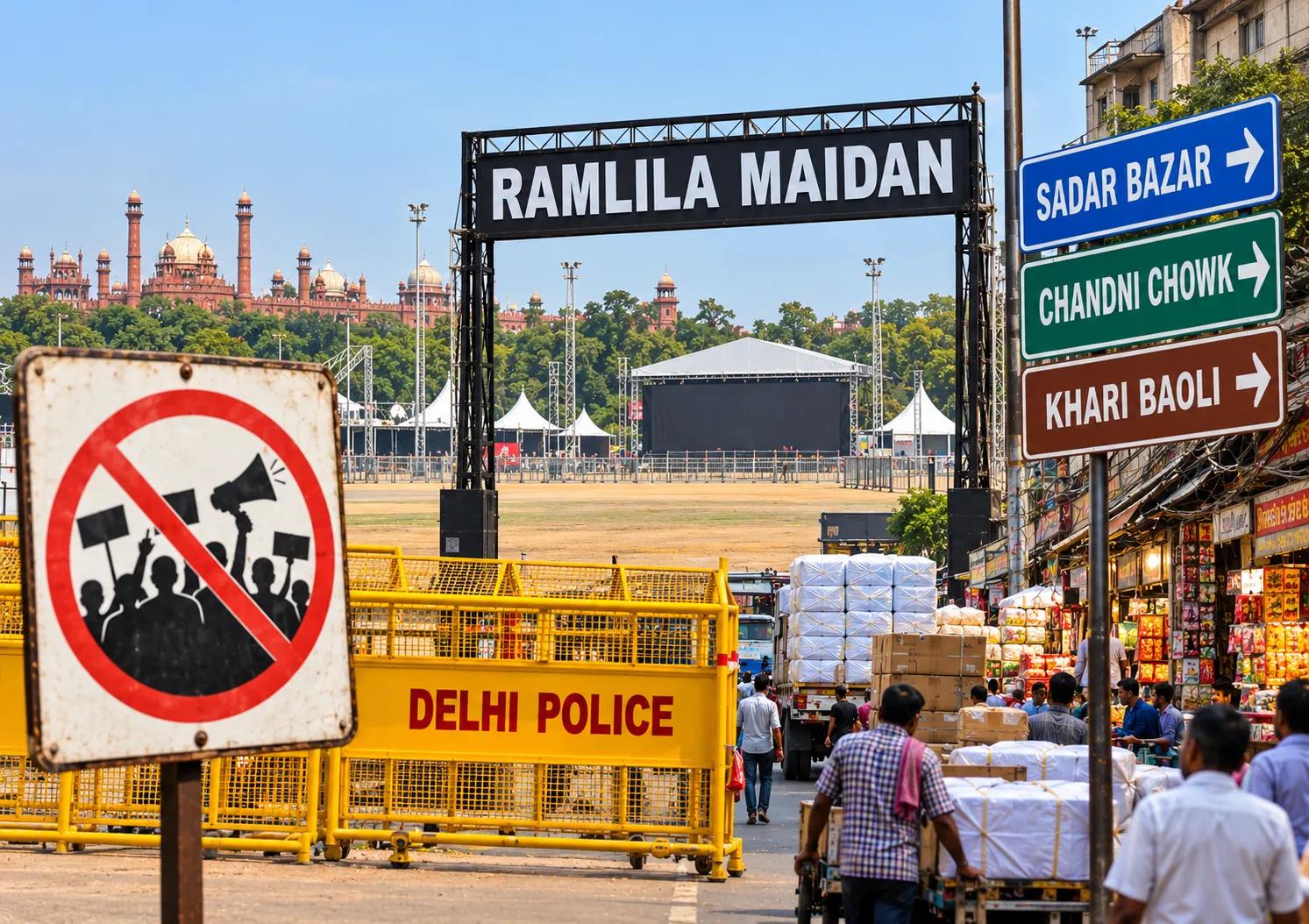
The administrative and security apparatus surrounding Ramlila Maidan also highlights its sensitivity. Whenever major rallies are scheduled, municipal and police authorities deploy extensive security arrangements to manage crowds and maintain public order. Despite occasional logistical challenges and tensions between protestors and law enforcement, the ground remains an unyielding bastion of free speech and democratic expression.
As India continues to navigate its complex sociopolitical landscape, Ramlila Maidan retains its status as a vital institution of public accountability. It serves as a physical reminder that the voice of the common citizen, when amplified through collective action on historic grounds, possesses the power to challenge authority and reshape the destiny of the nation.
How do you feel about this story?
Discussion
No comments yet. Be the first to share your thoughts.
Join the discussion
Sign in to share your thoughts on this story.