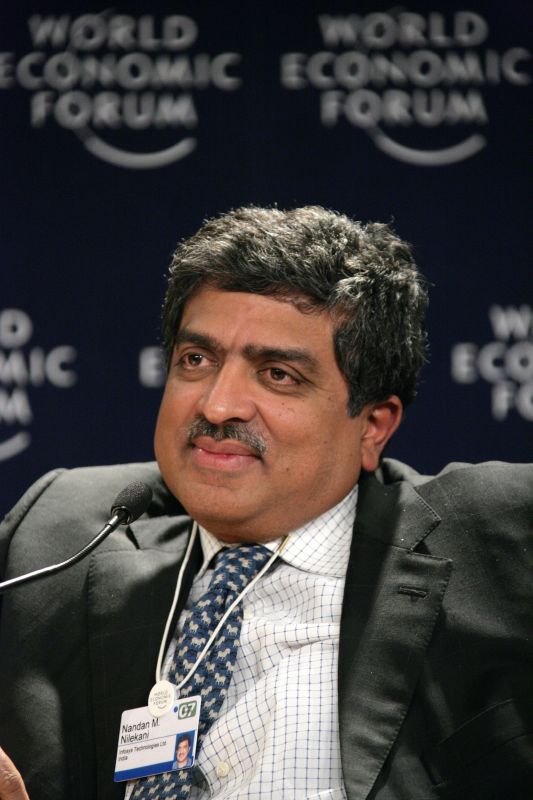
Image: Wikipedia
BNN Summary
In response to widespread scrutiny of the National Testing Agency, the Indian government has appointed Infosys co-founder Nandan Nilekani to lead a high-powered task force dedicated to overhauling examination protocols, enhancing digital security, and preventing systemic paper leaks.
In-Depth Analysis
In a decisive move to address the systemic challenges plaguing India's competitive examination landscape, the central government has announced the formation of a high-powered task force to be spearheaded by Infosys co-founder and tech visionary Nandan Nilekani. This initiative arrives at a critical juncture as public outcry intensifies regarding the integrity of the National Testing Agency (NTA) and the recurring incidence of paper leaks that have disrupted the aspirations of millions of students across the nation.
Mandate for Systematic Reform
The primary objective of this committee is to design a robust, transparent, and 'leak-proof' examination ecosystem. Nandan Nilekani, known for his pivotal role in architecting the Aadhaar project and driving India's digital public infrastructure (DPI), brings a wealth of experience in managing large-scale data and secure authentication systems. His team is tasked with re-evaluating the entire operational framework of the NTA.
Key focus areas for the task force include:
- Technological Integration: Utilizing advanced artificial intelligence and machine learning models to detect anomalies and predict vulnerabilities in test-taking processes.
- Biometric Security: Implementing state-of-the-art biometric identification and verification protocols to prevent impersonation and identity fraud.
- Process Auditing: Conducting a comprehensive review of the end-to-end examination lifecycle, from question paper setting to distribution and final result declaration.
- DPI Utilization: Leveraging existing digital public infrastructure to ensure end-to-end encryption and real-time tracking of examination materials.
Navigating the Current Crisis
The formation of this committee comes amidst a broader political debate regarding accountability in the education sector. While some opposition figures, including Karti Chidambaram, have questioned the efficacy of personnel changes and called for deeper structural reforms, the government remains focused on technical solutions. By entrusting Nilekani with this mandate, the administration aims to move away from legacy manual systems that have historically been prone to human error and malicious interference.
Technological Resilience
Nilekani’s approach is expected to prioritize scalability. Given that Indian competitive exams involve millions of candidates annually, the task force is looking at decentralized and tamper-proof digital platforms. The integration of blockchain or similar distributed ledger technologies is reportedly on the table to ensure the sanctity of question paper storage and transmission. Furthermore, the committee will examine the organizational structure of the NTA itself, proposing recommendations to streamline its leadership and enhance its investigative capacity to act swiftly against malpractice.
As the task force begins its work, the academic community and the public are looking for tangible results that transcend mere policy announcements. With Nilekani at the helm, there is an expectation that the focus will shift toward a permanent, tech-driven solution that restores faith in India's prestigious and life-altering examination assessments. The outcome of these deliberations is expected to redefine how the nation administers its most crucial educational entrance tests, ensuring that meritocracy remains the bedrock of Indian academic progress.
How do you feel about this story?
Discussion
No comments yet. Be the first to share your thoughts.
Join the discussion
Sign in to share your thoughts on this story.