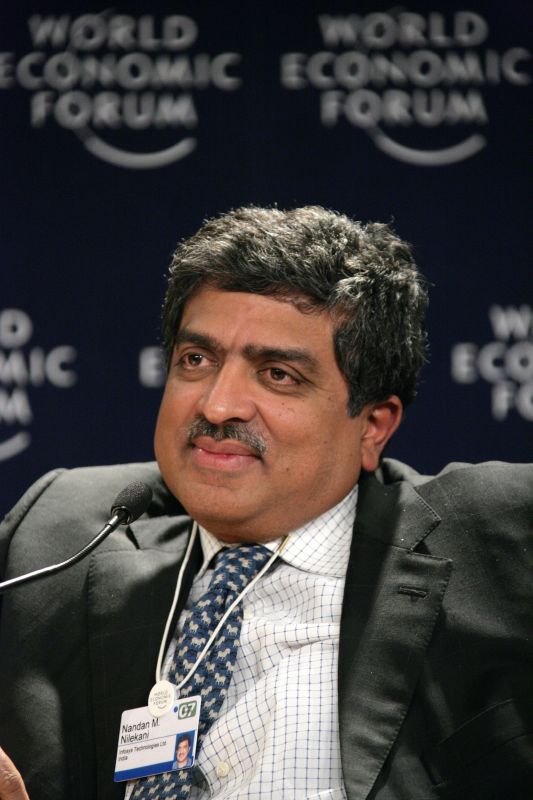
Image: Wikipedia
BNN Summary
In response to mounting concerns over examination integrity and widespread paper leaks, Prime Minister Narendra Modi has appointed Infosys co-founder Nandan Nilekani to lead a high-powered task force dedicated to overhauling the national testing framework.
In-Depth Analysis
Prime Minister Narendra Modi has officially appointed Infosys co-founder and tech visionary Nandan Nilekani to spearhead a newly formed task force aimed at institutionalizing comprehensive reforms within the national examination system. This strategic decision comes at a critical juncture for the Indian education sector, following a series of high-profile irregularities, paper leaks, and systemic failures that have undermined public trust in national competitive examinations, including the NEET entrance tests.
A Mandate for Technological Transformation
Nandan Nilekani, renowned for his instrumental role in architecting the Aadhaar project and his leadership in public digital infrastructure, is expected to bring a data-driven, technology-first approach to the country's assessment processes. The task force is expected to evaluate the entire lifecycle of examination management—from question paper setting and secure transmission to student verification and result declaration.
Key objectives for the task force include:
- Securing the Supply Chain: Developing end-to-end encrypted logistics for the distribution of question papers to prevent unauthorized access.
- Digital Identity Verification: Leveraging existing biometric and digital ID infrastructure to ensure that only eligible candidates participate in examinations, effectively curbing instances of impersonation.
- Standardization of Conduct: Establishing a uniform code of conduct for examination centers across states to eliminate regional disparities and administrative lapses.
- Real-time Monitoring: Implementing sophisticated digital surveillance and data analytics to detect anomalous patterns during test administration.
Addressing Systemic Failures
The announcement follows intense national pressure and student-led protests regarding the integrity of recent competitive entrance exams. Critics have argued that the current infrastructure is ill-equipped to handle the scale and complexity of exams taken by millions of students annually. By appointing an individual with a proven track record in massive-scale systems engineering, the administration hopes to restore credibility to the National Testing Agency (NTA) and its associated bodies.
Experts believe that Nilekani's involvement signals a shift toward a 'technology-as-a-service' model for the education sector. This move mirrors his earlier successes in the banking and governance sectors, where he successfully digitized services for hundreds of millions of citizens. The scope of the task force will likely extend beyond mere policy formulation to the practical application of blockchain or advanced cryptographic solutions to protect examination data integrity.
Stakeholder Engagement and Road Map
While the specific timeline for the task force’s recommendations has not been finalized, the directive from the Prime Minister's Office emphasizes urgency. Nilekani is expected to collaborate with educational experts, cybersecurity specialists, and government stakeholders to present an interim report that addresses the most vulnerable points in the current examination architecture.
This initiative is part of a broader government strategy to modernize civil services and public systems. With the backing of the Prime Minister, the task force is empowered to bypass traditional bureaucratic hurdles to implement agile, tech-led solutions. As the nation watches closely, the success of this reform will hinge on the balance between rigorous security and accessibility for candidates across rural and urban India.
How do you feel about this story?
Discussion
No comments yet. Be the first to share your thoughts.
Join the discussion
Sign in to share your thoughts on this story.