Image: Wikipedia
BNN Summary
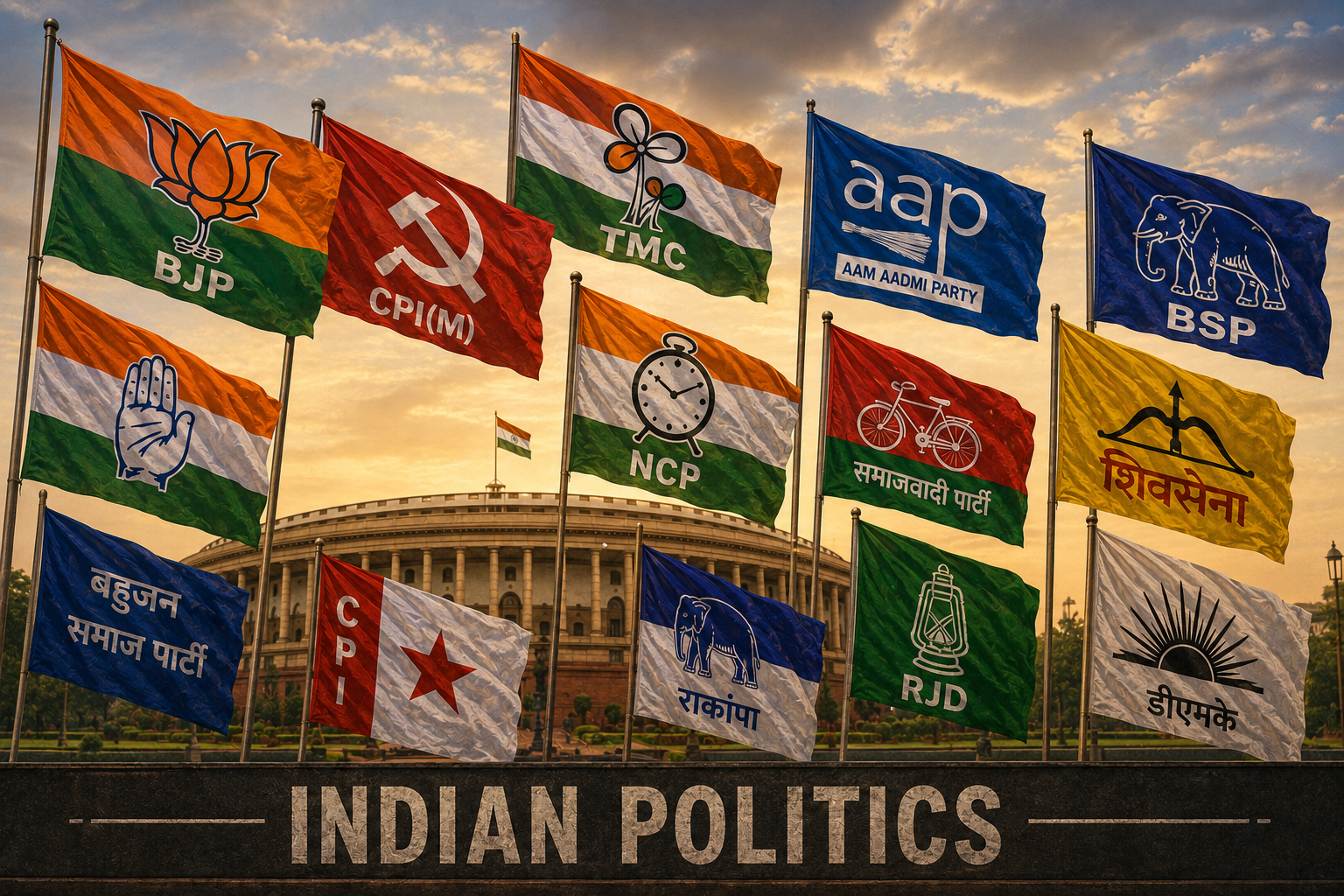
Prime Minister Narendra Modi recently declared that the Bharatiya Janata Party (BJP) has established a new foundational principle in Indian politics: 'Nation-First'. This ideology, according to the senior BJP leader, places the nation's interests above all else, marking a significant shift in political discourse and governance. The statement underscores the party's commitment to national priorities in its policy-making and electoral strategy.
In-Depth Analysis
Prime Minister Narendra Modi, a towering figure and senior leader of the Bharatiya Janata Party (BJP), recently articulated a profound shift in India's political landscape, asserting that his party has successfully embedded a new, overriding principle: 'Nation-First'. This declaration highlights what the BJP views as a fundamental reorientation of political priorities, moving away from what it often characterizes as historical patterns of vote-bank politics, dynastic succession, or narrow regional interests.
According to PM Modi, the 'Nation-First' principle serves as the unwavering compass guiding the BJP's policies, governance, and engagement with the populace. It signifies a political philosophy where the collective well-being, security, economic progress, and global standing of India take precedence over any sectarian, personal, or short-term electoral considerations. This approach, the party contends, is a departure from previous eras of Indian politics, which it often criticizes for being mired in corruption, appeasement, or a focus on specific communities rather than the holistic development of the nation.
The emphasis on 'Nation-First' aligns with the BJP's core ideological tenets, which often stress national unity, cultural pride, and a strong, assertive stance on both domestic and international fronts. In practical terms, this principle is reflected in a range of government initiatives and policy decisions. For instance, the focus on robust national security measures, often highlighted through actions along India's borders or in anti-terrorism efforts, is presented as a direct manifestation of prioritizing national integrity. Similarly, large-scale infrastructure projects, economic reforms aimed at boosting India's global competitiveness, and welfare schemes designed for all citizens irrespective of their background are often framed within the 'Nation-First' narrative.
The BJP leadership often uses this principle to differentiate its governance model. They argue that decisions are made based on what is beneficial for India as a whole, rather than being influenced by pressure from specific lobbies or electoral segments. This narrative has resonated significantly with a large section of the Indian electorate, contributing to the party's considerable electoral successes in recent years. The party's consistent communication strategy reinforces this message, portraying itself as the custodian of national interests and aspirations.
Moreover, the 'Nation-First' ethos extends to India's foreign policy under the current administration. PM Modi's government has frequently emphasized a proactive and independent foreign policy, aimed at enhancing India's strategic autonomy and influence on the global stage. This includes strengthening alliances, engaging in multilateral forums, and projecting India as a responsible global power, all under the umbrella of safeguarding and advancing national interests.
In essence, PM Modi's assertion underscores the BJP's ambition to permanently recalibrate the moral and operational framework of Indian politics. By championing 'Nation-First' as its established principle, the party seeks to solidify its image as a steadfast guardian of India's future, charting a course that it believes will lead to unprecedented growth, security, and prosperity for the entire nation. This ideological cornerstone is poised to continue shaping the party's agenda and discourse for the foreseeable future, influencing both domestic governance and international relations.
How do you feel about this story?
Discussion
No comments yet. Be the first to share your thoughts.
Join the discussion
Sign in to share your thoughts on this story.