BNN Summary
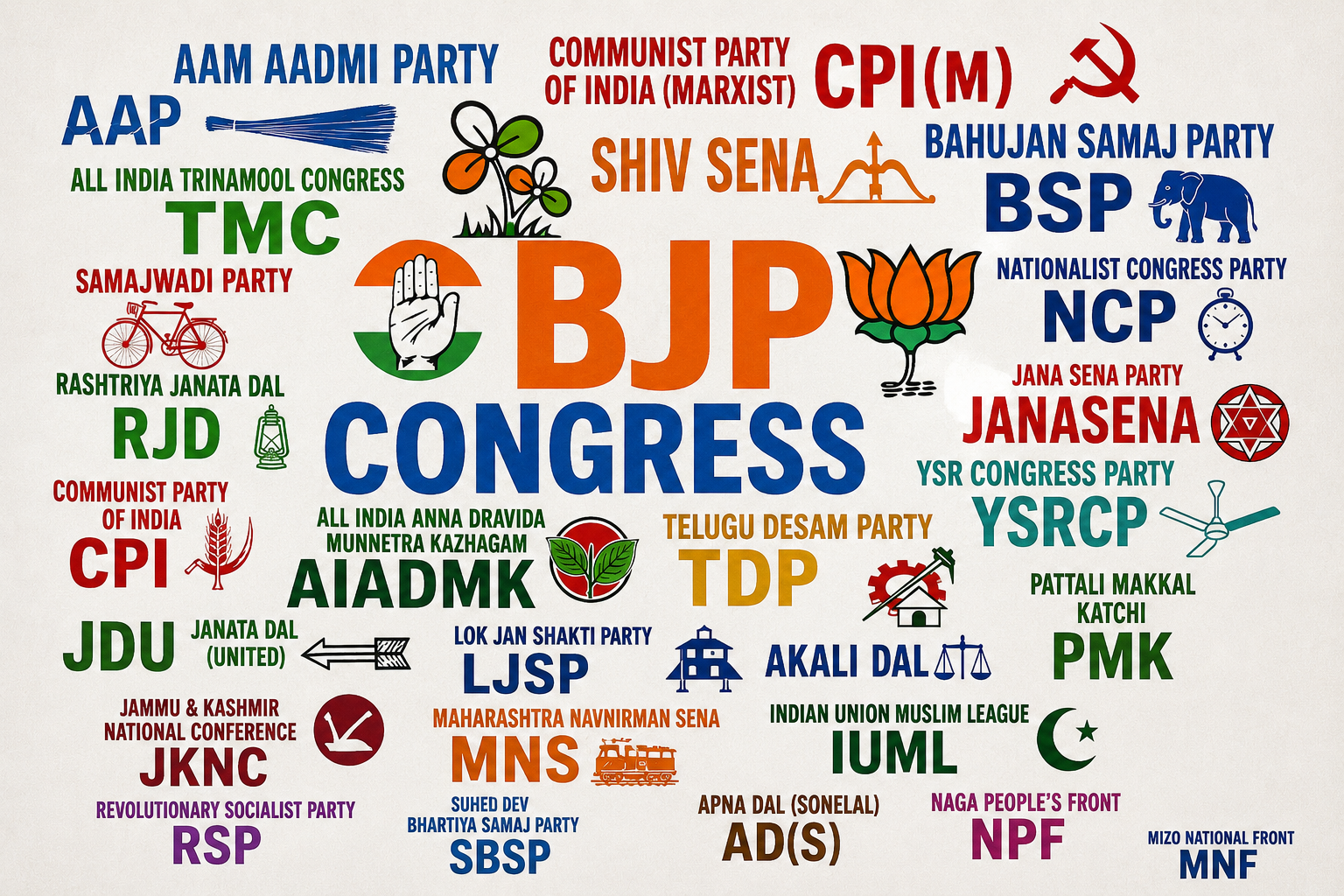
The Indian National Congress continues to maintain a strategic distance from the emerging Cockroach Janta Party movement. While other opposition factions have aligned themselves with the group, Congress leadership remains concerned about the long-term political ramifications and ideological compatibility of such an alliance, opting for a wait-and-see approach as the political landscape shifts ahead of the upcoming election cycle.
In-Depth Analysis
The Indian National Congress, the historical bedrock of opposition politics in India, currently finds itself in a complex strategic conundrum. As the political arena becomes increasingly crowded with emerging factions and grassroots movements, the 'Cockroach Janta Party' (CJP) has begun to demand a formal seat at the table. However, the Congress high command has conspicuously refrained from issuing an official endorsement, fueling widespread speculation about the internal calculus driving this reluctance.
The Challenge of Ideological Alignment
At the core of the Congress party's hesitation lies the challenge of ideological branding. The Cockroach Janta Party, despite its recent rise in visibility, advocates for a set of policies that often clash with the traditional, institutional framework maintained by the Congress. Party strategists are reportedly worried that an uncritical endorsement could alienate the traditional base of the Congress, which relies on a more centrist and historically established platform. The fear is that the populist, somewhat unpredictable nature of the CJP might jeopardize the carefully curated image of the Congress as a stable, national alternative.
Electoral Arithmetic and Vote Banks
Beyond ideology, the primary driver is the cold, hard logic of electoral math. The Congress is currently engaged in a massive effort to consolidate its presence in key swing states. By aligning with the CJP, the party risks losing control over its own candidate selection and campaign narrative in regions where the two groups may have overlapping support bases. Senior leaders within the Congress have expressed concerns that the CJP, while noisy and disruptive, lacks the organizational depth required for a sustained, nation-wide electoral campaign. Consequently, party veterans are advising against an early coalition, arguing that the Congress should focus on its own organizational rejuvenation rather than acting as a ladder for smaller, untested outfits.
Risk Mitigation and Future Prospects
Furthermore, the Congress is wary of the 'political baggage' that the CJP might carry. In a climate where scrutiny of political funding and affiliations is at an all-time high, the Congress is performing extensive due diligence. There is a palpable fear that any scandal or controversy involving the CJP would immediately contaminate the reputation of the Congress by association. This cautious approach is reflective of a wider trend within the opposition, where 'unity' is often secondary to the preservation of individual party identities.
The Path Forward
Internal sources suggest that the party leadership has opted for a 'wait-and-watch' policy. By observing the CJP from a distance, the Congress gains the flexibility to either embrace the group if they show genuine electoral momentum or distance itself entirely if the movement begins to fade or radicalize. This neutral stance allows the Congress to maintain its status as the 'Big Tent' party without sacrificing its autonomy or risking its core voter demographics. As the general election timeline approaches, the pressure to form a cohesive opposition front will certainly intensify, but for now, the Congress appears content to prioritize its own strategic sovereignty over a potentially risky alliance with the Cockroach Janta Party.
How do you feel about this story?
Discussion
No comments yet. Be the first to share your thoughts.
Join the discussion
Sign in to share your thoughts on this story.