Image: Wikimedia
BNN Summary
Recent political maneuvers in Uttar Pradesh, including calls for Bharat Ratna honors for late icons and competitive labor union elections, highlight a shifting regional power dynamic ahead of upcoming state electoral contests.
In-Depth Analysis
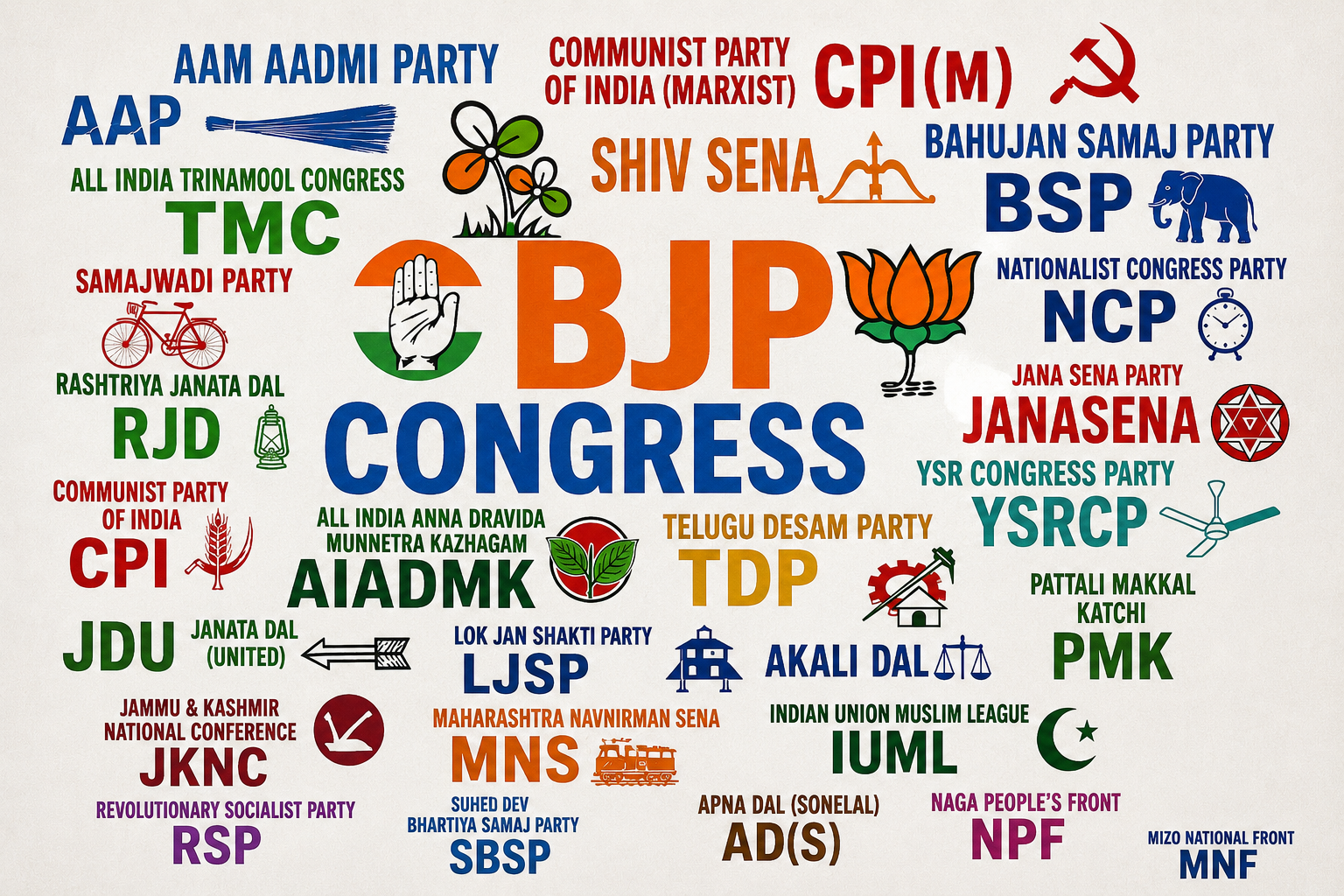
The political and organizational landscape in Uttar Pradesh is experiencing a period of significant activity, marked by high-stakes demands for national recognition and intense institutional elections. In a notable development, the Lok Janshakti Party (Ramvilas) has formally requested the central government to confer the 'Bharat Ratna', India's highest civilian honor, upon party founder Ram Vilas Paswan and Bahujan Samaj Party founder Kanshi Ram. This demand was articulated during a state executive committee meeting held on Wednesday in Lucknow. The party leadership emphasized that both leaders made indelible contributions to social justice and the upliftment of marginalized communities across the nation. By seeking this honor for a foundational leader of the BSP, the LJP (Ramvilas) is strategically positioning itself within the broader discourse of Dalit politics, aiming to consolidate support across different demographic segments.
Parallel to these state-level political ambitions, grassroots organizational elections are reflecting shifts in influence. In Agra, the Dr. Bhimrao Ambedkar University witnessed a major upset during its non-teaching staff union elections. The contest for the presidency saw a decisive victory for Anil, who managed to unseat the incumbent अखिलेश (Akhilesh). This outcome has been widely interpreted as a signal of internal discontent and a desire for new leadership within the university's administrative hierarchy. The victory of a challenger in such a specialized union underscores the broader trend of accountability and competitive voting that is currently permeating various sectors in the region.
Furthermore, the political maneuvering in Western Uttar Pradesh remains contentious. Mahtab Chauhan, the All India Majlis-e-Ittehadul Muslimeen (AIMIM) president for the region, has launched a sharp critique of Congress Member of Parliament Imran Masood. Chauhan accused the Congress leader of being preoccupied with 'family politics' rather than addressing the core issues facing the constituency. During a recent address in Saharanpur, Chauhan reaffirmed AIMIM's intention to contest approximately 200 seats in the upcoming assembly elections. He asserted that his party acts as a robust voice for all sections of society and is committed to an electoral strategy designed to challenge and defeat the Bharatiya Janata Party (BJP).
These three distinct occurrences—the state-level demands for historical recognition, the shifting tides of labor union leadership, and the aggressive expansionist rhetoric of regional political outfits—collectively paint a picture of a state bracing for intense political competition. While the demand for national honors serves as a symbolic rallying cry for voters, the institutional changes and the emergence of vocal regional challengers suggest that the traditional political equations in Uttar Pradesh are being actively renegotiated. Observers note that as the state moves toward future electoral cycles, the ability of these parties to mobilize support on local, institutional, and symbolic fronts will be the primary determinant of their success in the volatile arena of Indian politics.
How do you feel about this story?
Discussion
No comments yet. Be the first to share your thoughts.
Join the discussion
Sign in to share your thoughts on this story.