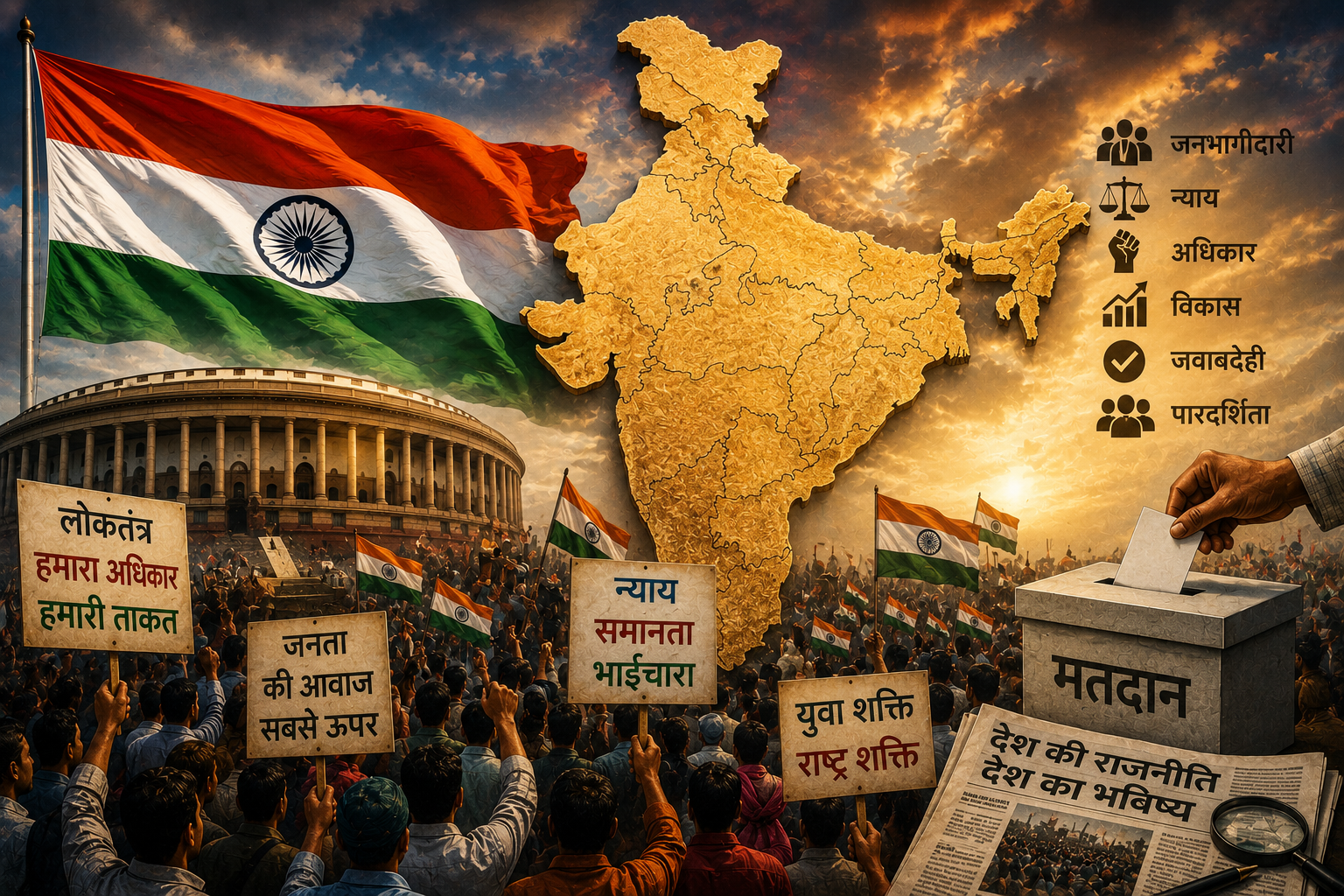
Image: Wikipedia
BNN Summary
Recent allegations of land-related irregularities within the Shri Ram Janmabhoomi Teerth Kshetra Trust have ignited a fierce political debate, questioning the institutional integrity and administrative capabilities of the RSS-BJP establishment regarding a project central to their national identity.
In-Depth Analysis
The controversy surrounding the Shri Ram Janmabhoomi Teerth Kshetra Trust has evolved from a local land dispute into a significant political challenge for the Bharatiya Janata Party (BJP). At the heart of the issue are allegations of irregularities in land transactions involving the trust, which was established to oversee the construction of the Ram Mandir in Ayodhya. These accusations touch upon the very core of the party's platform, which has long relied on the promise of clean governance and religious devotion as its primary pillars of political legitimacy.
A Crisis of Institutional Competence
Critics argue that the scandal transcends simple allegations of corruption; it speaks to a deeper issue of institutional incompetence. For decades, the Rashtriya Swayamsevak Sangh (RSS) and the BJP championed the cause of the Ram temple, positioning it as the ultimate symbol of national cultural resurgence. By claiming ownership of this project, the Sangh Parivar placed itself under a unique microscope. When members of the Trust face allegations of financial impropriety, it casts doubt on the organization's ability to manage an institution of such profound national and religious significance. The perception of mismanagement strikes at the narrative of a disciplined, transparent, and morally superior organization.
Double Standards and Political Accountability
One of the most vociferous criticisms leveled against the current administration is the apparent double standard regarding investigative agencies. Political analysts note that if similar allegations had surfaced in a state governed by an opposition party, central agencies like the Enforcement Directorate (ED) or the Central Bureau of Investigation (CBI) would have likely initiated swift proceedings under the Prevention of Money Laundering Act (PMLA). The relative silence or lack of aggressive oversight from these institutions regarding the Trust has fueled claims that the BJP is acting simultaneously as the police, the lawyer, and the judge in its own defense.
The Impact on the BJP Narrative
For the BJP, the Ram Mandir is not merely a construction project; it is the cornerstone of its 'Hindutva' narrative. Any blemish on the project's reputation carries the risk of alienating core supporters who view the temple as a sacred endeavor. If the public perceives that the project has been marred by profiteering or administrative apathy, it could undermine the moral authority the party wields in its cultural campaigns. The opposition has been quick to seize on this, arguing that the party that campaigned on 'zero tolerance for corruption' is now shielding those within its own ideological umbrella from scrutiny.
The Need for Transparency
To mitigate the political fallout, observers argue that the Trust must adopt a path of radical transparency. By shielding the investigation from partisan interests and ensuring that an impartial audit is conducted, the organization could potentially restore trust. However, the current strategy of downplaying the allegations or delegitimizing the critics has only served to sustain the news cycle. Whether these allegations lead to a permanent shift in public sentiment remains to be seen, but for now, they represent a rare and potent vulnerability in the BJP's well-oiled political machinery. The saga continues to pose a fundamental question: can a movement that rose to power on the promise of restoring the nation's spiritual heart withstand the scrutiny of modern democratic accountability?
How do you feel about this story?
Discussion
No comments yet. Be the first to share your thoughts.
Join the discussion
Sign in to share your thoughts on this story.