Image: Wikimedia
BNN Summary
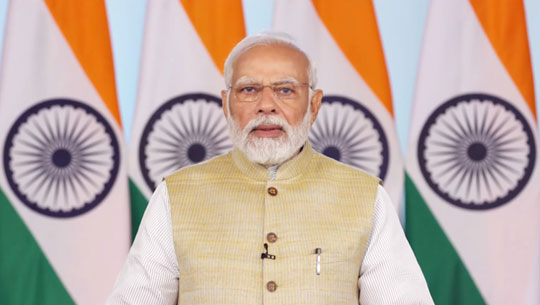
Congress President Mallikarjun Kharge has launched a sharp critique against the Modi administration, citing India's sliding position in global passport rankings as evidence of governance failure and diminished international standing.
In-Depth Analysis
Congress President Mallikarjun Kharge has voiced significant concern regarding the state of India's international mobility and the perceived erosion of the country's soft power under the current administration. His remarks stem from recent global passport index data, which highlights a downward trend for India in terms of visa-free access and global travel freedom for its citizens.
The Heart of the Critique
Addressing the public, Kharge emphasized that a nation's passport strength is a direct reflection of its diplomatic weight, economic stability, and international reputation. He argued that the stagnation or decline of India's ranking is not merely a logistical inconvenience for travelers, but a symptom of ineffective foreign policy and a lack of 'global trust' built by the current government. Kharge stated, 'The Modi government claims to have put India on the global map, yet our citizens face increasing hurdles when traveling abroad. This discrepancy exposes the reality behind the hyper-nationalistic rhetoric.'
Analyzing Global Passport Rankings
Global passport indices, such as the Henley Passport Index, evaluate countries based on the number of destinations citizens can visit without needing a visa or by obtaining a visa on arrival. Historically, India has hovered in the mid-to-lower sections of these rankings. Experts suggest that the ranking is influenced by a complex interplay of international relations, security agreements, and reciprocity. Kharge pointed out that while other nations in the region are improving their standings through strategic diplomatic engagement, India appears to be struggling to negotiate better access for its passport holders.
Economic and Social Implications
Beyond the diplomatic aspect, the Congress leadership highlighted the economic impact of these restrictions. A weaker passport limits the ability of Indian entrepreneurs, students, and professionals to travel easily for business, education, and collaboration. The opposition claims that this environment stunts the growth of the 'Global Indian' and prevents the country from fully integrating into the modern, interconnected global economy.
Government Response and Broader Political Context
While the ruling party has often defended its record by pointing toward massive infrastructure growth and digital initiatives, the opposition remains unconvinced. The critique is part of a broader strategy by the Congress party to hold the administration accountable for its international promises. The government typically maintains that its foreign policy is 'India-first' and focused on protecting national security, which sometimes necessitates stricter visa regimes and reciprocal actions. However, Kharge asserts that the government has failed to translate its diplomatic efforts into tangible benefits for the common citizen.
Moving Forward
As the political debate intensifies, the issue of passport strength is likely to become a recurring point of contention in future parliamentary sessions. The opposition is expected to demand transparency regarding the diplomatic efforts aimed at improving visa-free access for Indian citizens. For now, the passport ranking remains a symbolic yet powerful tool for the opposition to challenge the government's narrative of being a dominant global power. The debate underscores the fundamental tension between state-centric foreign policy goals and the mobility requirements of a globalized citizenry.
How do you feel about this story?
Discussion
No comments yet. Be the first to share your thoughts.
Join the discussion
Sign in to share your thoughts on this story.