BNN Summary
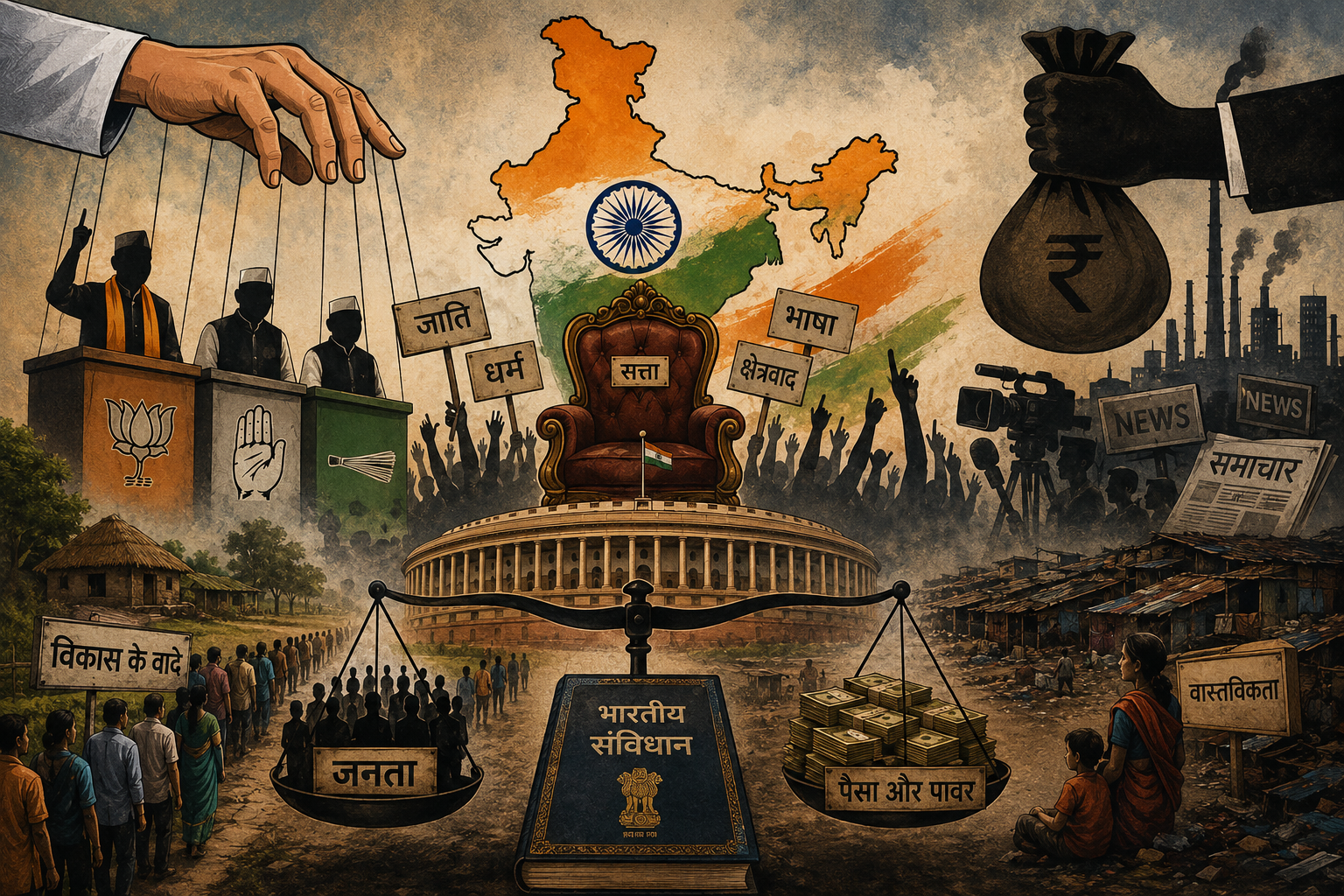
Congress leader Ghulam Ahmad Mir has accused the BJP of actively engineering defections and orchestrating splits within opposition parties. Mir alleges that these strategic maneuvers are aimed at consolidating the BJP's parliamentary strength, ensuring it possesses sufficient Members of Parliament to seamlessly pass key legislative bills and overcome potential opposition hurdles. The accusation highlights concerns about democratic health and parliamentary norms in India.
In-Depth Analysis
Srinagar, Jun 20 (PTI) Congress leader Ghulam Ahmad Mir on Saturday leveled a serious accusation against the Bharatiya Janata Party (BJP), alleging that the ruling party is actively involved in engineering defections and orchestrating splits within opposition parties. Mir contended that the BJP's objective behind these alleged maneuvers is to bolster its parliamentary strength, specifically to secure enough Members of Parliament (MPs) to smoothly pass crucial legislation.
Mir's statement, made in Srinagar, highlights a contentious aspect of Indian politics, where allegations of parties attempting to destabilize rival political formations are not uncommon. His specific charge points to a calculated strategy by the BJP to overcome potential legislative hurdles. In India's parliamentary democracy, the ability of the ruling party to pass bills, particularly those requiring constitutional amendments or significant political consensus, often hinges on its numerical strength in both the Lok Sabha (Lower House) and the Rajya Sabha (Upper House) of Parliament.
The Lok Sabha generally reflects the results of general elections, where the party or coalition with a majority forms the government. However, the Rajya Sabha, where members are elected by state legislative assemblies, can often present a more fragmented picture. A government lacking a majority in the Rajya Sabha can find it challenging to pass bills, leading to delays or even the shelving of key legislative initiatives. This often necessitates negotiations, compromises, or, as alleged by Mir, attempts to influence the composition of the house by weakening the opposition through defections.
Mir's accusation implies that the BJP's alleged actions are not merely about gaining political advantage but are strategically aimed at achieving a legislative supermajority. This kind of majority would empower the ruling party to push through its agenda with minimal resistance, potentially bypassing rigorous parliamentary scrutiny or the need for broad-based consensus. Bills related to significant economic reforms, social policy changes, or amendments to the Constitution require varying degrees of majority support, with constitutional amendments specifically mandating a two-thirds majority in both houses of Parliament. Such a high threshold makes it imperative for any government to command substantial numerical strength.
The Congress leader further elaborated that this alleged strategy has broader implications for the health of India's democratic institutions. By 'breaking parties,' Mir suggests that the BJP is not only weakening the opposition but also undermining the fundamental principles of multi-party democracy and political accountability. A robust opposition is considered vital for a healthy democracy, serving as a check on the government's power, articulating alternative viewpoints, and holding the executive accountable for its actions. If opposition parties are consistently fragmented or destabilized through defections, their capacity to perform these critical functions is severely hampered.
Furthermore, the practice of engineering defections, often termed 'horse-trading' in political parlance, raises ethical questions about political morality and the sanctity of electoral mandates. When elected representatives switch allegiances, especially after an election, it can be perceived as a betrayal of the voters' trust and a distortion of the democratic process. Critics often argue that such moves are motivated by personal gain or political expediency rather than ideological conviction, leading to public disillusionment with the political system.
Mir's statement also brings into focus the political dynamics in Jammu and Kashmir, a region that has witnessed significant political changes in recent years. While the snippet does not provide specific instances, the context of a J-K leader making such a charge suggests an awareness of regional political vulnerabilities and the impact of national party strategies on local political landscapes. The delicate political balance in regions like J-K can be particularly susceptible to the kinds of maneuvers Mir has alleged, further complicating governance and stability.
In conclusion, Ghulam Ahmad Mir's strong accusations against the BJP paint a picture of an aggressive political strategy aimed at consolidating legislative power. He contends that the BJP's alleged efforts to engineer defections and splits in opposition ranks are a calculated move to secure the numbers required to pass key bills without significant opposition. This alleged tactic, if true, has profound implications for the balance of power in India's Parliament, the effectiveness of the opposition, and the broader democratic fabric of the nation, raising concerns about parliamentary norms and political ethics.
How do you feel about this story?
Discussion
No comments yet. Be the first to share your thoughts.
Join the discussion
Sign in to share your thoughts on this story.