BNN Summary
India's political landscape is abuzz with legislative debates and accusations, as Union Minister Kiren Rijiju expressed frustration over the Women's Reservation Bill's delay, pointing fingers at the Congress for allegedly instigating opposition. Concurrently, the 'Mission Delimitation Bill' stirs significant unrest among various opposition parties, while senior Congress leader Jairam Ramesh has countered with grave allegations of 'revenge politics' and attempts by the ruling dispensation to destabilize the opposition bloc, deepening the political divide.
In-Depth Analysis
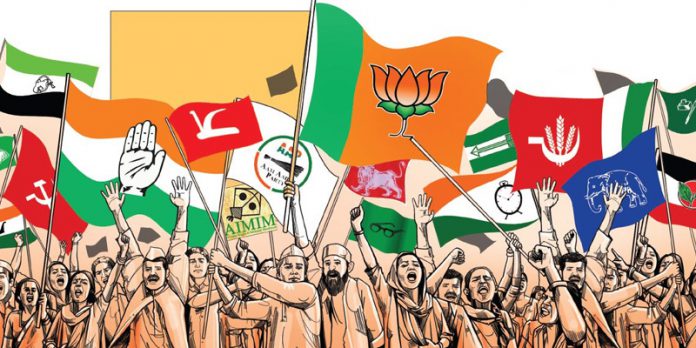
The Indian political arena is currently witnessing heightened tensions and a vigorous exchange of accusations, primarily centered around key legislative initiatives and the strategies employed by both the ruling government and the opposition. Union Minister Kiren Rijiju has voiced profound disappointment regarding the continued delay in the passage of the Women's Reservation Bill in Parliament. He underscored the repeated assurances from Prime Minister Narendra Modi that women in the nation would ultimately receive justice through this crucial legislation. In a direct and sharp critique, Rijiju accused the Congress party of actively instigating other political factions to oppose the bill, thereby impeding its progress and denying women their due representation. This accusation highlights the deep-seated polarization that characterizes contemporary Indian politics, where even proposals aimed at broader societal upliftment become flashpoints for partisan conflict.
Adding another layer of complexity to the legislative landscape is the 'Mission Delimitation Bill', which has sparked considerable agitation and debate across various opposition parties. From the eastern state of West Bengal to the western state of Maharashtra and the southern state of Tamil Nadu, political circles are reportedly abuzz with discussions and concerns surrounding this bill. Delimitation, in its essence, involves the redrawing of boundaries of parliamentary or assembly constituencies to ensure that each constituency has roughly the same population. Such exercises are inherently political, as they can significantly alter electoral outcomes and power dynamics. The widespread unrest among opposition parties suggests that the proposed delimitation has raised fears about potential disadvantages or gerrymandering, leading to intense scrutiny and opposition. There is growing speculation that any perceived cracks or divisions within the opposition ranks, possibly exacerbated by the implications of the Delimitation Bill, could fundamentally shift the electoral calculus and parliamentary majority, potentially reshaping the future political landscape of the country.
In response to these developments and the broader political climate, senior Congress leader and General Secretary Jairam Ramesh has launched a scathing attack on the central government, leveling serious allegations of 'revenge politics'. Ramesh explicitly accused the Prime Minister and the Home Minister of collaboratively working to create discord and divisions within the opposition camp. He further asserted that the ruling NDA (National Democratic Alliance) is engaged in deliberate efforts to 'break' and destabilize opposition parties, thereby weakening the democratic framework and consolidating its own power. These counter-allegations from the Congress leadership underscore a narrative of political persecution and attempts to undermine the strength of dissenting voices in Parliament. Such accusations contribute to an environment of mistrust and antagonism, making bipartisan cooperation on critical legislative matters exceedingly difficult.
Collectively, these legislative battles and the accompanying rhetoric paint a vivid picture of a deeply polarized political environment. The Women's Reservation Bill, despite its potential to empower women across India, remains a casualty of political deadlock, with both sides trading blame. The 'Mission Delimitation Bill', while ostensibly a technical exercise, has become a major point of contention, threatening to reconfigure the electoral map and inflame regional political sensitivities. The allegations of 'revenge politics' and attempts to fracture the opposition further indicate a strategic maneuvering ahead of upcoming electoral cycles, where both the ruling party and the opposition are positioning themselves for maximum advantage. The ongoing struggle for legislative consensus and political dominance reflects a critical juncture in India's democratic journey, where the resolution of these issues will have far-reaching implications for governance and representation.
How do you feel about this story?
Discussion
No comments yet. Be the first to share your thoughts.
Join the discussion
Sign in to share your thoughts on this story.