BNN Summary
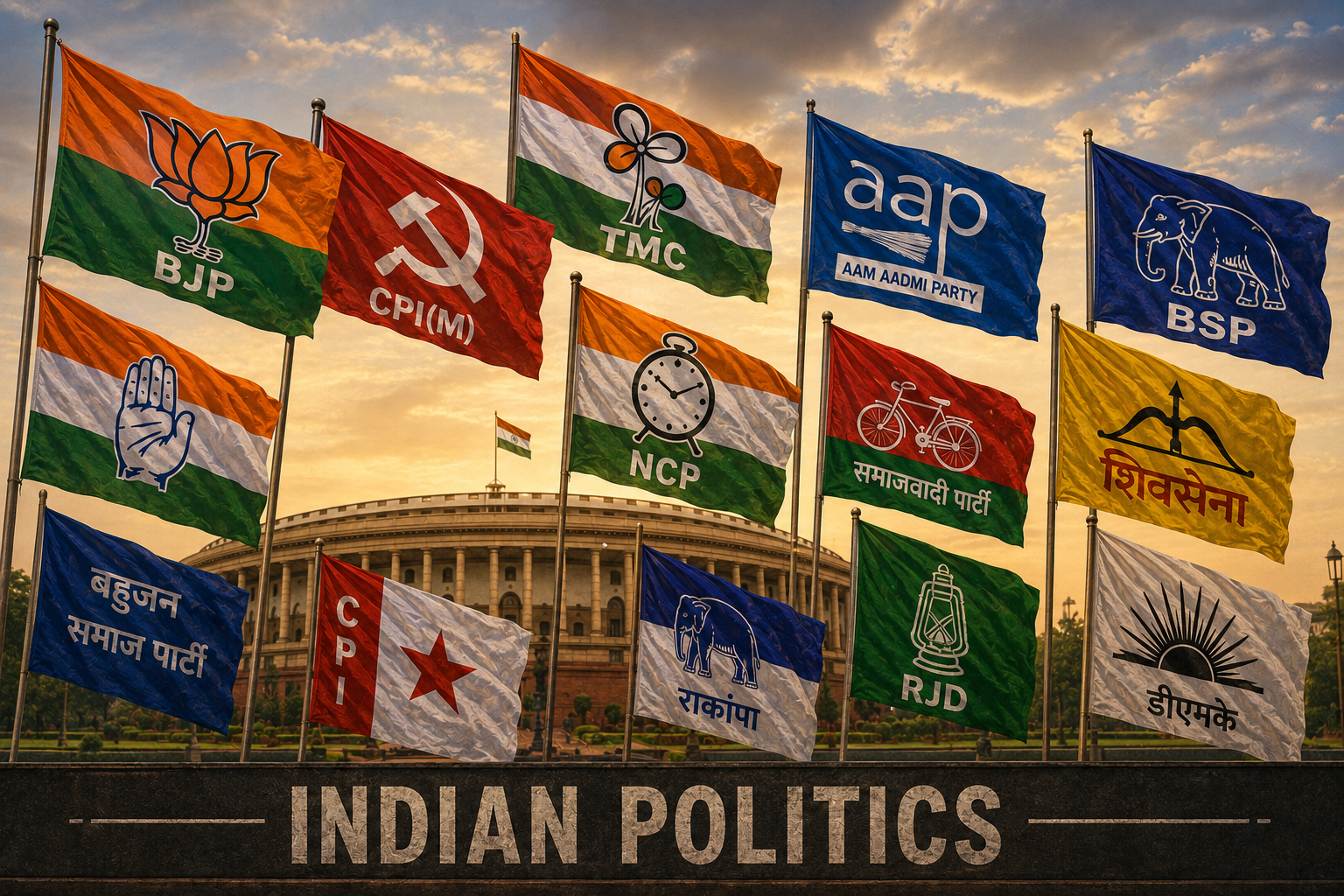
India's regional political parties face an uphill battle, significantly impacted by the decades-long realpolitik strategies of the Congress and BJP. These national powerhouses have sharpened their electoral tools, leaving regional entities scarred and struggling to maintain relevance and attract allies. Both Congress, in its bid to rebuild alliances, and regional parties, in their quest for survival, are confronted with formidable political obstacles.
In-Depth Analysis
The political landscape of India, characterized by its vibrant multi-party democracy, is increasingly defined by the strategic dominance of two national behemoths: the Indian National Congress and the Bharatiya Janata Party. Their adept deployment of 'realpolitik' — practical politics focused on power and national interest rather than ideology — has profoundly reshaped the electoral arena, leaving numerous regional parties in a precarious position. For these localized entities, the journey ahead presents not one but two formidable challenges, metaphorically described as 'hard rows to plough'.
Over several decades, both the Congress and the BJP have honed their electoral and organizational strategies, effectively centralizing political power and influence. The BJP, under its current leadership, has particularly excelled in crafting a pan-Indian narrative, often leveraging nationalistic sentiment and robust welfare schemes to transcend regional boundaries. Its formidable electoral machinery, extensive financial resources, and pervasive media presence enable it to campaign relentlessly across states, often overshadowing local issues and regional leaders. Similarly, the Congress, despite its recent electoral setbacks, has historically mastered the art of coalition building and adapting its message to diverse regional aspirations, albeit with varying degrees of success in contemporary politics. Their 'realpolitik' involves a strategic blend of ideological projection, targeted voter outreach, co-option of regional leaders, and, at times, directly challenging the very existence of regional political spaces. This has led to a narrative where national elections often appear as a direct contest between these two major poles, diminishing the space for alternative regional voices.
The relentless pressure from national parties has left many regional entities 'scarred'. This scarring manifests in multiple ways:
- Electoral Marginalization: Regional parties often struggle to convert their local appeal into significant parliamentary seats, especially when national issues dominate the election cycle. Voters, often influenced by national media narratives, might prioritize a stable national government over regional representation.
- Resource Disparity: Compared to the deep pockets of national parties, regional parties frequently face severe financial constraints, limiting their ability to mount extensive campaigns, utilize modern electoral technologies, or sustain long-term organizational structures.
- Ideological Erosion: To survive, some regional parties find themselves compelled to align with either Congress or BJP, risking the dilution of their distinct ideological platforms or regional specificities. Such alliances can lead to internal dissent and confusion among their traditional voter bases.
- Leadership Drain: Promising regional leaders might be enticed by the larger platforms and resources offered by national parties, leading to defections that weaken regional organizations.
For the Congress, the task of re-establishing its pre-eminent position and attracting allies is fraught with difficulty. Decades of strategic maneuvering by both itself and its primary rival have eroded trust and created a complex web of regional antagonisms. To regain its role as a credible anchor for a broad opposition alliance, the Congress must demonstrate a clear vision for federalism, a willingness to cede space to regional aspirations, and a consistent, reliable leadership. It needs to 'put its' house in order, project internal stability, and articulate a compelling national alternative that resonates with both regional parties and the electorate. This involves delicate negotiations, compromising on seat-sharing arrangements, and potentially even accepting a less dominant role within a coalition, a stark contrast to its historical position.
Beyond the immediate electoral battles, regional parties face a dual existential challenge:
- Preserving Identity amidst National Tides: The first 'hard row' involves maintaining their unique regional identity, cultural specificities, and local issue-based politics in an environment increasingly dominated by national narratives and leadership cults. They must find ways to articulate their distinctiveness without alienating potential national allies or appearing parochial to a broader electorate. This requires a delicate balance between local advocacy and an understanding of national political currents.
- Strategic Survival in a Bipolar System: The second 'hard row' is the strategic imperative of survival within what increasingly resembles a de facto bipolar national political system. Regional parties must constantly weigh the benefits and risks of alignment with either Congress or BJP. Aligning too closely can lead to absorption or loss of autonomy, while remaining entirely independent can render them politically irrelevant. They must develop sophisticated alliance strategies, negotiate effectively for their share of power and resources, and demonstrate electoral strength to remain attractive partners. This often means navigating complex post-election scenarios where their limited numbers hold disproportionate sway, but also carry the risk of instability.
The diminishing space for robust regional parties has significant implications for India's federal structure and the quality of its multi-party democracy. Strong regional voices are crucial for ensuring that diverse local needs and aspirations are adequately represented at the national level. Their marginalization risks over-centralization of power and a less nuanced approach to governance. The struggle of regional parties underscores a broader challenge to democratic pluralism, where the push for national unity or a dominant national narrative can inadvertently suppress regional distinctiveness and autonomy, which are cornerstones of India's constitutional framework.
In essence, India's regional parties are at a critical juncture. The strategic dominance of the Congress and BJP has created a challenging environment where survival necessitates astute political maneuvering, a clear articulation of purpose, and an ability to navigate complex alliance dynamics. Their future trajectory will not only determine their own political fate but also significantly impact the vibrant, federal, and diverse democratic fabric of India.
How do you feel about this story?
Discussion
No comments yet. Be the first to share your thoughts.
Join the discussion
Sign in to share your thoughts on this story.