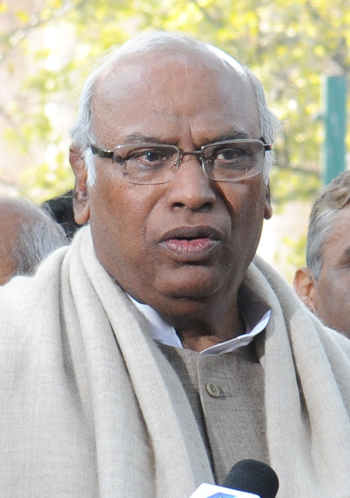
Image: Wikipedia
BNN Summary
Veteran Congress leader Mallikarjun Kharge has been re-elected unopposed to the Rajya Sabha from Karnataka, marking a significant win for the party. During his address, Kharge hinted that this electoral certificate might be his last, sparking discussions about his future in active electoral politics. His re-election reinforces his pivotal role as the Leader of the Opposition and the Congress President, ensuring his continued presence in national legislative discourse.
In-Depth Analysis
Veteran Congress leader Mallikarjun Kharge has once again demonstrated his political stature by securing an unopposed re-election to the Rajya Sabha from Karnataka. This uncontested victory for a second term in the Upper House of Parliament underscores his continued influence and the strategic importance he holds within the Indian National Congress party. The announcement of his unopposed election came alongside other successful candidates from both the Congress and the Bharatiya Janata Party (BJP) in the state.
Addressing party workers and supporters after receiving his election certificate, Kharge, who also serves as the Congress President and Leader of the Opposition in the Rajya Sabha, made a poignant remark, hinting that this electoral success might be his final one. 'This could be my last election certificate,' he stated, a comment that has naturally ignited widespread speculation and discussion regarding his long and distinguished career in electoral politics.
Kharge's career spans several decades, making him one of India's most experienced politicians. Born in 1942, his journey in public service began in the early 1970s. He has been a Member of Parliament for numerous terms, serving both in the Lok Sabha (the Lower House) and now for the second term in the Rajya Sabha. Before his elevation to national politics, he was a prominent figure in Karnataka state politics, holding various ministerial portfolios and serving as the Leader of the Opposition in the Karnataka Legislative Assembly. His deep understanding of parliamentary procedures, constitutional law, and public policy has made him an invaluable asset to his party.
His role as the Congress President is particularly significant, especially given the current political landscape. As the head of the principal opposition party, Kharge faces the formidable task of revitalizing the Congress and leading its charge against the ruling dispensation. His experience and ability to forge consensus among diverse factions within the party are crucial at this juncture. His continued presence in the Rajya Sabha ensures that the party has a seasoned voice leading its parliamentary strategy and deliberations on critical national issues. As the Leader of the Opposition in the Rajya Sabha, he plays a vital role in scrutinizing government policies, holding it accountable, and articulating the opposition's stance on key legislative matters.
The unopposed nature of his re-election is a testament to his cross-party respect and the political maneuvering that often precedes Rajya Sabha elections. In Karnataka, alongside Kharge, two other Congress colleagues, namely G.C. Chandrashekhar and Syed Naseer Hussain, were also elected unopposed. From the BJP, Narayanasa Bhandage secured an unopposed term. Such unopposed elections typically occur when the number of candidates filing nominations does not exceed the number of available seats, often a result of pre-election understandings or the strategic withdrawal of candidates by political parties to avoid contests that are deemed unlikely to succeed. This scenario reflects the proportional representation system used for Rajya Sabha elections, where candidates need a specific number of votes from state legislative assembly members to win.
While Kharge's hint about his 'last election certificate' might suggest a gradual step back from direct electoral contests, it does not necessarily imply an immediate retirement from public life or party leadership. Many senior politicians transition from electoral politics to more advisory or organizational roles within their parties. Given his current position as Congress President, it is highly probable that he will continue to steer the party's direction and strategy, even if he chooses not to contest general elections in the future. His vast experience and deep institutional knowledge would remain invaluable to the Congress party for years to come. The political implications of his statement are profound, suggesting a potential shift in leadership dynamics within the Congress in the foreseeable future, as younger leaders might be groomed to take on more prominent electoral roles.
How do you feel about this story?
Discussion
No comments yet. Be the first to share your thoughts.
Join the discussion
Sign in to share your thoughts on this story.