BNN Summary
BJP National President J.P. Nadda recently addressed multiple public meetings in Chhattisgarh, vehemently criticizing the Congress party for its alleged 'appeasement politics'. Nadda asserted that the Congress prioritizes specific vote banks, engaging in divisive strategies rather than equitable progress. In contrast, he highlighted the BJP's unwavering commitment to a 'development agenda', promising inclusive growth and empowerment for all sections of society, without bias. His addresses aimed to galvanize support for the BJP in the upcoming Lok Sabha constituencies, reinforcing the party's 'Sabka Saath, Sabka Vikas' (Together with all, Development for all) philosophy.
In-Depth Analysis
Bharatiya Janata Party (BJP) National President J.P. Nadda recently concluded a series of public meetings across various Lok Sabha constituencies in Chhattisgarh, launching a sharp attack on the Congress party and outlining the BJP's vision for development. His addresses, delivered to enthusiastic crowds, focused on a dual strategy: condemning the Congress's alleged 'appeasement politics' and championing the BJP's commitment to inclusive development.
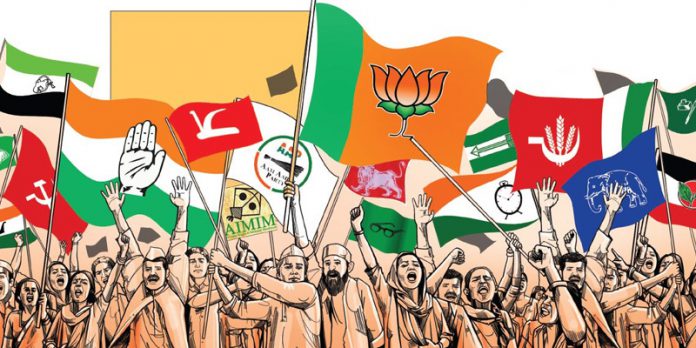
Nadda alleged that the Congress has a long history of indulging in appeasement politics, suggesting that its policies are designed to cater to specific vote banks rather than ensuring welfare for all citizens. This narrative is a recurring theme in BJP's political discourse, often accusing the Congress of prioritizing certain communities and fostering division. The BJP President asserted that such policies undermine national unity and divert focus from genuine issues of governance and development. He referenced historical instances, stating that the idea of partition based on religion was instilled by Congress, which the country never desired.
Furthermore, Nadda criticized the Congress for what he termed a 'divide and rule' approach and for engaging in 'vote-bank politics'. He highlighted how, in the past, Congress has been accused of focusing on minority appeasement, even questioning allocations of funds to minorities. The BJP leader also alluded to allegations of the Congress aligning with what he described as 'anti-India' and 'anti-Sanatan' forces, and being part of an 'INDI Alliance' focused on protecting families and corrupt individuals.
In stark contrast to these allegations, Nadda meticulously laid out the BJP's 'development agenda', which he emphasized is rooted in the philosophy of 'Sabka Saath, Sabka Vikas, Sabka Vishwas, Sabka Prayas' (Together with all, Development for all, Trust of all, Efforts of all). This principle, championed by Prime Minister Narendra Modi, aims to uplift every section of society without discrimination based on caste, creed, or religion.
Nadda detailed various developmental initiatives undertaken by the BJP, both at the central and state levels. The BJP's concept of progress goes beyond mere economic growth, focusing on enabling Indians to fulfill their potential and improve their daily lives. Key areas of focus under the BJP's development model include robust economic and infrastructure development, such as extensive highway and road expansion, modernization of railways, and significant airport and port upgrades. Digital infrastructure has also been a priority, with India becoming the world's largest digital payment ecosystem.
Beyond infrastructure, the BJP's agenda encompasses financial inclusion through schemes like the Jan Dhan Yojana, which has opened millions of bank accounts for the poor, facilitating direct benefit transfers. Programs like 'Make in India' and 'Startup India' aim to boost manufacturing and entrepreneurship. In agriculture and rural development, initiatives like PM-Kisan Samman Nidhi and schemes for soil health and crop insurance have been implemented. The party also highlights its efforts in providing basic amenities such as electricity, LPG connections through the Ujjwala Yojana, and tap water access via 'Har Ghar Jal'.
Social welfare schemes like Ayushman Bharat (PMJAY) offer health insurance to crores of people, while educational reforms under the National Education Policy 2020 aim to modernize the Indian education system. Nadda underscored that these initiatives are geared towards transforming and empowering the weakest and most neglected sections of Indian society. He also congratulated Chhattisgarh for breaking records by winning 10 out of 11 Lok Sabha seats in previous elections and forming the government for the fourth time, attributing this success to the state's support for the BJP's developmental vision.
Nadda's visit and strong statements are part of the BJP's broader strategy to consolidate its position in Chhattisgarh, a state where the party has historically performed well in Lok Sabha elections, securing 9 out of 11 seats in 2019 and maintaining dominance in tribal-dominated areas. The BJP's emphasis on good governance, development, and 'nation first' aims to counter the opposition's narratives and reinforce its appeal to a diverse electorate.
How do you feel about this story?