BNN Summary
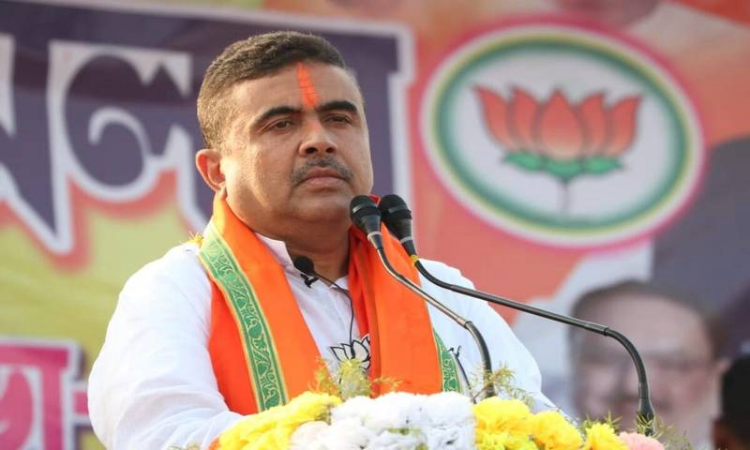
West Bengal Chief Minister Suvendu Adhikari has significantly expanded his government, swearing in 35 new ministers. This includes 13 Cabinet Ministers, three Ministers of State with Independent Charge, and 19 Ministers of State, marking a crucial move to strengthen administration and broaden representation within the state's political landscape.
In-Depth Analysis
In a major political development for West Bengal, Chief Minister Suvendu Adhikari presided over a significant cabinet expansion, inducting 35 new members into his government. The swearing-in ceremony saw these Bharatiya Janata Party (BJP) MLAs officially take their oaths as ministers, signaling a comprehensive restructuring and strengthening of the state's administrative machinery. This strategic move aims to infuse fresh energy and broader representation into the ruling dispensation, as CM Adhikari charts the course for governance in the coming period.
The newly expanded council of ministers is meticulously structured to enhance efficiency and departmental oversight. The 35 new faces are distributed across three distinct ministerial tiers, each with specific roles and responsibilities. The most senior tier welcomes 13 Cabinet Ministers. These individuals are expected to head crucial departments, playing pivotal roles in policy formulation, implementation, and overall governance. Their experience and leadership will be instrumental in driving the state's agenda forward, tackling key developmental challenges, and ensuring effective administration across various sectors.
Adding another layer to the governmental structure are the three Ministers of State (Independent Charge). These ministers will hold independent portfolios, granting them significant autonomy and direct responsibility for their respective departments. This category often includes ministries that require focused attention or are newly established, allowing for agile decision-making and direct accountability. Their independent charge empowers them to initiate and execute policies without necessarily reporting through a senior Cabinet Minister, streamlining processes and potentially accelerating project implementation.
The largest contingent of the newly sworn-in ministers comprises 19 Ministers of State. These ministers will work under the guidance of Cabinet Ministers, assisting them in their departmental duties, and gaining valuable administrative experience. Their roles are crucial for the smooth functioning of various ministries, providing support, managing specific sub-sections of portfolios, and ensuring that governmental initiatives reach the grassroots level. This broad induction of Ministers of State also serves to provide wider political representation, bringing in leaders from diverse regions and communities across West Bengal, thereby reflecting the democratic mandate more comprehensively.
Chief Minister Suvendu Adhikari's decision to undertake such a massive cabinet expansion underscores a clear intent to consolidate power, reward party loyalists, and strategically position the government for more effective governance. A larger cabinet allows for a more equitable distribution of responsibilities, potentially reducing the burden on individual ministers and enabling a more focused approach to specific policy areas. Furthermore, it often serves as a mechanism to integrate new talent, recognize emerging leaders within the party, and ensure that various demographic and geographic segments of the state find representation at the highest echelons of power.
The expansion is also seen as a political statement, demonstrating the strength and depth of the BJP's legislative wing in West Bengal. By bringing in 35 MLAs into ministerial roles, the government aims to project a strong, unified front and foster greater cohesion within the legislative assembly. This move could also be interpreted as a step towards strengthening the party's organizational base across the state, as newly minted ministers often become key conduits for communication and implementation of party policies in their respective constituencies. The composition of the new team will be closely scrutinized for regional balance, caste representation, and the inclusion of fresh perspectives, all of which are vital components of a robust and representative democracy.
How do you feel about this story?