BNN Summary
Historian Ramachandra Guha asserts that the Gandhi family's continued dominance in the Congress party actively undermines its ability to provide competent leadership, a factor inadvertently strengthening Prime Minister Narendra Modi's hold on power. Readers echo this sentiment, expressing a desire for alternatives but finding a void in credible opposition leadership, leaving them with limited choices in India's political landscape.
In-Depth Analysis
Prominent historian Ramachandra Guha has ignited a robust debate within India's political circles, arguing that the persistent influence of the Gandhi family on the Indian National Congress is a primary reason for the party's inability to forge competent leadership, thereby indirectly facilitating Prime Minister Narendra Modi's consolidation of power. This analysis, articulated in his article 'How the Gandhi family has helped Modi consolidate power,' resonates with a significant segment of the populace, including readers who, while potentially critical of the current government, express despair over the lack of a viable alternative.
Guha's central thesis posits that the dynastic succession within the Congress, particularly the continued prominence of Sonia Gandhi, Rahul Gandhi, and Priyanka Gandhi, stifles the emergence of fresh, merit-based leadership. He highlights that unlike the top brass of the Bharatiya Janata Party (BJP)—Modi, Shah, and Nadda—who are self-made and united by a shared political ideology, the Gandhis are perceived as entitled and privileged, their positions largely owing to their surname. This dynastic approach, according to Guha, transforms the Congress into a 'family firm' rather than a democratic institution fostering diverse talent.
The historian points to the electoral fallout, noting the Congress's declining footprint in state assemblies since Rahul Gandhi assumed a formal leadership role, with the number of MLAs falling significantly. Despite the positive reception of Rahul Gandhi's 'Bharat Jodo Yatra' in enhancing his credibility, Guha suggests these gains were 'frittered away by the reassertion, after the elections, of the Congress as a family firm.' He criticises instances like Priyanka Gandhi running from Wayanad and her subsequent 'grandiose' statements, along with the party's choice of her as a lead speaker in a parliamentary debate, given historical contexts like the Emergency imposed by her grandmother. Guha cautions against elevating Priyanka as an alternative, labeling her an 'entitled dynast' despite acknowledging her oratorical skills.
This leadership vacuum within the Congress creates a significant challenge for India's democratic health. A strong opposition is crucial for accountability, transparency, and balanced governance, acting as a watchdog against the ruling party. However, the Congress's internal turmoil, marked by infighting and a perceived disconnect between the leadership and workers, has rendered it ineffective in this role. The 'Group of 23' (G-23) senior Congress leaders, for instance, have been vocal in demanding organisational reforms and a clear leadership direction, a demand that has largely gone unheeded with Sonia Gandhi reportedly serving as interim president and no definitive decision on a permanent party chief.
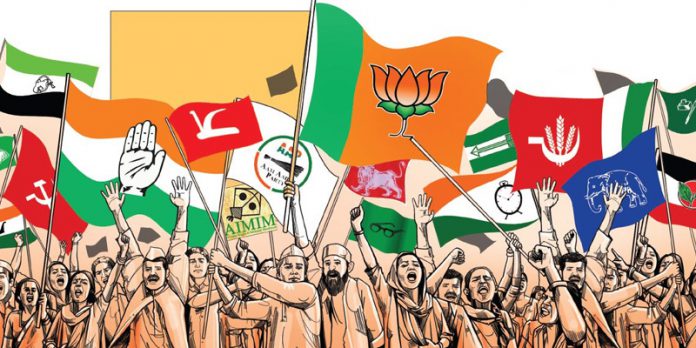
The consequences extend beyond the Congress itself, impacting the broader opposition landscape. Political analysts frequently observe that India's current opposition is among the weakest since independence, characterized by fragmentation, conflicting agendas among regional parties, and a distinct lack of cohesive national leadership. Attempts to form united fronts, such as the Indian National Developmental Inclusive Alliance (INDIA) bloc, have struggled to move beyond symbolic gestures, hampered by internal divisions and a reactive rather than proactive political strategy. This feeds into a public perception that 'there is no alternative' to the incumbent government, directly strengthening the ruling party's position.
Readers' comments underscore this pervasive sentiment of disillusionment. One reader lamented, 'even if we don't want Modi, who else is there to lead the nation?'. Another, identifying as a 'die-hard Congress supporter,' expressed being 'disheartened' by the lack of competent leadership and questioned, 'What are our options?' This highlights a critical democratic deficit where citizens feel their choice is curtailed by the absence of a strong, credible opposition capable of offering a different vision for the country. The BJP, under Modi, is seen to dominate not just Parliament but also the national narrative and key institutions, making the opposition appear even more powerless.
While Guha acknowledges the BJP's role in institutional erosion since 2014, he maintains that the Gandhis have been 'witting or unwitting accomplices' in enabling Modi's consolidation of power. The perpetual focus on the Gandhi family, instead of promoting new faces and decentralising power, continues to plague the party's efforts to revive its electoral fortunes. The challenges for the Congress are thus deeply structural, requiring an 'open-heart surgery,' as one former MLA suggested, to address the disconnect between leadership and party workers and to foster a genuinely meritocratic system capable of presenting a compelling alternative to the Indian electorate.
How do you feel about this story?