BNN Summary
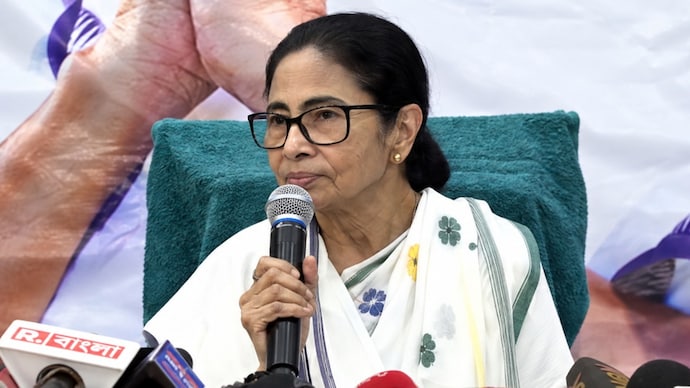
West Bengal Chief Minister Mamata Banerjee faces fierce political pressure as the Bharatiya Janata Party severely criticizes her refusal to step down amid mounting controversies. Meanwhile, the political landscape in the state remains volatile with escalating tensions between rival factions and ongoing scrutiny from election authorities.
In-Depth Analysis
The political atmosphere in West Bengal has reached a boiling point as the Bharatiya Janata Party (BJP) launched a scathing attack on Chief Minister Mamata Banerjee, strongly condemning her refusal to resign from office. Senior BJP leaders have characterized her steadfast stance as a direct assault on the fundamental principles of democracy and the Indian Constitution. The mounting friction highlights the deeply polarized political climate currently prevailing in the state.
Political analysts note that the confrontation between the ruling Trinamool Congress (TMC) and the opposition BJP has intensified significantly over recent months. The BJP's central and state leadership argue that continuing in office under the current circumstances undermines institutional integrity and democratic accountability. They have repeatedly demanded moral responsibility from the administration, pointing to various governance challenges and administrative controversies that have plagued the state.
On the other side of the political spectrum, supporters and leaders of the Trinamool Congress have vehemently defended Mamata Banerjee, dismissing the opposition's demands as politically motivated maneuvers designed to destabilize a democratically elected government. TMC spokespersons have emphasized that Banerjee continues to enjoy the mandate of the people of West Bengal and remains fully committed to grassroots welfare and state development. They argue that the relentless attacks by the opposition are a desperate attempt to weaken the regional party's influence ahead of upcoming electoral battles.
Adding to the administrative complexities, organizational challenges have also surfaced within regional politics, with electoral authorities keeping a close watch on party dynamics and factional disputes. Regulatory bodies have occasionally intervened to maintain electoral decorum and ensure that party symbols and affiliations adhere strictly to established guidelines, further complicating the strategic calculations of political entities operating in the region.
The rivalry between key political figures in West Bengal has a storied history of intense electoral contests. High-profile political showdowns, such as fiercely contested assembly elections where senior leaders lock horns, have often defined the state's electoral narrative. These battles are closely watched by political observers nationwide, as West Bengal remains a crucial battleground for national supremacy.
As the war of words continues to escalate, civil society and political commentators are closely monitoring the unfolding events. The ongoing face-off not only impacts daily legislative and administrative functions in West Bengal but also sets the tone for national political discourse. Both camps are mobilizing their cadres for sustained political engagement, ensuring that the political temperature in the state will remain exceptionally high in the foreseeable future.
How do you feel about this story?
Discussion
No comments yet. Be the first to share your thoughts.
Join the discussion
Sign in to share your thoughts on this story.