BNN Summary
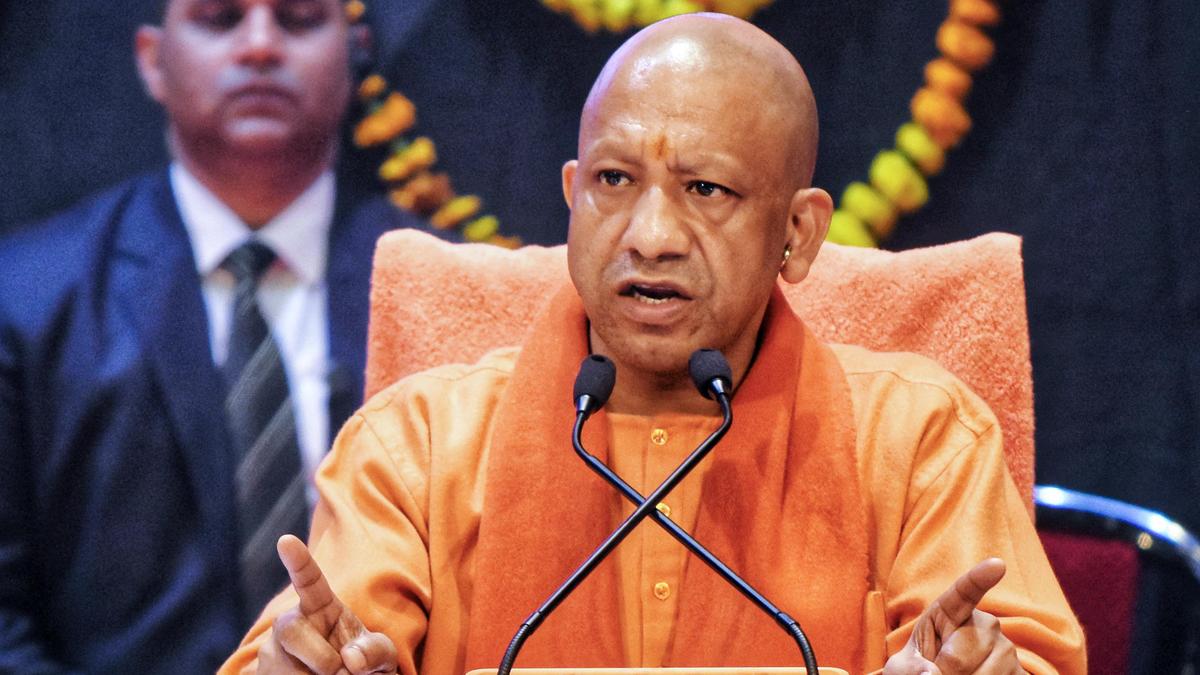
Uttar Pradesh Chief Minister Yogi Adityanath has launched a sharp political attack on the Samajwadi Party, comparing the opposition outfit to historical figure Babur. He claimed that both entities share an aversion to the name of Lord Ram.
In-Depth Analysis
Uttar Pradesh Chief Minister Yogi Adityanath has escalated political tensions in the state by drawing a controversial historical parallel, comparing the Samajwadi Party (SP) to the Mughal emperor Babur. Addressing a public gathering, the senior leader asserted that both the political organization and the historical figure exhibit an identical sense of unease and irritation whenever the name of Lord Ram is invoked.
Escalating Rhetoric in State Politics
The remarks mark a significant intensification of the ongoing war of words between the ruling Bharatiya Janata Party (BJP) and the opposition Samajwadi Party. Yogi Adityanath, known for his unvarnished political rhetoric and staunch Hindutva ideology, suggested that the ideological DNA of the opposition party prevents them from embracing cultural and religious symbols that are dear to the majority population. According to the Chief Minister, the opposition's political strategy has consistently involved undermining religious sentiments for electoral gains, a tactic he claims mirrors historical incursions against indigenous cultural markers.
During his address, Adityanath elaborated on the transformation of Ayodhya and the successful construction of the Ram Mandir, presenting it as a monumental civilizational triumph. He argued that the realization of the grand temple has exposed the alleged hypocrisy of secular political parties that previously ruled the state. The Chief Minister emphasized that while previous administrations attempted to suppress faith and appease specific vote banks, the current governance model prioritizes cultural resurgence alongside comprehensive development.
Historical Comparisons and Political Repercussions
Comparing political rivals to historical conquerors is a recurring motif in contemporary Indian political discourse, aimed at mobilizing the party base and framing electoral battles as civilizational contests. By invoking Babur, a figure frequently cited in Hindu nationalist narratives regarding historical temple destructions, the Chief Minister sought to consolidate public memory around historical grievances while contrasting them with present-day governance.
The Samajwadi Party has historically rejected such characterizations, accusing the ruling administration of using divisive religious rhetoric to deflect public attention from pressing socio-economic concerns, such as unemployment, inflation, and agricultural distress. Opposition leaders argue that the ruling dispensation relies on polarization because it lacks substantive achievements in governance and public welfare.
Broader Political Context
As political parties prepare for upcoming electoral battles across the region, ideological narratives concerning identity, faith, and historical legacy remain central to campaign strategies. Analysts note that both sides are attempting to firmly establish their respective narratives ahead of crucial local and national polls.
The continuous exchange of sharp words highlights the deeply polarized nature of the electorate in Uttar Pradesh, where cultural symbolism often plays a decisive role in shaping voter behavior. While the ruling party continues to leverage its achievements regarding temple construction and law enforcement, the opposition strives to pivot the discourse toward developmental metrics and social justice frameworks. The impact of such rhetoric on the ground will ultimately be tested at the ballot box, where voters will weigh ideological alignment against governance delivery.
How do you feel about this story?
Discussion
No comments yet. Be the first to share your thoughts.
Join the discussion
Sign in to share your thoughts on this story.