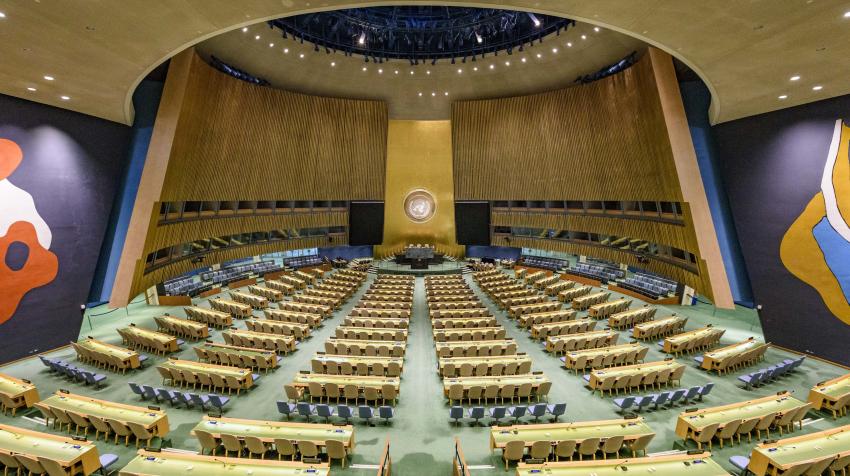
BNN Summary
An in-depth look at Ankara's persistent diplomatic campaign calling for structural reform within the United Nations Security Council, highlighting the argument that the current veto-wielding permanent members no longer reflect contemporary global geopolitical realities.
In-Depth Analysis
The structural architecture of the United Nations has increasingly come under intense international scrutiny, with nations from the Global South and emerging economies arguing that the post-World War II framework is obsolete. Among the most vocal critics of the current international order is Ankara, which has consistently maintained that the global governance system fails to represent the geopolitical realities of the twenty-first century. At the heart of this diplomatic push is the powerful assertion that the five permanent members of the United Nations Security Council—commonly referred to as the P5—hold a monopoly on international peace and security decisions that no longer serves the broader global community.
The Historical Context of the P5 Monopolies
The United Nations Security Council was established in 1945 in the immediate aftermath of the Second World War. The victors of that global conflict—the United States, the United Kingdom, France, the Soviet Union (now succeeded by the Russian Federation), and the Republic of China (later represented by the People's Republic of China)—awarded themselves permanent seats and absolute veto powers. This structure was designed to prevent another catastrophic global war by ensuring that the major military powers remained engaged in diplomatic dialogue. However, critics note that this arrangement froze the global hierarchy in time.
Over the past eight decades, the distribution of economic, political, and demographic power has shifted dramatically. Nations in Africa, Latin America, and Asia have emerged as major economic powerhouses and demographic centers, yet none hold permanent seats with veto power. Ankara has repeatedly emphasized this imbalance, arguing that a Security Council consisting of just five dominant nations cannot effectively manage modern crises ranging from regional conflicts to global pandemics and climate change.
Ankara's Diplomatic Mantra: 'The World is Bigger than Five'
At various international forums, including the United Nations General Assembly, Turkish leadership has popularized the diplomatic slogan 'The world is bigger than five'. This phrase encapsulates a fundamental critique of how the veto system operates. When a single permanent member exercises its veto power, it can unilaterally paralyze the entire international body, effectively shelving humanitarian interventions, peace missions, and resolutions addressing egregious violations of international law.
Ankara's foreign policy establishment contends that this paralysis undermines the foundational credibility of the United Nations. When the supreme organ responsible for maintaining international peace and security is deadlocked due to narrow national interests or geopolitical rivalries among the P5, vulnerable populations across the globe suffer the consequences. Consequently, comprehensive reform is not merely a bureaucratic preference but a moral imperative for global survival and stability.
Proposals for Structural Transformation
Calls for reform extend beyond merely adding new permanent members; they encompass a complete overhaul of decision-making mechanisms. Various reform proposals suggest expanding the Security Council to include permanent representations from Africa, Latin America, and the Asia-Pacific region. Furthermore, debates persist regarding the restriction or abolition of the veto power in cases involving mass atrocities, war crimes, and crimes against humanity.
Ankara advocates for a more democratic, inclusive, and transparent council where representation rotates or reflects broader geographic and economic diversity. Proponents of these changes argue that a reformed security apparatus would enjoy greater legitimacy, voluntary compliance, and effectiveness in enforcing international norms.
Challenges and Resistance to Change
Despite widespread consensus among developing and emerging nations that the current system is flawed, achieving tangible reform remains an uphill battle. The P5 members, who hold the ultimate legal authority to ratify any charter amendments, have historically resisted structural changes that would dilute their unique privileges and veto authority. Rivalries among aspiring regional powers also complicate negotiations, as countries compete for prospective permanent seats.
Nevertheless, the persistent pressure exerted by nations like Türkiye keeps the reform debate alive on the global stage. As geopolitical shifts accelerate and traditional multilateral institutions face mounting challenges, the demand for a more representative and equitable global governance framework will only continue to intensify.
How do you feel about this story?
Discussion
No comments yet. Be the first to share your thoughts.
Join the discussion
Sign in to share your thoughts on this story.