

BNN Summary
The battle for votes is no longer fought only on public platforms, political rallies and television debates. Increasingly, it is fought on smartphone screens, where a hashtag can set the agenda, a short video can shape public perception, and a viral message can influence the political conversation.
In-Depth Analysis
Elections have always been about narratives. Political parties have traditionally relied on public meetings, newspaper advertisements, posters, television interviews and campaign speeches to communicate their promises and convince voters. However, the arrival and rapid expansion of social media have fundamentally changed the way these narratives are created, circulated and challenged.
Today, an election campaign does not begin and end with a political rally. It continues around the clock on WhatsApp, Facebook, Instagram, YouTube and X. The smartphone has become a political communication platform, and ordinary citizens have become participants in the creation and distribution of election narratives.
How did this transformation begin?
The transformation began with the wider availability of the internet, affordable smartphones and the growth of social networking platforms. Initially, social media was primarily used for personal communication and entertainment. Gradually, political parties, candidates and campaign organisations recognised its potential to reach voters directly.
In India, the expansion of affordable mobile internet, particularly after the mid-2010s, accelerated this transformation. Political communication moved beyond traditional media and entered regional-language social media networks. WhatsApp groups, Facebook pages, YouTube channels and short-video platforms became important spaces for political discussion.
This change was not simply about adopting new technology. It represented a shift in who could communicate politically, how quickly information could travel and who could influence public opinion.
From political manifestos to viral narratives
One of the most significant changes is the movement from manifesto-centred political communication towards personality-driven and issue-driven digital narratives.
Earlier, voters often depended on newspapers, television debates and public meetings to understand political promises and government policies. Now, a short video, an edited speech, an infographic or a trending hashtag can become a major part of the election conversation.
Political communication has also become more visual, emotional and immediate. Campaign messages are increasingly designed to attract attention within seconds. A complicated economic or governance issue may be reduced to a thirty-second video or a memorable slogan.
This does not necessarily mean that voters have stopped caring about development, employment, education, healthcare or governance. Rather, the way these issues are presented and discussed has changed.
The central question is increasingly not just what a political party promises, but how effectively it communicates its version of events in the digital public sphere.
The rise of the ordinary digital voter
Social media has also weakened the traditional monopoly of political communication held by established media organisations and political institutions.
An ordinary citizen can now record a local problem, upload a video, question an elected representative or highlight an issue that receives little attention in mainstream media. Local concerns can sometimes become statewide or national conversations through digital sharing.
This has created new opportunities for public participation and political accountability.
Young voters, in particular, have access to multiple sources of political information and can engage directly with candidates and public representatives. Regional-language content has also expanded the reach of political communication among communities that may not regularly consume English-language news.
However, greater participation also brings greater responsibility. The ability to publish information does not automatically guarantee its accuracy.
When information becomes misinformation
The biggest challenge associated with social media-driven election narratives is the rapid spread of misleading information.
Old videos can be circulated as recent events. Speeches can be edited to remove context. Unverified claims can spread through messaging groups, while fabricated images and AI-generated audio or video can make false information appear convincing.
The problem is not limited to one political party or ideology. Misleading narratives can emerge from different political groups, supporters, anonymous accounts and other actors.
Social media algorithms also tend to recommend content based on engagement and user interests. As a result, emotionally charged or controversial material can receive substantial attention, while detailed policy discussions may struggle to attract similar engagement.
The danger is that political debate can gradually move away from evidence and public policy towards suspicion, personal attacks and competing versions of reality.
The changing role of political parties and traditional media
Political parties are adapting to this new environment by building digital communication teams, engaging social media influencers, producing regional-language content and responding rapidly to political developments.
At the same time, traditional newspapers and television channels face a new challenge. They are no longer the only major sources through which political narratives reach the public.
Nevertheless, journalism remains essential. Verification, investigation, context and accountability are responsibilities that cannot be replaced by viral posts or anonymous social media accounts.
In fact, the growing influence of digital platforms makes independent journalism more important than ever.
Democracy needs informed voters, not just viral campaigns
Social media is neither entirely a threat to democracy nor an automatic solution to its problems. It is a powerful communication instrument whose impact depends on how political parties, technology companies, journalists and citizens use it.
The future of election campaigning will undoubtedly involve artificial intelligence, personalised political messaging, digital influencers and increasingly sophisticated communication strategies. The challenge will be to ensure that technological innovation does not come at the cost of transparency and democratic accountability.
Ultimately, an election should be decided through informed public debate about leadership, governance, public welfare and policy choices—not merely through the popularity of a hashtag or the reach of a viral video.
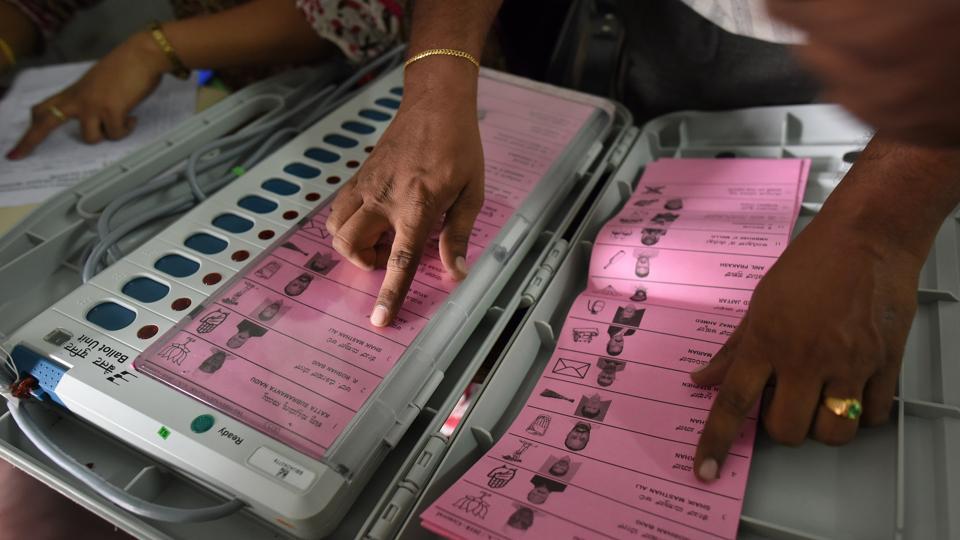
The ballot box may remain the final instrument of democratic choice, but the narrative surrounding it is increasingly shaped by the smartphone.
The real question for democracy is no longer simply who controls the election campaign, but who controls the information through which citizens understand their choices.
How do you feel about this story?
Discussion
No comments yet. Be the first to share your thoughts.
Join the discussion
Sign in to share your thoughts on this story.