BNN Summary
The Madhya Pradesh Congress has launched a scathing attack on the state government, questioning the steady decline of local dairy cooperatives. This political escalation comes right ahead of Union Home Minister Amit Shah's high-profile visit to Bhopal, setting the stage for a heated debate on rural economy and agricultural policies in the region.
In-Depth Analysis
The political atmosphere in Madhya Pradesh has intensified significantly as the main opposition party, the Congress, trains its guns on the state administration regarding the alarming decline of dairy cooperatives across the region. This sharp political offensive has been strategically timed to coincide with the impending visit of Union Home Minister Amit Shah to the state capital, Bhopal, thereby drawing heightened national and regional attention to rural economic grievances.
Concerns Over Rural Livelihoods
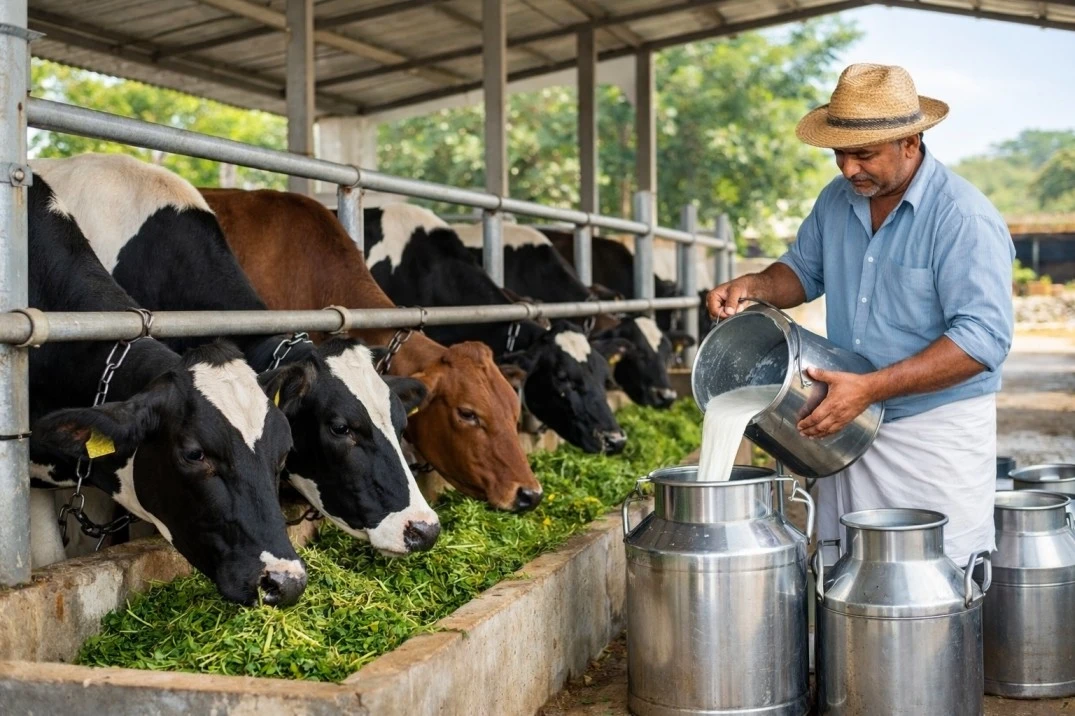
Leaders from the Madhya Pradesh Congress committee highlighted that dairy farming and cooperative societies have historically formed the backbone of the rural economy, providing sustainable livelihoods to millions of farmers and marginal households. However, in recent years, the sector has reportedly witnessed a steep downward trajectory. The opposition argues that mismanagement, lack of adequate financial support, and a failure to procure milk at competitive rates from local producers have severely crippled these cooperative bodies.
According to party spokespersons, once-thriving milk unions and regional federations are struggling to stay afloat, burdened by mounting operational debts and competition from private players. The Congress leadership has demanded an immediate white paper from the state government detailing the steps taken to revitalize the cooperative framework and protect dairy farmers from exploitation.
Timing Ahead of High-Level Visit
The decision to spotlight the agrarian crisis just before the arrival of a senior central leader is viewed as a calculated political move. Union Home Minister Amit Shah is scheduled to visit Bhopal to review organizational preparedness and participate in various official and party events. By raising critical socio-economic questions right at this juncture, the opposition aims to put the ruling dispensation on the defensive, forcing them to address structural economic challenges rather than focusing solely on political optics.
Political analysts note that rural distress and agrarian policies have traditionally played a decisive role in Madhya Pradesh elections. By targeting the dairy sector—which directly touches countless households in rural and semi-urban pockets—the Congress is attempting to rally agricultural communities and build a narrative of administrative apathy.
Government and Cooperative Response
While the ruling party has dismissed the allegations as politically motivated posturing ahead of the high-profile tour, agriculture and cooperative department officials maintain that corrective measures are already underway. Authorities claim that modernization efforts, digital tracking of procurement, and new financial packages are being rolled out to strengthen cooperative infrastructure and ensure timely payments to dairy farmers.
As the political showdown unfolds in Bhopal, the debate over the future of dairy cooperatives highlights the broader tensions surrounding rural development, cooperative federalism, and the economic well-being of farmers in Madhya Pradesh. The opposition has vowed to keep the pressure on the administration, ensuring that rural livelihood issues remain at the forefront of the political discourse.
How do you feel about this story?
Discussion
No comments yet. Be the first to share your thoughts.
Join the discussion
Sign in to share your thoughts on this story.